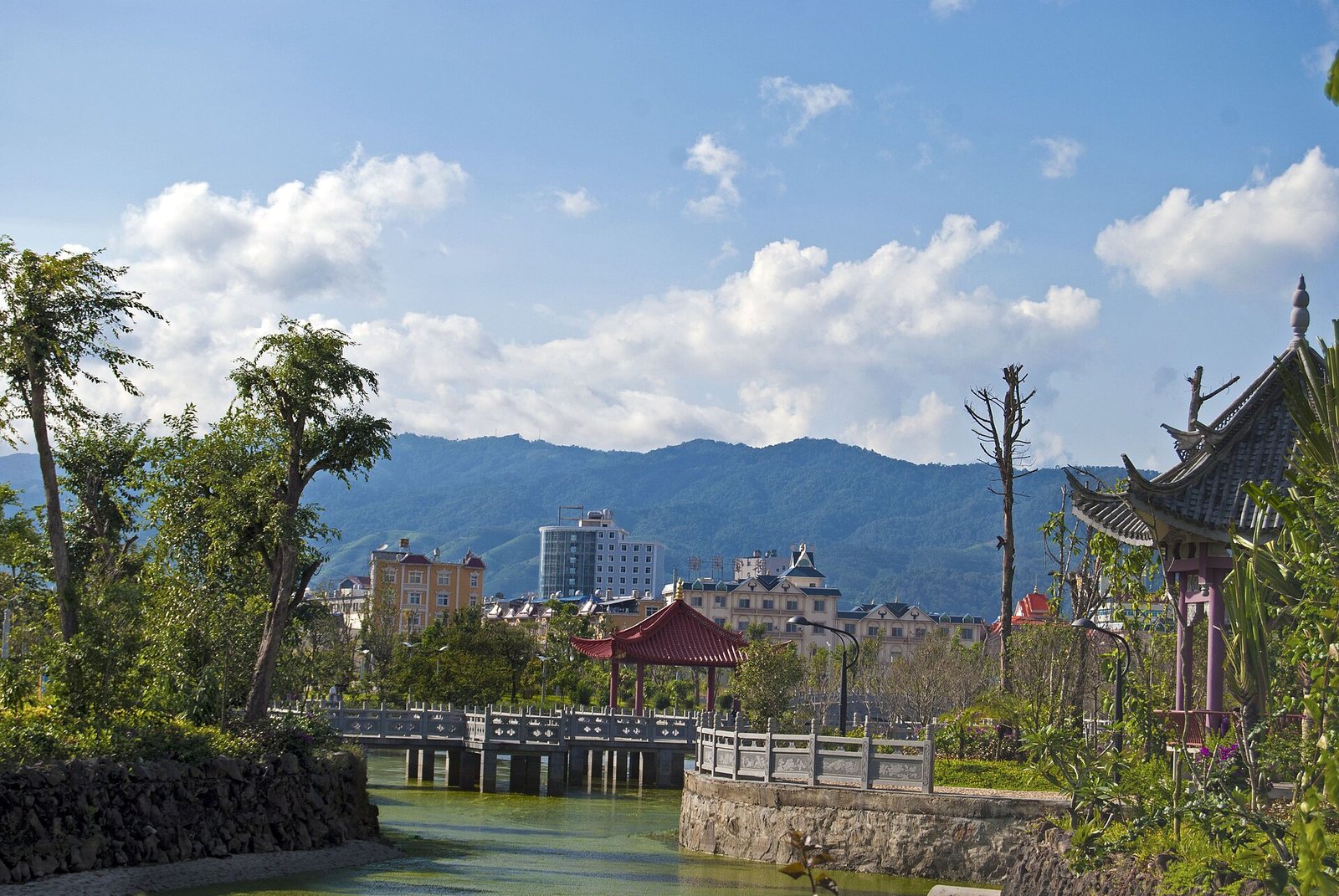
Dehong is easiest to understand as a set of distinct bases rather than a single border-sightseeing loop. Mangshi (芒市) is the air gateway and the best place for temples, urban food and an unhurried introduction to Dai and Jingpo culture. Ruili (瑞丽), Jiegao (姐告) and Wanding (畹町) focus more on border trade and frontier history, while Yingjiang (盈江), Lianghe (梁河) and Longchuan (陇川) require separate road time.
Destination Fit
Three or four days give first-time visitors a workable shape: one or two days in Mangshi and one or two in Ruili. With only two days, choose one base. Mangshi suits travelers who want religious architecture, markets and a relaxed city pace. Add Ruili only when border-city history, tropical river country and commercial streets are central to the trip.
Yingjiang has wetlands and nature-watching areas, Lianghe has the Nandian Tusi Chieftain Office, and Longchuan offers more Jingpo cultural context. None is a casual add-on to a short Mangshi day. Check road conditions, opening arrangements and the overnight return before committing to an outlying county.
When to Go
Late autumn through spring is generally more comfortable for city walking and road transfers, although mornings and evenings can still feel cool. Heat, humidity and showers build toward late spring. Summer and early autumn bring heavier rain, when wet mountain roads, poor visibility, landslide risk and transport disruption need more margin.
Carry sun protection, water and insect repellent in every season. Do not assume Water-Splashing Festival, Munao Zongge or another cultural event will follow a previous year's dates or venue. Confirm the current program with prefecture or county authorities, then recheck lodging and traffic controls.
Choosing the Right Stops
- Mangshi city cluster: Menghuan Grand Golden Pagoda (勐焕大金塔), the Silver Pagoda, Mengbana Rare Garden and the Dai Ancient Town can share one city day. Follow posted clothing, footwear and photography rules at religious sites.
- Ruili border cluster: Jiegao, Wanding Border Culture Park, One Village, Two Countries and central Ruili show different aspects of border life. Border crossing and transnational activities depend on current policy; an exterior visit never implies permission to cross.
- Tropical nature: Moli Tropical Rainforest is sensitive to rainfall, slippery paths and local transport. Treat it as the main remote stop of a Ruili day rather than pairing it with every border attraction.
- County extensions: Choose Yingjiang for wetlands and nature, Lianghe for historical architecture, or Longchuan for Jingpo culture. Give each its own day instead of collecting county names.
Practical One-Day Itinerary
From a Mangshi hotel, begin with a public cultural venue or Mengbana Rare Garden, depending on the day's opening notice. After lunch, visit the Golden Pagoda and Silver Pagoda with time for security, walking and quiet observation. Return to the city for dinner or a managed night district; do not add an evening round trip to Ruili.
From Ruili, choose either Wanding Border Culture Park or Moli Tropical Rainforest as the morning's main remote stop. Return for central Ruili and the publicly accessible parts of Jiegao in the afternoon, then confirm transport before dark. Shorten the route immediately if port controls, heavy rain or road warnings change.
Two Days or Longer
A three-day plan can use a Mangshi city day, a transfer day to Ruili with one verified stop, and a Ruili border day. Four days allow Moli or Wanding to have its own day, which keeps rainforest walking, border interpretation and shopping from competing for the same hours.
With five days or more, choose one of Yingjiang, Lianghe or Longchuan. Wildlife viewing never guarantees a particular species, and a village visit is not permission to enter private homes or ceremonies. Use formal visitor facilities or invited community programs and protect a rain-day alternative.
Getting There and Moving Around
Mangshi Airport is the practical air gateway, and central Mangshi is a useful first-night supply base. Travel between Mangshi and Ruili is mainly by road coach, self-drive or licensed hired vehicle. Confirm the actual boarding and drop-off points; a ticket marked for Ruili may not include a hotel transfer.
Ruili, Wanding, Yingjiang and Lianghe need separate road calculations. Finish unfamiliar mountain roads in daylight and confirm a driver's operating credentials, insurance, included costs, waiting time and cancellation terms. Before an early flight, returning to Mangshi the previous evening is safer than a night drive from an outlying county.
Where to Stay
Central Mangshi works for airport access, food and a gentle evening. Compare air-conditioning, mosquito protection, parking and street noise rather than choosing on price alone. Central Ruili is better for consecutive border-city and Moli days; being close to a port is less useful if evening transport and food are limited.
For Yingjiang, Lianghe or Longchuan, stay in the county seat when a same-day return would erase the visit. During the rainy season, prioritize clear cancellation terms and confirmed parking, hot water and road access.
Food Planning
Dehong cooking includes Dai and Jingpo dishes, sour and spicy salads, pounded mixtures, barbecue, rice noodles and tropical fruit. Sample strong flavors, raw garnishes and local alcohol in small separate portions. Ask clearly about allergens and uncooked ingredients; travelers with sensitive stomachs should favor freshly cooked food and reliable cold storage.
Night markets are useful for comparison, not for buying large quantities of pre-cut fruit or chilled salads at once. Confirm fruit variety, weight, ripeness and storage before a long transfer. At religious or festival gatherings, respect local meal customs and ask before photographing diners.
Booking and Final Checks
Check Mangshi, Ruili and the chosen county separately. A prefecture-level guide cannot replace current notices for attraction opening, shuttles, religious events or port management. Tickets, entry sessions and refund rules for pagodas, rainforest sites, cultural parks and performances should come from official channels or the on-site notice.
For jade or jewelry, use a clearly identified business and require the item description, material, price, testing certificate and return terms in writing. A certificate is not a promise of investment value. Keep contracts and payment records for vehicles, guides and workshops.
Budget Structure and County Contingency
Price arrival and return through Mangshi, transport to Ruili or the chosen county, lodging, admission and activities, meals, insurance and emergency return money as separate lines. Keep any jade-shopping allowance outside the travel budget. Adding Yingjiang, Lianghe or Wanding also adds vehicle, possible hotel-change and return-time costs. Hold a separate reserve for an extra night or ticket change after rain or port-management disruption; with limited funds, remove the remote branch before reducing lawful transport or the return margin.
Safety and Local Etiquette
Near border roads, ports, bridges and controlled facilities, follow signs and staff instructions. Do not cross barriers, fly a drone or photograph restricted infrastructure. Ask about clothing, photography and touching rules before entering temples, villages or craft spaces, and request permission before taking portraits.
During heavy rain, stay away from rising rivers and unstable slopes; leave exposed viewpoints during thunderstorms. In the tropical climate, manage insects, hydration and food storage. Road closures, temporary border controls and illness are reasons to shorten the plan, not challenges to push through.