Before You Go
Beibei should be planned as four different experiences: Jinyun Mountain for mountain walking, Beiquan for hot-spring rest, Jingangbei for a riverside old-village visit, and Chongqing Museum of Natural History for a stable indoor half day. Tickets, reservations, trail control, pool access and gallery schedules are dynamic; check the venue or operator on the day rather than relying on a fixed timetable.
What To Choose First
This Jialing River district works well for one or two unhurried days from central Chongqing. Pick a primary purpose before setting out. Choose Jinyun Mountain for walking, foggy ridge scenery and temple etiquette; Beiquan for a recovery-focused day; Jingangbei for architecture and a short riverside stroll; and the natural-history museum for families, rain or limited time. These are not one continuous walking circuit.
Season and Weather
Spring and autumn are easiest for streets and hills. Summer brings heat, thunderstorms and insects; winter can make mountain steps cold, wet and foggy. If Jinyun Mountain is fog-bound, rainy or temporarily controlled, move to the museum or a booked hot-spring session. Rain makes riverside paving, old-street stone and outdoor stairs slippery. Wear shoes with grip and complete the return leg before dark.
Jinyun Mountain: For Walkers
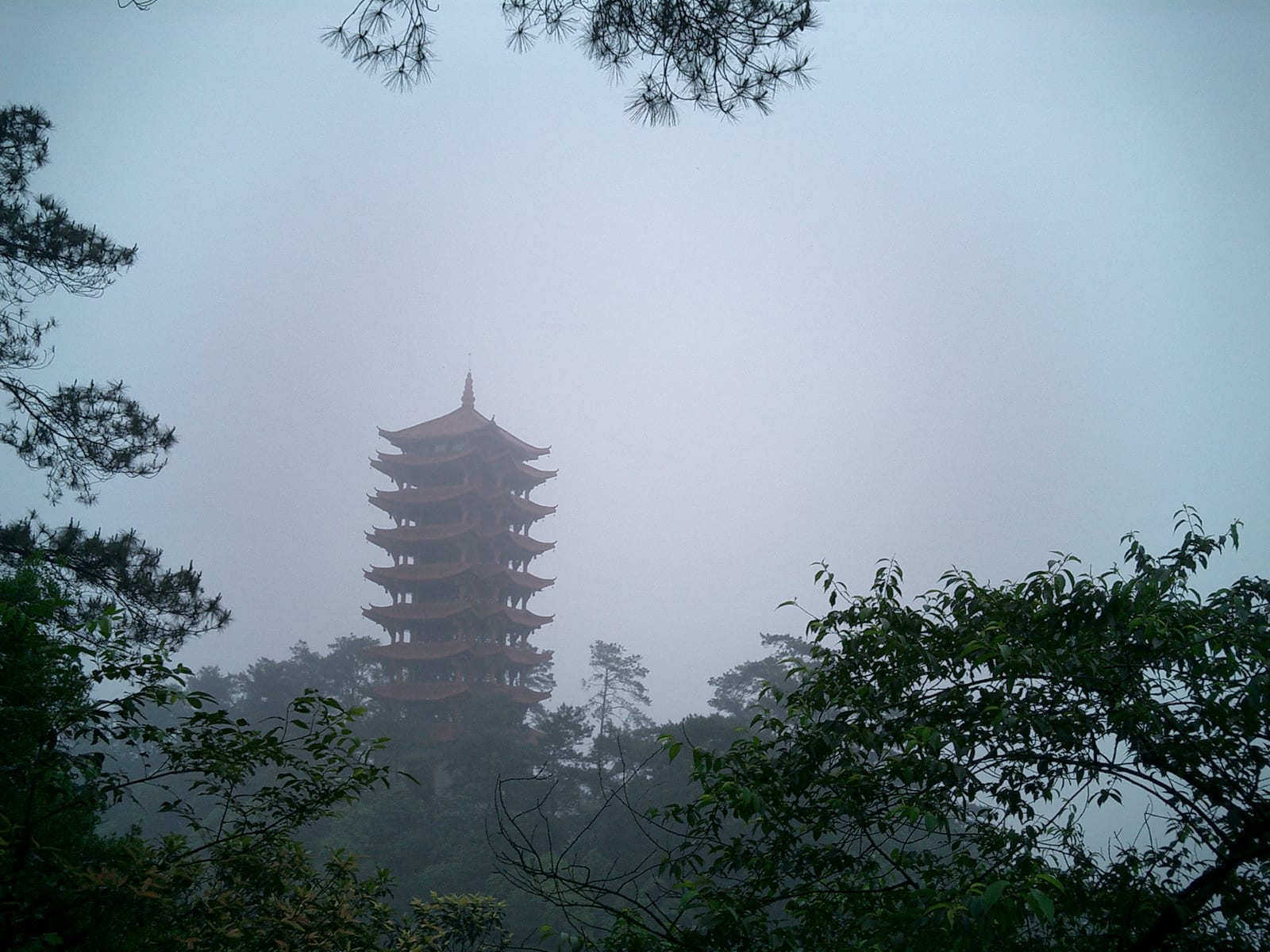
Jinyun Mountain deserves a half or full day for people happy to walk on a mountain route. Use an open trailhead and a verified access plan, then turn back according to your fitness rather than treating a summit as compulsory. Fog and rain slow everything down. Carry water, charge your phone and decide the descent time before climbing. At Jinyun Temple and other religious sites, follow quiet, dress and photography rules. Do not build a rigid plan around a ropeway or shuttle until its current operation is confirmed.
Beiquan: For Rest, Not a Race
Beiquan and nearby hot-spring hotels suit travellers who want recovery rather than a packed sightseeing day. Confirm whether a booking covers park entry, public pools or a hotel private bath, then check time slots, child policies, swimwear requirements and cancellation terms. Hot water is not suitable for every visitor; leave the pool, drink water and rest if you feel unwell. Schedule the bath after your return transport is already settled, not before a rushed train connection.
Jingangbei: A Slow Riverside Visit
Jingangbei is best for a short walk through an old-village environment, architectural observation and riverside atmosphere. It is not an extra stop to squeeze in after a mountain hike. Restoration, business opening and accessible lanes can change, so use local guidance and respect barriers and residents' privacy. First settle how you will arrive and leave from the station or city area, then decide whether to stop for food. In rain, make it a brief visit and put more time into the museum.
Chongqing Museum of Natural History
The museum is Beibei's most controllable half-day option for families, wet weather and visitors interested in natural history. Check reservation requirements, gallery access, storage and activities with the museum. Pick the day's priority galleries first, then add a meal or short nearby walk only if time allows. It is a strong substitute for a weather-cancelled mountain plan, not something to cram into the same tight window as a remote trail. Supervise children and follow touch, flash and eating rules.
One- and Two-Day Plans
On a clear one-day visit, Jinyun Mountain in the morning plus Beiquan in the afternoon can work only when access, transfer and fitness are genuinely comfortable. On a wet day, pair the museum with a short Jingangbei visit and dinner in Beibei. For two days, give Jinyun Mountain its own day and choose two of Beiquan, the museum and Jingangbei for the other. Pianyan Ancient Town and Jindaoxia are distant add-ons that deserve another day.
Transport and Timing
Reach Beibei by the current rail, metro or road options from Chongqing, then treat each destination as a separate transfer. Mountain trailheads, Beiquan, the museum and Jingangbei are not automatically connected just because they share a district. Check the last segment on maps, parking, walking distance and the final public-transport option. Weekends, fog and rain require extra time. Ride-hailing can help but is not a substitute for a confirmed return from a remote direction.
Where To Stay
A Beibei town base is best for food, the museum and flexible choices. A hot-spring hotel suits a bath-centred stay. Mountain lodging is for visitors who have confirmed the next day's trail and transport. At Jingangbei, assess vehicle access, luggage distance, dinner options and cancellation terms before booking a guesthouse. Before an early train or flight, choose a town location that is easy to leave.
Food, Spending and Boundaries
Try Beibei douhua, noodles and Chongqing-style dishes in town rather than crossing a mountain for one meal. Ask about chilli, peanuts, sesame, animal fats and shared cookware when relevant. Check hot-spring packages and tours for what is actually included and keep payment records. Mountain routes require respect for trail closures; riverside areas require respect for wet surfaces and water levels; old villages, campuses and temples each have their own access boundaries. A museum-and-town day is a complete Beibei day when conditions are poor.
Decision Table and Final Checks
Choose Jinyun Mountain when the group wants to walk and accepts weather variability; Beiquan for recovery or a slower pace; Jingangbei for old-riverside architecture and a short observational walk; and the natural-history museum for children, rain or only half a day. Combine the first two only when the trail, both transfers, the group's stamina and the bathing slot are all settled; otherwise give them separate days. Jingangbei is a short stop, while the museum is the most reliable wet-weather substitute.
Before leaving, check the open trail or galleries, the final connection to the entrance, exactly what the hot-spring booking includes, the real hotel-to-station journey for the following day and the group's tolerance for slopes and hot bathing. If any item remains unresolved, use town plus the museum. When rain strengthens, stone paving becomes slippery or a trail closes, do not wait for a possible break or search side roads for a viewpoint. An afternoon decision should stay near the current base and finish before dark. If companions split between activities, agree on a meeting point and latest contact time.