Wan Chai compresses the Victoria Harbour convention district, older residential streets, dining and nightlife, and several forms of Hong Kong Island transport into a small area. In Wan Chai, admission to events, venue access, ferry services, road closures, and typhoon or rainstorm arrangements can change at short notice. Check the organiser, venue, transport operator, and Hong Kong Observatory separately on the day.
Is Wan Chai a Half-Day or Full-Day Stop?
Without a fixed Wan Chai event, allow half a day to a full day for an old-neighbourhood walk plus the harbourfront. Do not force the Hong Kong Convention and Exhibition Centre (HKCEC), Golden Bauhinia Square, the Blue House Cluster, and a Causeway Bay extension into one short visit. On a Wan Chai exhibition day, registration, security, luggage, meals, and the exit journey form the main itinerary; add only one nearby area if time remains.
Wan Chai is not solely a business district. HKCEC and the harbourfront occupy an open, large-scale waterfront, while Queen’s Road East and Stone Nullah Lane retain markets, tong lau buildings, temples, shops, and ordinary residential life. The two zones look close on a map, but footbridges, major junctions, gradients, and event crowds lengthen the walk.
Weather, Typhoons, and Walking Conditions
Spring and summer are humid, and heat, afternoon thunderstorms, and downpours can make a long walk uncomfortable. Hong Kong summers and autumns also require attention to tropical-cyclone and rainstorm warnings as well as changes to ferries and surface transport. A Wan Chai winter is often pleasant for city walking, although the exposed harbourfront can feel much cooler in wind.
Golden Bauhinia Square and Wan Chai Promenade are optional in lightning, strong wind, or a serious weather warning. Use a sheltered shopping centre, restaurant, or confirmed-open indoor cultural space instead. Hong Kong’s rainstorm, thunderstorm, landslip, and tropical-cyclone warnings are separate systems, so read the current advice rather than inferring conditions from one signal. Allow extra time for transport diversions and end the outdoor route before conditions deteriorate.
Areas and Sights: What to Keep and What to Skip
- HKCEC and the harbourfront: HKCEC, Golden Bauhinia Square, Expo Drive Promenade, Wan Chai Promenade, and Wan Chai Ferry Pier make one compact waterfront route. An exhibition or conference hall is not a public attraction: admission, screening, luggage rules, and the accessible area depend on the individual event.
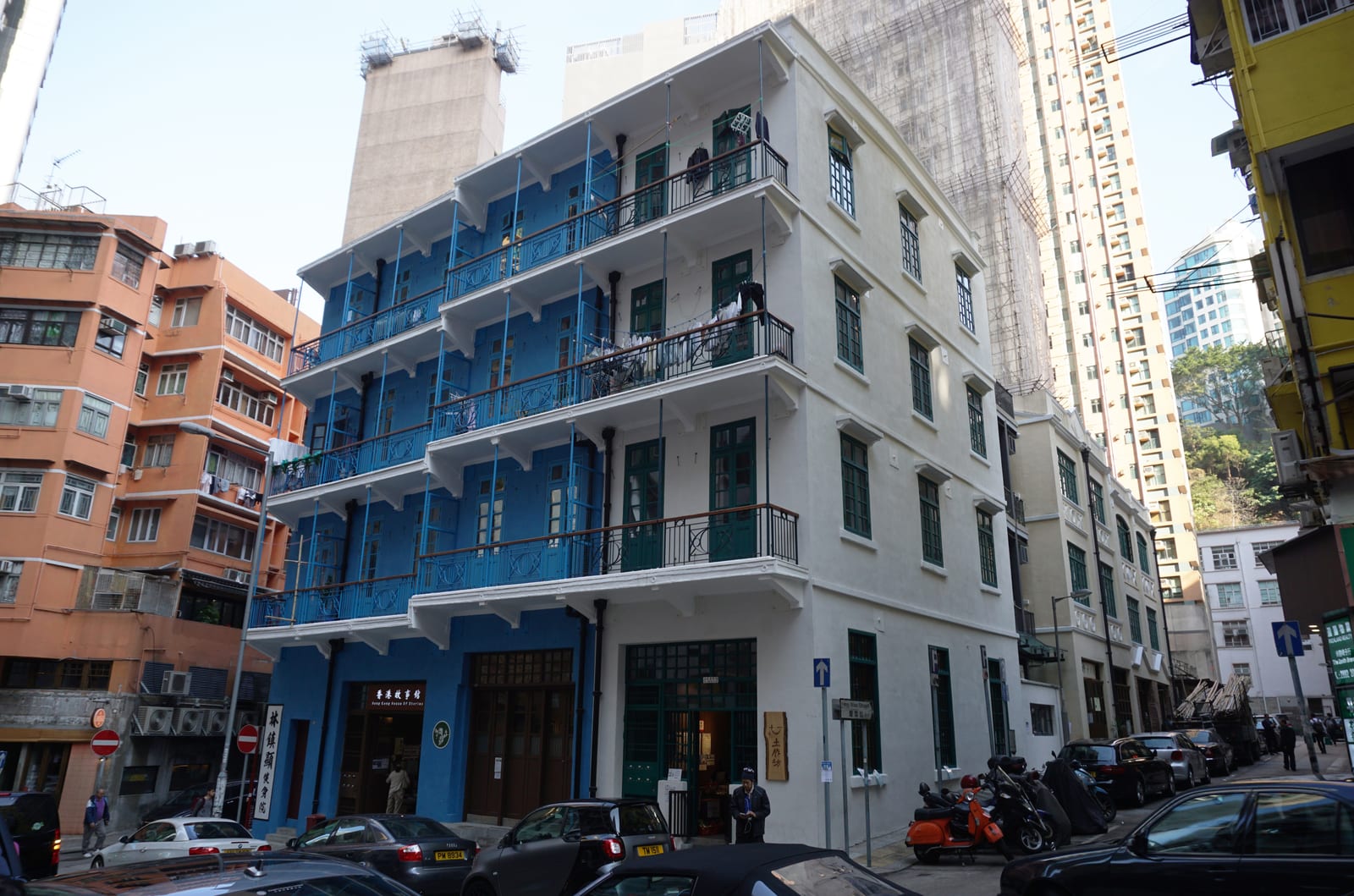
- Blue House Cluster: Blue House, Yellow House, and Orange House stand on Stone Nullah Lane and nearby streets. Parts of the Blue House Cluster remain residential or serve community functions. Check Hong Kong House of Stories exhibitions and tours separately, and do not treat upper residential floors as freely accessible galleries.
- Old Wan Chai: Wan Chai Market, Tai Yuen Street, Spring Garden Lane, Queen’s Road East, and the Pak Tai Temple area show a working neighbourhood. Stallholders, diners, worshippers, and residents are not displays; ask before taking close photographs.
- Dinner and evening streets: Lee Tung Avenue, Ship Street, Johnston Road, and surrounding streets offer restaurants and late-night venues. In Wan Chai, bars are an adult option, not a default family stop. After drinking, do not drive or cycle; plan MTR, a bus, a tram, a licensed taxi, or a vehicle with a current hire-car permit that can be checked through the Transport Department before the evening begins.
- Causeway Bay extension: Causeway Bay is adjacent and useful for a wider shopping or dining plan, but it adds little to a short Wan Chai visit. Travellers attending an event or accompanying children or older people will usually have a better day by staying within the district.
Half-Day to Full-Day Routes
Neighbourhood and harbourfront half-day
Start near Wan Chai MTR Station, walk to the Blue House Cluster and Stone Nullah Lane, then pause around Wan Chai Market or Tai Yuen Street. Continue to the harbourfront or Golden Bauhinia Square only if weather, walking ability, and time allow. In heavy rain, finish in the old neighbourhood instead of making an exposed crossing to Wan Chai North.
HKCEC event day
The confirmed exhibition, conference, or performance determines the day’s timing. Resolve registration, permitted bags, luggage storage, and meals before entry. Afterward, choose either a short harbour walk or dinner in Wan Chai. When a major event empties, MTR entrances, footbridges, bus stops, and taxi boarding points may be managed as separate streams; follow the temporary signs and staff directions.
Slower route for families or older visitors
Divide the Blue House exterior and one level section of the promenade into two short walks with an indoor rest between them. Mark toilets, lifts, and the return station entrance in advance, and avoid a chain of steep streets and crowded footbridges. If fatigue begins, end at the nearer transport option rather than crossing the district for one final sight.
Getting to and Around Wan Chai
Wan Chai Station is on the MTR Island Line and is closer to the old streets and traditional commercial area. Exhibition Centre Station is on the East Rail Line and is closer to Wan Chai North and HKCEC. They are distinct stations, not two names for the same interchange; choosing the wrong one can add footbridges and road-level detours. Check the station layout and destination exit before travelling.
Buses, trams, and licensed taxis supplement east-west movement across Hong Kong Island. Ferry services from Wan Chai Pier connect across Victoria Harbour only according to the operator’s current timetable and weather arrangements; confirm the route before walking to the pier. Hong Kong International Airport, West Kowloon Station, and land-border checkpoints all lie outside Wan Chai, so immigration queues and the cross-district transfer need their own allowance. During major exhibitions, festivals, or road works, use public transport and follow live crowd routing instead of arranging a car to stop at the venue door.
Choosing Accommodation
- HKCEC and Harbour Road: This area suits an early event entrance or late finish, but room rates, breakfast conditions, and cancellation rules may change sharply during major exhibitions.
- Wan Chai Station and Queen’s Road East: These blocks are practical for food and everyday transport. Compare actual room size, sound insulation, window type, deposit, and service charge rather than the district name alone.
- Causeway Bay or Admiralty: Either can support a broader Hong Kong Island itinerary, but check the precise MTR exit, gradients, covered walkways, and luggage route. A short straight-line distance may conceal a tiring transfer.
Before reserving, confirm taxes and service charges, accepted check-in identification, the children’s policy, deposit method, and cancellation terms. During busy exhibition periods, do not buy a privately resold room from a stranger or move payment outside the booking channel.
Food, Payment, and Evening Plans
Wan Chai has cha chaan tengs, Cantonese restaurants, dim sum, roast-meat shops, desserts, bars, and international dining. Before ordering, check any service charge, tea charge, minimum-spend claim, seafood pricing unit, and allergen information. Diners needing vegetarian, low-salt, or ingredient-specific food should ask the restaurant directly; dish names do not establish the broth, sauce, or shared cooking surface.
Octopus and electronic payments are widely used, but acceptance differs at small businesses, so keep a backup payment method. Retain the itemised bill and digital payment record, and raise a price discrepancy first with the business or premises management. For a late departure from a bar or show, stay with companions, protect phones and identification, and use MTR, a night bus where suitable, a licensed taxi, or a vehicle whose current hire-car permit can be checked through the Transport Department. If a new ride-hailing licensing regime has begun issuing licences, also verify the platform, vehicle and driver as required at the time. Confirm the vehicle registration and destination before boarding. Alcohol and fatigue both impair route judgement; when either becomes significant, cancel the next venue and return to the hotel.
Exhibitions, Tours, and Tickets
HKCEC is a venue rather than the organiser of every activity inside it. Tickets, identity requirements, prohibited items, photography, child admission, seating, and refunds must be checked on the page for the specific exhibition, conference, or performance. Blue House community programmes, Hong Kong House of Stories opening, and guided tours also have separate arrangements. A building visible from the street is not proof that its interior is open.
Buy only through the organiser, venue, or an explicitly authorised ticket platform. Treat alleged staff passes, “internal” credentials, queue-skipping access, and requests for immediate private transfer as warning signs. Before payment, verify the organising body, ticket category, entry time, seat where applicable, and refund conditions.
Safety, Respect, and an Exit Plan
- In a tropical cyclone, rainstorm, thunderstorm, or strong wind, shorten or cancel harbourfront time and check MTR, bus, ferry, and flight information again before moving.
- When HKCEC or a festival crowd disperses, do not stop for photographs at fare gates, escalator landings, footbridge junctions, or the centre of a passage. Companions should agree on a reunion point before entry.
- The Blue House Cluster and old streets remain homes and places of business. Do not block doors, enter non-public floors, or pursue residents with telephoto photography.
- Wet paving, footbridges, and slopes require extra care with children, older people, wheelchairs, prams, or luggage. Finish at the nearest safe station or taxi point when mobility declines.
- At night, secure identification and phones, keep drinks in sight, and avoid isolated shortcuts. If alcohol, illness, or fatigue affects judgement, the only remaining task is a safe return.