Hong Kong's Islands District is a collection of very different communities rather than a single island that can be covered on one loop. Lantau, Cheung Chau, Lamma Island and Peng Chau each need their own plan. Across the district, ferry capacity, weather warnings, last-mile connections on Lantau and the return journey matter more than the number of sights on a list.
Destination Fit
The district suits travelers who want a slower counterpoint to central Hong Kong, families planning one focused Lantau day, and walkers comfortable organizing a day around ferry times. Cheung Chau is the easiest first island: its pier, market streets, temples and short coastal walks form a coherent day. Lamma is better for a point-to-point village and trail walk. Peng Chau is smaller and quieter, while Lantau is so large that Tung Chung, Ngong Ping, Tai O, Mui Wo and the southern coast must be treated as separate zones.
A rushed half-day is rarely worthwhile once pier access and waiting time are included. Travelers using wheelchairs, strollers or frequent rest stops should check the actual vessel, gangway, bus access, gradients and paving at both ends. A place that looks close on a map may still involve stairs, narrow lanes or an infrequent connection.
When to Go
Cooler, clearer days are best for island walking. Summer visits still work if the plan stays close to a pier or includes only a short maintained trail. From May to November, thunderstorms, heavy rain, tropical cyclones, strong monsoon winds and very hot weather can independently disrupt ferries, cable cars, beaches and hill routes. The absence of a high typhoon signal does not by itself make hiking or swimming safe.
Winter sea winds can feel much colder while passengers wait at exposed piers, so carry a windproof layer. In hot weather, leave early, bring enough water and define a turnaround point before starting a trail. Beach opening, red flags and lifeguard service must be checked with the Leisure and Cultural Services Department for the specific day; these services are not guaranteed all year or all day.
Choosing the Right Stops
Choose Cheung Chau for a relaxed first island day based around the pier, Pak Tai Temple, Tung Wan and a manageable section of coast. Choose Lamma Island if the main experience is the walk between Yung Shue Wan and Sok Kwu Wan. Check the Yung Shue Wan and Sok Kwu Wan ferry schedules before starting. Choose Peng Chau for compact lanes and local island life rather than headline attractions.
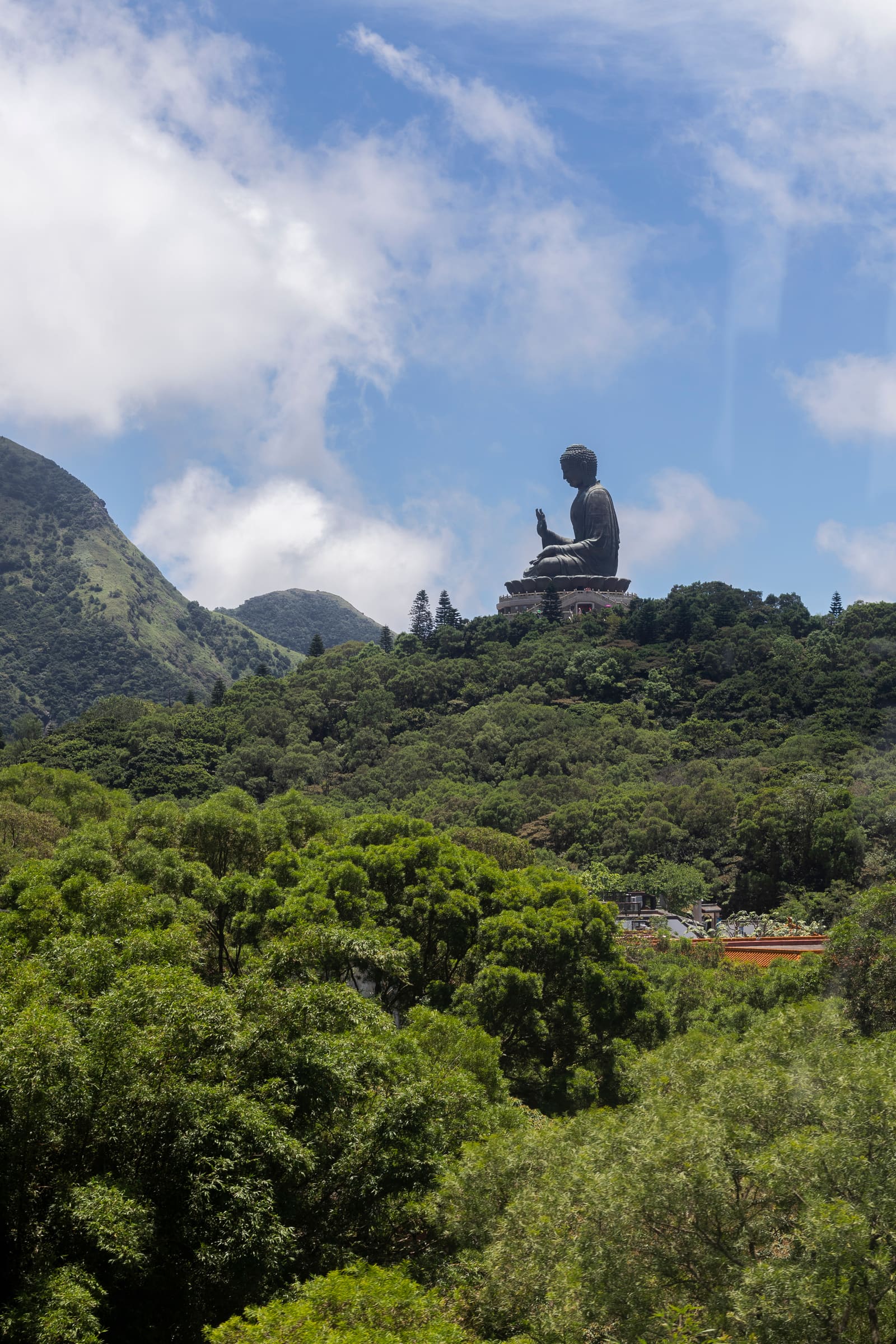
Split Lantau by theme. Ngong Ping, the Big Buddha and Po Lin Monastery belong together; Tai O is another zone; Mui Wo and the southern beaches form a third. Lantau is too large for a checklist approach: trying to combine Ngong Ping, Tai O, Mui Wo and another island makes transfers dominate the day. Disneyland also deserves its own full day. The cable car, Wisdom Path and country-park routes may close for maintenance or weather, so verify each facility rather than assuming the whole area is open.
Practical One-Day Itinerary
For the most straightforward first day, take the ferry from Central Pier 5 to Cheung Chau in the morning. On arrival, identify the return gate and at least one backup sailing before exploring the market streets, Pak Tai Temple and Tung Wan. On Cheung Chau, eat near the town center, then choose one short coastal section in the afternoon. If heat, rain or fatigue increases, remain near the pier and return early. Ordinary passengers may need to wait for a later sailing when a departure is full, so do not schedule an inflexible evening appointment immediately after the theoretical arrival time.
A Lamma day can begin at Central Pier 4 for Yung Shue Wan, continue through the village and along the maintained Family Walk toward Sok Kwu Wan, then return to Central from that pier. Save both sets of ferry times, check sunset and carry water. In thunderstorms, extreme heat or poor trail conditions, make it a Yung Shue Wan out-and-back visit instead of forcing the crossing.
Two Days or Longer
For two Lantau days, use Tung Chung or a verified licensed island property as the base. On day one, travel overland from Tung Chung to Tai O, explore the public lanes and waterfront without intruding on homes, then return to Tung Chung. On day two, go from Tung Chung to Ngong Ping and visit the areas confirmed open. Continue toward Mui Wo only if a suitable bus and ferry connection has been checked; otherwise return to Tung Chung by the established route.
A third day can add Cheung Chau or Peng Chau. The inter-island service linking Peng Chau, Mui Wo, Chi Ma Wan and Cheung Chau exists, but it runs far less frequently than the main Central routes. Build a two-island day around a specific sailing and a clear fallback. Do not add a third island on impulse, and always protect the final connection before extending an intermediate stop.
Getting There and Moving Around
Pier numbers are part of the navigation. Central Pier 5 serves Cheung Chau; Central Pier 6 serves Mui Wo and Peng Chau; different berths at Central Pier 4 serve Yung Shue Wan and Sok Kwu Wan on Lamma. Recheck the operator, gate-closing time, Sunday or public-holiday schedule and last practical return. A Hong Kong Transport Department notice says that, from 1 April 2026, all former ordinary-ferry sailings on the Central-Mui Wo and Central-Peng Chau routes became fast-ferry sailings; older vessel and fare advice is therefore unreliable. That change does not prove that bicycles, bulky luggage or assisted boarding are handled as they were on an ordinary ferry. Travellers with those needs should check both the current Transport Department service table and the operator's rules for acceptance, charges, size or quantity limits, arrival time and boarding assistance. If carriage cannot be confirmed, choose a sailing or overland route with explicit conditions instead of arriving at the gate with a bicycle or large bag.
Tung Chung is the main land-transport hub for much of Lantau. Check New Lantao Bus times, stop locations and diversions before traveling to Tai O, Ngong Ping or Mui Wo. If the Ngong Ping cable car is central to the day, keep a bus alternative. Octopus is convenient, but payment methods for small businesses and individual services still need confirmation. With luggage, steps, narrow lanes and bus storage can be more important than the headline journey time.
Where to Stay
For a single island day, staying near Central or on a convenient Hong Kong Island MTR line makes the early pier transfer easier. For a Lantau-focused visit, Tung Chung offers practical transport, supplies and airport access. Before booking in Cheung Chau, Mui Wo, Tai O or another island community, verify that the property appears in the Home Affairs Department's licensed hotel, guesthouse, holiday-flat or holiday-camp records. Then confirm the exact address, pier distance, late check-in, accessibility and cancellation terms.
A booking-platform listing or a familiar-sounding name does not replace a license check. Do not assume frequent late-night transport. If the following morning involves a flight, border crossing or important reservation, spending the final night in Tung Chung or urban Hong Kong usually protects the journey. The purpose of an island overnight is to slow down, not to add more transfers.
Food Planning
Cheung Chau, Lamma, Mui Wo, Peng Chau and Tai O have clusters of seafood restaurants, snack stalls, cafes and cha chaan tengs, but opening days and stock change. For seafood, ask for the pricing unit, weight, cooking method, preparation charge and service charge before ordering, then confirm the total. Treat market price as a reason to ask, not as permission to skip the price discussion.
Do not depend on a remote trail section for lunch. Carry water and a simple backup snack. Travelers with seafood, peanut, nut or dairy allergies should state the allergy clearly and ask about shared cooking surfaces. In hot weather, avoid carrying perishable food for hours, and stop outdoor activity if stomach illness or dehydration begins.
Booking and Final Checks
Check the Hong Kong Observatory, Transport Department ferry information, operator notices, New Lantao Bus, Ngong Ping facilities and beach notices on the evening before travel and again in the morning. Save the intended sailing, one earlier or later alternative, the correct pier and the return plan offline. Do not assume that main island ferries can always be reserved or that boarding is guaranteed; on routes such as Central to Cheung Chau, a full sailing can mean waiting for the next departure.
For boat tours, accommodation, festivals or paid experiences, use the operator or an authorized channel and read the cancellation terms, meeting point and identification requirements. Do not rely on an old fare table or a social-media screenshot of the last ferry. If the forecast is worsening, simplify the route before leaving rather than trying to solve a multi-island day at the pier.
Safety and Local Etiquette
Use maintained, open trails and avoid walking alone on remote routes. Tell someone the route and expected return. Do not hike, swim or join nonessential water activities during thunderstorms, heavy rain, strong winds or tropical-cyclone warnings. A red flag, absent lifeguard service or a closure notice means staying out of the water. Rocky shores, wet boulders and unmanaged coastline are not viewing platforms; never cross barriers for a photograph.
Island villages are residential communities. Keep noise down in Tai O stilt-house lanes, Cheung Chau alleys and Lamma villages. Do not photograph directly into homes, enter private piers or courtyards, feed wildlife or leave litter. Follow temple and fishing-community rules. A successful island day ends with an unhurried walk back to the correct pier, not a race against the final connection.