Hunan covers a large area, and conditions differ sharply among its mountains, lake country and cities. Across a Hunan route, attraction reservations, cableways, shuttles, water levels, road controls and performances can change, so consult current official notices for every stop before departure.
Divide Hunan into Travel Corridors
Hunan does not work well as a straight line from the provincial capital through every famous sight and back. A common first trip combines Changsha with Zhangjiajie, then adds either Fenghuang or Furong Town. Travellers who want fewer long transfers can build a Huxiang culture route around Changsha, Shaoshan and Yueyang. Nanyue Mount Heng provides a separate route for religious culture and mountain walking. From southern China, Chenzhou can anchor a southern-Hunan trip focused on one of Dongjiang Lake, Mangshan or Gaoyiling.
Zhangjiajie, Xiangxi, Yueyang, Nanyue and Chenzhou are far enough apart that they should not be treated as neighbouring day trips. In Hunan, choose one main corridor and designate one extension that can be dropped. For a Changsha–Zhangjiajie trip, that structure is more resilient than changing hotels repeatedly in an attempt to “cover” the province.
How Season and Weather Affect the Route
Rain increases in spring, and cloud around Zhangjiajie or Nanyue can soften a mountain view or obscure it completely. A Hunan summer combines urban heat with strong convective weather; mountain thunderstorms, changing lake levels and heat illness in the cities all deserve attention. Around Zhangjiajie and Nanyue, autumn is generally comfortable for longer walks, although popular weekends concentrate visitors. At mountain summits and Dongting wetlands, winter adds cold, ice, wind and possible facility maintenance.
Do not infer the current shoreline of Dongting Lake or its tributaries from old photographs. At Dongting Lake, birdwatching, boat trips and waterside activities depend on same-day access, water level and wind. For Zhangjiajie or Nanyue, keep an indoor or city alternative each day; waiting for the cloud to lift should never jeopardise the safe journey back.
Changsha as a Starting Point
One or two days in Changsha establish useful context for the rest of the province. Hunan Museum, Yuelu Mountain and Yuelu Academy, Orange Isle and the central neighbourhoods each have a distinct pace, so there is little benefit in forcing all of them into one day. Check the museum reservation separately, select a Yuelu route that matches your walking capacity, and follow same-day instructions for Orange Isle shuttles or temporary controls.
Taiping Street, Chaozong Street and similar neighbourhoods combine residents' lives, historic buildings and commercial premises. On Taiping Street or Chaozong Street, ask before photographing people, the interior of an old house or a working business. During a Changsha evening, prices, portions and queue rules matter more than a restaurant's online fame; a long wait is always removable.
Allow Enough Time for Zhangjiajie
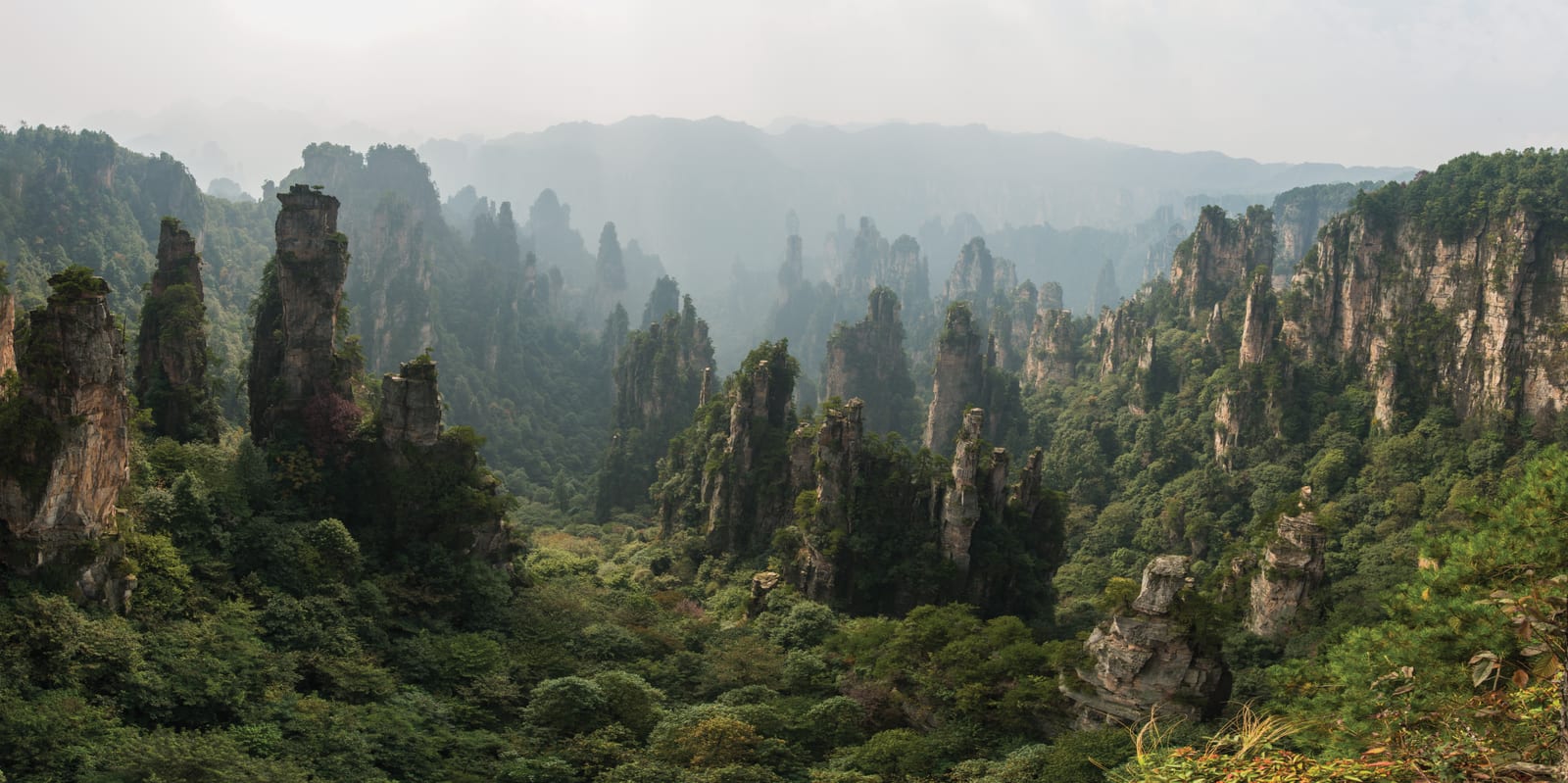
Wulingyuan Scenic Area and Tianmen Mountain operate as separate visitor systems. Between Wulingyuan and Tianmen Mountain, tickets, entrances, transport arrangements and exposure to weather all differ. On a first trip, allow Wulingyuan two complete sightseeing days before deciding whether to add Tianmen Mountain. Around Zhangjiajie, cableways, glass attractions and canyon projects should not be assumed to share one pass or entrance.
In Wulingyuan, choose a route only after checking the open areas, shuttle order and final return connection, then reduce it to match fitness. At Tianmen Mountain, dense fog, high wind, lightning or ice are reasons to leave exposed facilities and closed paths out of the day. Around Zhangjiajie, offers of local guidance for free admission or a queue bypass can lead away from managed access and should be declined.
Slow Down in Xiangxi
An overnight in Fenghuang Ancient Town reveals the difference between early morning, daytime and evening. Furong Town, Dehang and Aizhai should be selected according to transport and interest rather than compressed into the same day. These towns and villages contain tourism businesses alongside homes and living ethnic cultures. Permission comes before photographing traditional clothing, a ceremony, a private courtyard or a child.
Rail and road links between Zhangjiajie and Xiangxi have made the intercity leg easier, but there is still a last-mile journey from the station to the old town or accommodation. Before an evening arrival in Fenghuang, confirm the pickup point. In Xiangxi, unlicensed drivers and low-priced transfers tied to shopping create more difficulty than they solve.
Yueyang, Dongting Lake and Shaoshan
Yueyang supports one or two days around Yueyang Tower, the urban waterfront and the culture of Dongting Lake. Access to Junshan Island or a water route depends on water level, wind, navigation and attraction operations, so neither should be treated as a fixed year-round excursion. Qu Yuan heritage in Miluo is an independent extension with its own return journey.
Shaoshan and its memorial venues work best as a dedicated trip from Changsha. Confirm real-name reservations, transfer points and the expected visiting order in advance. Memorial spaces call for quiet conduct rather than posed photographs, and promises of entry without a reservation should be ignored. Historical understanding should come from documented facts, exhibitions and formal interpretation, not sensational or entertainment-led retellings.
Nanyue Mount Heng and Southern Hunan
Allow one or two days for Nanyue Mount Heng. Hiking routes, scenic-area transport, religious sites and summit weather each need their own check. Spending connected with worship should remain voluntary, clearly priced and receipted. Inside temples, keep voices low and do not pay an unidentified intermediary to arrange rituals or sell expensive incense.
From Chenzhou, choose one direction among Dongjiang Lake, Mangshan and Gaoyiling; the attractions are not close to one another. Mist, sunrise and mirror-like water depend on conditions and cannot be promised as part of a photography trip. Langshan lies towards Shaoyang and also deserves a route of its own rather than being forced into a Chenzhou or Zhangjiajie itinerary.
Routes from Three to Ten Days
Three days in and around Changsha: spend one day at Hunan Museum and in city neighbourhoods, one around Yuelu Mountain and Orange Isle, then choose either Shaoshan or Yueyang. The route suits visitors who prefer not to change hotels.
Five or six days for a first visit: give Changsha one or two days and Wulingyuan two days, then use one or two days for either Tianmen Mountain or Fenghuang. In poor weather, protect the city and old-town portions while keeping exposed mountain activities refundable or removable.
Seven or eight days through greater Xiangxi: combine Changsha, Zhangjiajie and Fenghuang, adding either Furong Town or Aizhai. Stay at least one night after every move to a new city so that luggage does not accompany a rushed sightseeing day.
Eight to ten days in two regions: choose two groups from Changsha with Yueyang, Zhangjiajie with Xiangxi, and Changsha with Nanyue and Chenzhou. Joining all three is ill-advised without substantial self-driving experience and planned rest days.
Arrival and Intercity Transport
Changsha is Hunan's principal air and rail hub, while Zhangjiajie, Xiangxi, Hengyang, Yueyang and Chenzhou also have useful rail nodes. Reaching a city is not the same as reaching a scenic-area gate. Before purchasing, check the station's Chinese name, the accommodation address, the correct entrance and the last-mile connection together. Holiday traffic controls, parking arrangements and ride-hailing pickup areas may change at short notice.
Self-driving plans need slack for mountain roads, tunnels, intense rain and driver fatigue. For a chartered car or tour, choose a licensed travel agency and a qualified vehicle. The written contract should identify attractions, accommodation, meals, shopping, insurance, cancellation and extra charges. “Free tours,” health-themed trips or packages priced implausibly below cost often depend on compulsory shopping and are best avoided.
How to Choose Accommodation
In Changsha, choose a district for its Metro connection and the next day's route. Near an entrance to Wulingyuan, accommodation can reduce early and late transfers; Zhangjiajie city is more convenient for Tianmen Mountain and transport connections. The edge of Fenghuang Ancient Town is often quieter and easier to reach by vehicle. In Yueyang, Hengyang and Chenzhou, a central base near the station or main route is usually the practical choice.
For mountain and old-town properties, verify stairs, soundproofing, damp control, hot water, luggage assistance and a clear fire escape. “Inside the scenic area” does not guarantee proximity to the entrance you intend to use. Check the actual walking route on a map before booking and save the cancellation terms.
Hunan Food and Night Markets
Rice noodles, stinky tofu, chopped-chilli fish head, cured meats and local stir-fries are better spread across several meals than treated as a checklist. Hunan dishes can be intense in chilli, oil and salt; children, older diners and anyone with a sensitive stomach can begin with one or two milder dishes. For fish, river produce and market-priced ingredients, ask how the price is calculated and what portion will arrive. At a night market, favour food that is cooked through, prepared to order and clearly priced.
“Not spicy” is not a complete allergy instruction. Anyone avoiding peanuts, sesame, shellfish or fermented ingredients should ask directly about recipes and cross-contact. Unidentified wild mushrooms, homemade medicinal alcohol and local products claiming to cure illness do not belong in a safe food purchase.
Reservations, Etiquette and Safety
Museums, mountain parks, cableways, performances, memorial venues and water activities may each use a separate booking system. Use an official or verifiably authorized channel, and retain the order, cancellation terms and customer-service details. In the mountains, stay on marked routes and behind barriers. Around lakes and rivers, avoid unmanaged shorelines and boats without operating credentials.
When lightning, dense fog, a flood warning, a geological-hazard alert or a facility suspension appears, revise the route before considering money already spent. Historic villages and ethnic-cultural places require respect for residents and ritual boundaries; memorial venues require solemn conduct. If a dispute arises, preserve the contract, receipts, messages and on-site evidence, then take the matter to the operator, booking platform or relevant public service channel.