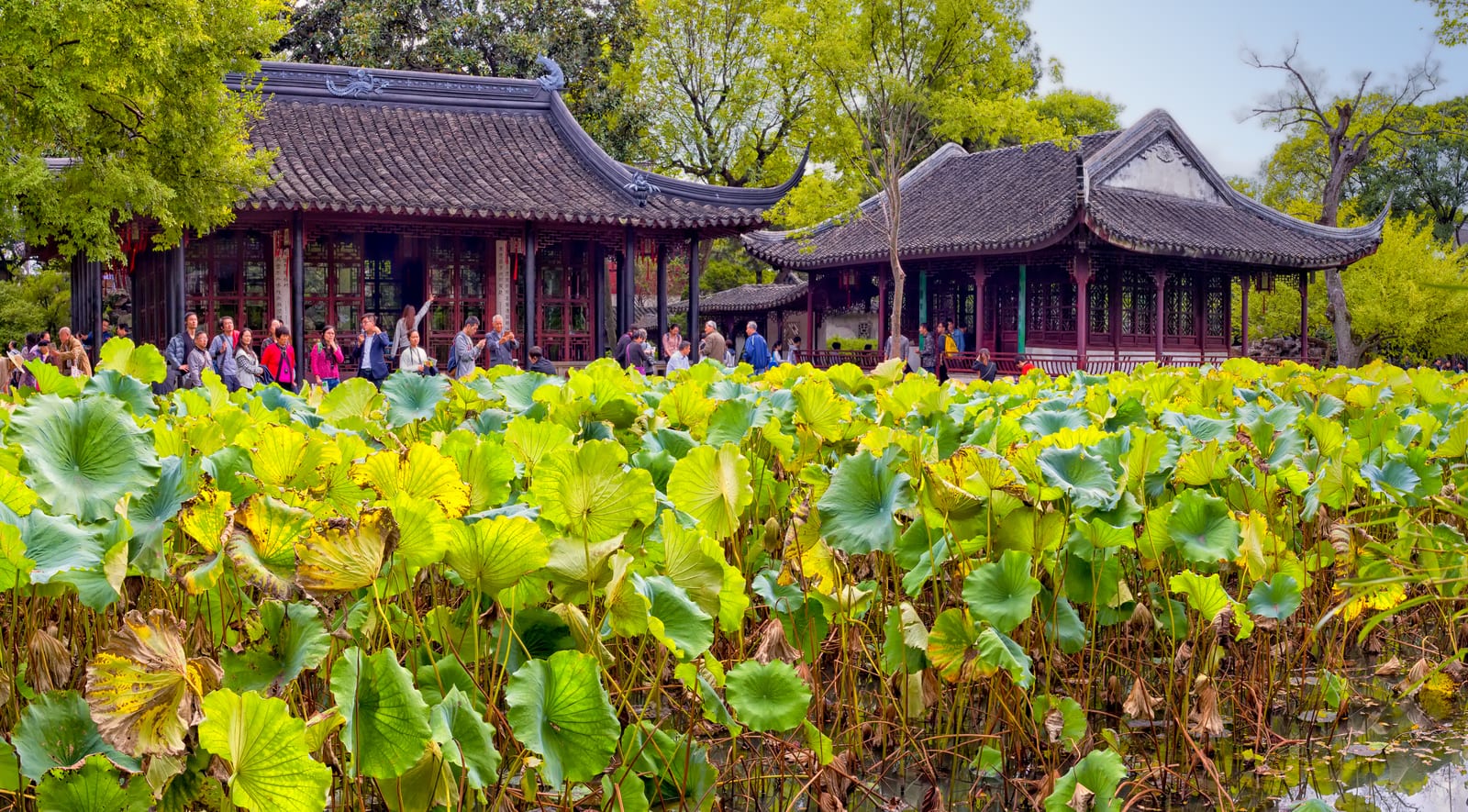
Jiangsu rewards selective planning. Nanjing’s imperial and modern history, Suzhou’s classical gardens, Yangzhou’s canal culture, Wuxi’s Lake Tai scenery, Xuzhou’s Han heritage and Yancheng’s Yellow Sea wetlands belong to distinct parts of the province. A first trip is better built around one or two of these themes than around a rushed circuit of every major city.
Before You Go
- Recheck admission rules, opening days, timed-entry reservations, transport connections and weather alerts shortly before each visit.
- Read hotel cancellation terms and ticket inclusions before paying. Use venue websites, official accounts or clearly authorised booking platforms.
- Leave a fallback plan for mountain paths, wetlands, islands, boat trips, memorial sites and evening activities. Weather or crowd controls can change access at short notice.
1. Understanding Jiangsu
Jiangsu lies on China’s east coast, crossed by the Yangtze River, the Huai River and the Grand Canal. Nanjing is the provincial capital; Shanghai and Zhejiang border the province to the southeast, Anhui to the west, Shandong to the north and the Yellow Sea to the east.
Jiangsu has many national historic and cultural cities, including Nanjing, Suzhou, Yangzhou, Xuzhou, Zhenjiang, Huai’an, Wuxi, Nantong, Changshu, Changzhou, Yixing, Gaoyou, Taizhou and Xinghua. The directory changes through State Council approvals. When eligibility matters or you are planning a themed route, use the State Council approval and the current directory published by the housing and urban-rural development authority rather than a static total on this page. Together these cities reflect the intertwined traditions of Jiangnan, the Grand Canal, the lower Yangtze, Huaiyang culture and the Han heartland around Xuzhou.
Spring and autumn are generally the easiest seasons for city walks and garden visits. The plum-rain period can be humid and slippery, summer is hot, and winter often feels damp and cold. Typhoon-related weather can also affect the coast and transport even when the storm centre is elsewhere.
How to choose a region
- History and museums: Nanjing, Yangzhou and Zhenjiang form a practical rail-based route.
- Gardens, water towns and Lake Tai: combine Suzhou and Wuxi, then choose one water town for a separate half- or full-day visit.
- Han history and the Grand Canal: pair Xuzhou with Huai’an on a separate northern Jiangsu trip.
- Wetlands, coast and mountain scenery: link Yancheng and Lianyungang only after checking the final ground connections and weather.
Travel between southern, central and northern Jiangsu takes longer than the map may suggest. Let the weakest connection—and the last ride back—set the limit of each day.
2. Essential Destinations
Nanjing
Nanjing is the best introduction to Jiangsu’s long historical range. The Zhongshan Scenic Area brings together Sun Yat-sen Mausoleum and the Ming Xiaoling Mausoleum on Purple Mountain. Treat it as a substantial walking day, and check the current reservation and opening arrangements for Sun Yat-sen Mausoleum.
In the city, choose between the Nanjing Museum and the Presidential Palace rather than hurrying through both. The Memorial Hall of the Victims in Nanjing Massacre by Japanese Invaders requires time, attention and respectful conduct. Xuanwu Lake offers a gentler outdoor break, while the Confucius Temple–Qinhuai River area is liveliest in the evening. Niushou Mountain is farther from the historic centre and works better as a dedicated half- or full-day excursion.
Suzhou
Suzhou’s UNESCO-listed classical gardens reward slow looking. The Humble Administrator’s Garden, Lingering Garden, Lion Grove Garden, Master of the Nets Garden and Canglang Pavilion differ in scale and spatial design; two gardens in one day are usually enough. Pair one with Suzhou Museum, Pingjiang Road or Shantang Street.
Tiger Hill is known for Yunyan Temple Pagoda and its layered historical landscape. Jinji Lake presents a very different, contemporary side of Suzhou. Zhouzhuang and Tongli are outside the old city and require separate transfers, so choose one water town unless the trip is specifically devoted to canal settlements.
Yangzhou
Yangzhou combines Grand Canal history, gardens and one of China’s most distinctive breakfast traditions. Slender West Lake is the city’s signature scenic area; Ge Garden and He Garden show two distinctive approaches to late-imperial private garden design. Dongguan Street and the surrounding old-city lanes are best explored on foot, while Daming Temple adds a major Buddhist and cultural site.
Plan morning tea as an experience rather than a quick meal. A leisurely breakfast followed by one garden and an old-city walk is more satisfying than forcing every major sight into the same day.
Wuxi and Lake Tai
Yuantouzhu is one of the best-known Lake Tai landscapes and is especially busy during its spring blossom season. Huishan Ancient Town and the Grand Canal area around Nanchang Street offer a more urban, historical counterpoint.
The Lingshan Buddhist cultural complex and nearby Nianhua Bay sit away from central Wuxi. Check performance times, transport and the last return before committing to both. Yixing, administered by Wuxi, is a separate destination for purple-clay pottery, bamboo landscapes and caves.
Zhenjiang
Zhenjiang sits where the Yangtze and Grand Canal narratives meet. Jinshan, Jiaoshan and Beigushan each frame the river differently; select two if arriving from another city. Xijindu preserves the atmosphere of an old ferry and trading quarter and works well later in the day.
Water towns and the wider province
Zhouzhuang, Tongli and Luzhi share canals, stone bridges and old lanes, but they are not interchangeable. One well-timed overnight stay can reveal more than a same-day checklist of several towns.
Beyond the usual southern Jiangsu circuit:
- Xuzhou has a dense concentration of Han-period remains, including the Guishan Han Tomb and the tomb-and-warrior complex at Lion Mountain.
- Huai’an connects Grand Canal history with the Zhou Enlai Hometown scenic area and Hexia Ancient Town.
- Yancheng is the gateway to the Yellow Sea wetlands and the Chinese Milu Park.
- Lianyungang combines Huaguo Mountain with the coast and Liandao Island.
- Nantong offers the Hao River and Langshan area; Changzhou is known for major theme parks and Tianning Temple.
- Suqian adds Hongze Lake Wetland and canal-themed attractions, while Taizhou and nearby Xinghua open onto the lakes and waterways of the Lixiahe region.
3. Suggested Routes
Nanjing, Yangzhou and Zhenjiang: 4 days
- Day 1: Sun Yat-sen Mausoleum and Ming Xiaoling Mausoleum; add the Qinhuai area only if energy allows.
- Day 2: Choose the Nanjing Museum or Presidential Palace, then Xuanwu Lake or the Qinhuai River.
- Day 3: Travel to Yangzhou for Slender West Lake, one private garden and an old-city walk.
- Day 4: Continue to Zhenjiang and choose only one or two of Jinshan, Jiaoshan and Beigushan. Work backwards from the train already booked, either retrieve luggage from the hotel or use a legitimate left-luggage point closer to the station, and preserve enough time for city transport, station security and boarding. Drop Xijindu when the departure is early.
Suzhou and Wuxi: 5 days
- Day 1: Humble Administrator’s Garden, Suzhou Museum and Pingjiang Road.
- Day 2: Tiger Hill, Lingering Garden and Shantang Street.
- Day 3: Choose Zhouzhuang or Tongli; stay overnight if quiet evening and early-morning streets matter to you.
- Day 4: Travel to Wuxi for Yuantouzhu and Huishan Ancient Town.
- Day 5: Choose the Lingshan complex or central Wuxi’s Grand Canal neighbourhoods before departure.
A first-time Jiangsu circuit: 7 days
Spend two days in Nanjing, one in Yangzhou, one in Zhenjiang, one in Wuxi and two in Suzhou. This is already a full itinerary. Build Xuzhou–Huai’an or Yancheng–Lianyungang as a separate trip rather than adding either pair at the last minute.
4. What to Eat
Jiangsu cooking changes noticeably from city to city, and meals are part of the route rather than an afterthought.
- Nanjing: salted duck, duck-blood vermicelli soup, beef pot stickers and sweet osmanthus-flavoured snacks.
- Suzhou: squirrel-shaped mandarin fish, quick-fried eel shreds, Suzhou-style noodles, seasonal pastries and dishes associated with Lake Tai.
- Yangzhou: morning tea with three-diced buns, jade shumai and layered oil cake; Huaiyang classics include boiled shredded dried tofu, lion’s-head meatballs and Yangzhou fried rice.
- Wuxi: Wuxi-style soup dumplings, braised spare ribs and sweet-savoury local cooking.
- Zhenjiang: pot-cover noodles, crystal pork and vinegar-accented dishes.
For lake or river fish and any dish sold at a market price, confirm the unit, preparation charge and total before ordering. Tell the restaurant about allergies, alcohol restrictions or other dietary needs explicitly. Popular morning-tea houses and Huaiyang restaurants may require advance reservations during holidays.
5. When to Visit
Spring suits gardens and flowering landscapes in Nanjing, Suzhou, Yangzhou and Wuxi, but peak bloom dates vary each year. Autumn usually brings comfortable walking weather and foliage around Purple Mountain and Suzhou’s western hills. Both seasons are busy during public holidays.
Summer in Nanjing and Suzhou is hot and humid. Along the Yellow Sea, thunderstorms can disrupt Yancheng wetland visits and Lianyungang coastal transfers. Start outdoor visits early and use museums for midday breaks. Winter is quieter but can feel colder than the temperature suggests because of the damp; hot-spring stays around Tangshan are one possible add-on.
6. Transport
Nanjing Lukou International Airport is a major gateway. Airports serving Wuxi, Yangzhou–Taizhou, Changzhou, Nantong, Xuzhou and Lianyungang may be more convenient for a regional itinerary once ground transfers are included.
Rail is usually the simplest way to connect the major cities. The Shanghai–Nanjing corridor links Suzhou, Wuxi, Changzhou and Zhenjiang with Nanjing, while the wider network reaches all 13 prefecture-level cities. Check the exact station name: Suzhou and Suzhou North, or Wuxi and Wuxi East, are not interchangeable.
Within cities, combine metro, bus, walking and licensed ride-hailing. Historic lanes and the approaches to popular gardens are often poor places to rely on a car. For water towns, wetlands, islands and mountain sites, research the final transfer and last departure before buying the intercity ticket.
7. Culture and Living Traditions
Kunqu opera originated around Kunshan and is inscribed on UNESCO’s Representative List of the Intangible Cultural Heritage of Humanity. Check current programmes at professional theatres, the Kunqu Opera Museum and seasonal garden performances.
Suzhou pingtan combines storytelling and ballad singing in the local dialect. In Yangzhou, Huaiyang cuisine expresses a culture of precise knife work, balanced flavours and careful seasonality; the city is part of UNESCO’s Creative Cities Network as a City of Gastronomy. Suzhou silk and Yixing purple-clay pottery offer further routes into the province’s craft traditions.
8. World Heritage and 5A Scenic Areas
Jiangsu’s UNESCO World Heritage-related destinations include the Classical Gardens of Suzhou, the Ming Xiaoling Mausoleum as part of the Imperial Tombs of the Ming and Qing Dynasties, components of the Grand Canal, and components of the Migratory Bird Sanctuaries along the Coast of Yellow Sea-Bohai Gulf of China in Yancheng.
The Ministry of Culture and Tourism’s public-service directory includes national 5A tourist attractions across Jiangsu, covering historical and urban sites, gardens and water towns, lakes and wetlands, mountain and coastal destinations, and theme parks. Names, ratings and component boundaries can change. After choosing a destination, confirm its current full name in the Ministry directory and then use the attraction’s same-day notice for opening, combined-ticket and included-area details instead of relying on a static count on this page.
A 5A rating applies to a defined scenic area, not automatically to every attraction in the same city. Combined tickets and included sub-sites can change, so consult the current Ministry directory and the attraction’s own notice rather than relying on an old copied list.
9. Booking, Accommodation and Safety
Where to stay
In Nanjing, choose among the central commercial district, the Qinhuai area and a well-connected railway-station corridor according to the next day’s route. Suzhou’s old city is ideal for garden access but can be slow with luggage or taxis. Yangzhou’s old city and the water towns suit travellers who value evening atmosphere and quiet mornings. For a same-day intercity trip, prioritise a hotel with a straightforward route to the correct station.
Reservations
The Nanjing Museum, Suzhou Museum, Sun Yat-sen Mausoleum and popular gardens may use real-name booking, timed admission or temporary capacity controls. Confirm the date, entry window, accepted identification, age or concession rules, cancellation policy and whether transport is included. Keep confirmations and receipts accessible offline.
Safety and etiquette
- During the plum rains, watch for slippery stone and protect luggage from moisture; in summer, plan shade, water and rest stops.
- Follow all zoning and seasonal restrictions in wetlands. Do not feed or pursue wildlife, leave marked routes or enter closed conservation areas.
- Boat trips, island ferries and exposed mountain routes should be abandoned when official operators suspend service for wind, lightning or poor visibility.
- Maintain a respectful manner at the Memorial Hall of the Victims in Nanjing Massacre by Japanese Invaders and follow photography, dress and security rules at all memorial and religious sites.
- Avoid unlicensed guides, vague “all-inclusive” tickets and verbal promises. Check the last bus, ferry or shuttle before travelling to an outlying attraction.
10. Budgeting Without Stale Prices
Jiangsu can support anything from a rail-and-noodle trip to a garden hotel or lakeside resort, but costs vary sharply by city, season and location. Build the budget from current quotes for accommodation, intercity rail, local transfers, admissions and meals. Keep a separate allowance for boats, performances, water towns and resort packages, and reserve some flexibility for holiday surcharges or a weather-driven change of plan.
Ticket types for Suzhou gardens, Qinhuai cruises, Grand Canal boats, Lake Tai attractions and popular performances change too often for a static price table. Compare only like-for-like inclusions and favour a clear cancellation policy over a small headline discount.