Trip Profile and Time Needed
Plan Macao as three connected zones rather than one continuous walking route: the Macao Peninsula for the Historic Centre and everyday city life; Taipa and Cotai for village streets, resorts, shows and family attractions; and Coloane for a quieter settlement, shoreline and trails. A first visit to Macao works best over two days. With one day, choose between a Peninsula heritage route and a Taipa–Cotai day instead of forcing both into a rushed circuit.
Travellers interested in architecture, religion and the city's layered history should make the Peninsula the core. Families or show-led trips may devote more time to Cotai. A Coloane half-day rewards those seeking lower density and a slower pace. Arrival at a Macao port and the hotel location materially affect the route because these districts are not all practical to connect on foot.
Seasons and Timing
Late autumn through early spring is usually the most comfortable period for long walks in the Historic Centre. Spring in Macao can be humid and misty. A Macao summer brings heat, sudden rain, thunderstorms and tropical cyclones that can alter ferries, flights, cross-sea transport, beaches and trails. Check the Macao Meteorological and Geophysical Bureau together with port, airline, ferry and attraction notices on the travel day.
Major races, festivals, concerts and weekends increase hotel demand and may trigger traffic controls around Cotai, the Outer Harbour or heritage areas. Annual Macao event dates move from year to year, so a previous calendar month is not enough evidence for a booking. In Macao rainstorm conditions, shorten stone-paved and waterfront sections. When Macao tropical-cyclone signals rise, follow official advice and suspend exposed or cross-sea plans.
Areas and Sightseeing Choices
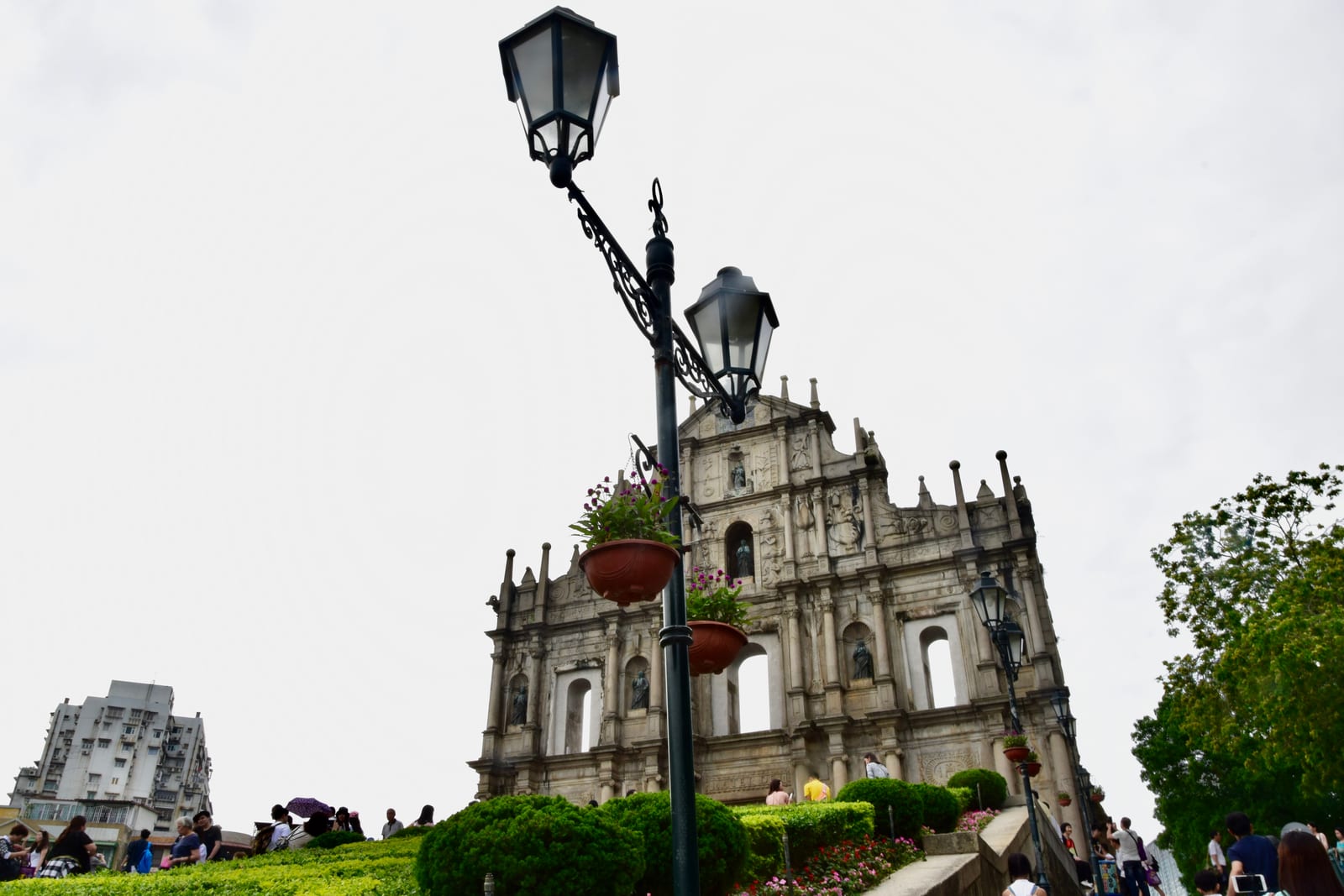
The Historic Centre on the Macao Peninsula is the first-visit priority. From A-Ma Temple, choose a connected northbound line through the Moorish Barracks exterior, Lilau Square, St Lawrence's area, Senado Square, St Dominic's Church, the Ruins of St Paul's and Mount Fortress. The UNESCO property comprises more than twenty monuments and squares; understanding one continuous route is better than collecting every component in a day.
The Guia area and the newer waterfront districts add a different city view. Guia Fortress and Lighthouse sit on elevated ground with access and opening limits, so skip them in oppressive heat or when mobility is restricted. NAPE, Nam Van and the Macao Science Center direction are spread out and should be selected for a specific exhibition or architectural interest, not appended automatically to the heritage walk.
Taipa Village works around Carmo, the Taipa Houses area and the streets near Rua do Cunha. The Rua do Cunha food street is crowded at peaks; the adjacent lanes reveal more of the residential, church and village scale. Cotai is strongest for hotels, shows, shopping and indoor family facilities. Buildings that appear adjacent can still involve long internal corridors and major road crossings.
Coloane suits a quiet half-day. Combine Coloane Village, the area around the Chapel of St Francis Xavier, a waterfront section or the Hac Sa direction according to conditions. Trails, beaches and outdoor facilities remain subject to weather, maintenance and water-quality notices; swimming or hiking cannot be assumed.
Practical Itineraries
One-day Peninsula route: begin near A-Ma Temple and follow the Historic Centre toward Senado Square. Continue after lunch to St Dominic's Church, the Ruins of St Paul's and Mount Fortress, then choose Nam Van or return to the hotel. Avoid reversing direction for remote sights, and shorten the stone-paved route when rain makes it slippery.
One-day Taipa and Cotai route: explore Taipa Village and the Taipa Houses area in the morning. After lunch, enter Cotai for one selected show, exhibition, family facility or shopping block. If there is an evening performance, do not add a full Peninsula itinerary, and reserve time for post-show queues and transport.
Two-day combination: use day one for the main Historic Centre line. On day two, visit Taipa in the morning and choose either Cotai or Coloane for the afternoon. Pick Coloane for neighbourhood pace and open air; choose Cotai for indoor facilities and nightlife. Add Guia, museums or deeper community walks only on a third day.
Ports of Entry and Local Transport
Macao International Airport, the Outer Harbour and Taipa ferry terminals, and land crossings such as the Hong Kong–Zhuhai–Macao Bridge Macao Port, Border Gate, Qingmao and Hengqin Port serve different origins and districts. Select by live service, document eligibility and hotel location, not by name recognition. Entry rules depend on nationality, residence and travel document; visa, permit, passport-validity and transit conditions must be confirmed with the Public Security Police Force and the relevant immigration authority.
Public buses connect the Peninsula, Taipa and Coloane. The current Light Rapid Transit network is useful for parts of the airport, Taipa, Cotai, Seac Pai Van and Hengqin Port corridors, while the Peninsula's historic streets still depend on buses, taxis and walking. Routes, frequency and fares can change, so use the Transport Bureau and LRT operator rather than treating a route number in an article as permanent.
Hotel shuttles set their own passenger eligibility, port stops, luggage rules and hours. Never assume every hotel or every traveller has free access. Queues for buses and taxis are common after shows. Border peaks and severe weather can add further delays. Historic lanes may also place the legal pickup point some distance from the door.
Where to Stay
Senado Square, Nam Van or the Avenida de Almeida Ribeiro area suits travellers prioritising the Historic Centre. Morning access is efficient, but older entrances, room dimensions and street noise vary. NAPE or the Outer Harbour area is convenient for some ferry services and newer city facilities. Reaching much of the old town still requires a transfer.
Taipa feels more residential than Cotai and balances village dining, airport access and resort facilities. Cotai concentrates large hotels, performances and indoor attractions, although walking through a resort complex can take longer than the map suggests. Coloane offers limited, quieter lodging; it is inefficient for repeated Peninsula visits or an early border crossing.
The accommodation review should cover the final payable total, service charges, deposit or card pre-authorisation, child policy, facility access, shuttle eligibility and typhoon cancellation terms. Do not treat gaming benefits as an assumed part of room value, and use licensed accommodation rather than informal short lets.
Food and Souvenirs
Macao's table includes Macanese and Portuguese cooking, Cantonese food and dim sum, neighbourhood snacks and hotel dining. Representative choices include minchi, African chicken, Portuguese-style seafood or cod dishes, roast meats, congee and noodles, pork-chop buns and egg tarts. Macanese cooking draws on several spice traditions and is not uniformly mild; ingredients matter more than the dish name.
Rua do Cunha and the streets near the Ruins of St Paul's are convenient for tasting, but there is no need to buy every jerky, biscuit or sweet at once. Check net weight, shelf life, meat, egg and dairy content, origin and the destination's customs rules. Vacuum sealing does not make meat products automatically legal to import.
For Portuguese or hotel restaurants, review service charges, minimum spend, seating limits and cancellation policy. Travellers allergic to peanuts, tree nuts, shellfish, egg, dairy or gluten should state the allergen and cross-contact concern explicitly. Busy stalls may not be able to isolate preparation. Avoid driving, shoreline walks or trails after drinking.
Booking and Cost Control
Book accommodation, cross-sea or long-distance transport, popular performances, holiday restaurants and timed observation or family attractions first. Ordinary streets, squares and public heritage spaces do not require a ticketed schedule. Individual World Heritage components set their own opening conditions, and worship, maintenance or crowd controls can narrow access.
Weekend or event-period hotels, performances, resort facilities, hotel dining and cross-border transport create the largest budget differences. Public buses and LRT control routine costs, while taxis are often rational for families, luggage or late show exits. Compare the final total, including service fees, deposits, refund terms, seat class and currency conversion.
Request a receipt that identifies both seller and goods, and ask about returns before shopping. Avoid unofficial exchange, unverifiable tickets and offers involving rebates or proxy betting. Gambling must never be used as a strategy to recover or fund travel expenses.
Safety, Gaming and Visitor Etiquette
The legal age for casino entry in Macao is 21, and identification may be checked. Minors must stay outside restricted areas. Eligible adults should still treat gaming as high-risk paid entertainment: set a loss limit that cannot affect accommodation, transport or the journey home; do not borrow, chase losses, carry money for strangers or handle funds on another person's behalf; follow venue rules on photography and devices.
Historic stone paving, steps and slopes become slick in rain, while hot months require shade, water and a slower midday pace. During tropical-cyclone or rainstorm warnings, avoid shorelines, low areas and trails and follow live port, ferry, LRT, bus and hotel instructions. In Coloane, use officially open paths and never enter maintenance areas.
A-Ma Temple, churches and other religious sites remain active places of worship. Dress and speak respectfully, give ceremonies room and follow photography signs. Protect documents and phones in crowded lanes, and do not compress a border transfer so tightly that a queue creates a missed connection.
Pre-Departure Checklist
- Confirm entry, permit, document-validity and port conditions with the Macao Public Security Police Force and relevant authority.
- Choose airport, ferry terminal or land border according to the hotel and live service, and retain the operator's amendment channel.
- Review Macao weather, tropical-cyclone and rainstorm information and keep alternatives for Coloane and cross-sea travel.
- Schedule the Peninsula, Taipa/Cotai and Coloane as separate geographic blocks rather than crossing repeatedly.
- Verify hotel total, deposit and shuttle eligibility; retain show, restaurant, seat and cancellation records.
- Check ingredients, shelf life and destination quarantine rules before buying jerky, pastries or other food souvenirs.