Border arrangements, bus diversions, museum access, church services and severe-weather measures can change at short notice. Recheck Macao Government Tourism Office, Transport Bureau, Public Security Police Force and venue notices before setting out.
Destination Fit
Nossa Senhora de Fátima Parish covers the northern, predominantly residential side of the Macao Peninsula. Its value lies in everyday neighborhoods, border connections and layers of modern urban history rather than a dense collection of headline monuments. The most useful anchors are Lin Fong Temple and the Lin Zexu Memorial Museum, Mong-Há Hill and its former fort, Our Lady of Fátima Church, and the streets of Toi San, Areia Preta and Iao Hon. Travelers entering through the Border Gate or Qingmao Port can use the parish for a focused half-day. First-time visitors with only one day in Macao should still protect enough time for the Historic Centre instead of crossing the city simply to collect another district.
When to Go
Late autumn and winter generally provide the most comfortable conditions for extended walking. Spring in Macao is warm but can be misty and wet, leaving Mong-Há paths and steps slippery. Summer and early autumn on the Macao Peninsula bring heat, humidity, heavy rain and a higher chance of tropical-cyclone disruption. Churches may restrict casual visits during Mass or community events. A high typhoon signal or a black rainstorm warning in Macao is not an ordinary wet-weather inconvenience: abandon hill walks, follow official closure and transport instructions, and avoid building a route around an uncertain border transfer.
Choosing the Right Stops
- Lin Fong Temple and the Lin Zexu Memorial Museum: choose this pair for nineteenth-century history and Macao's role in regional exchange. The sites are close together, although the museum has its own closing days and admission schedule.
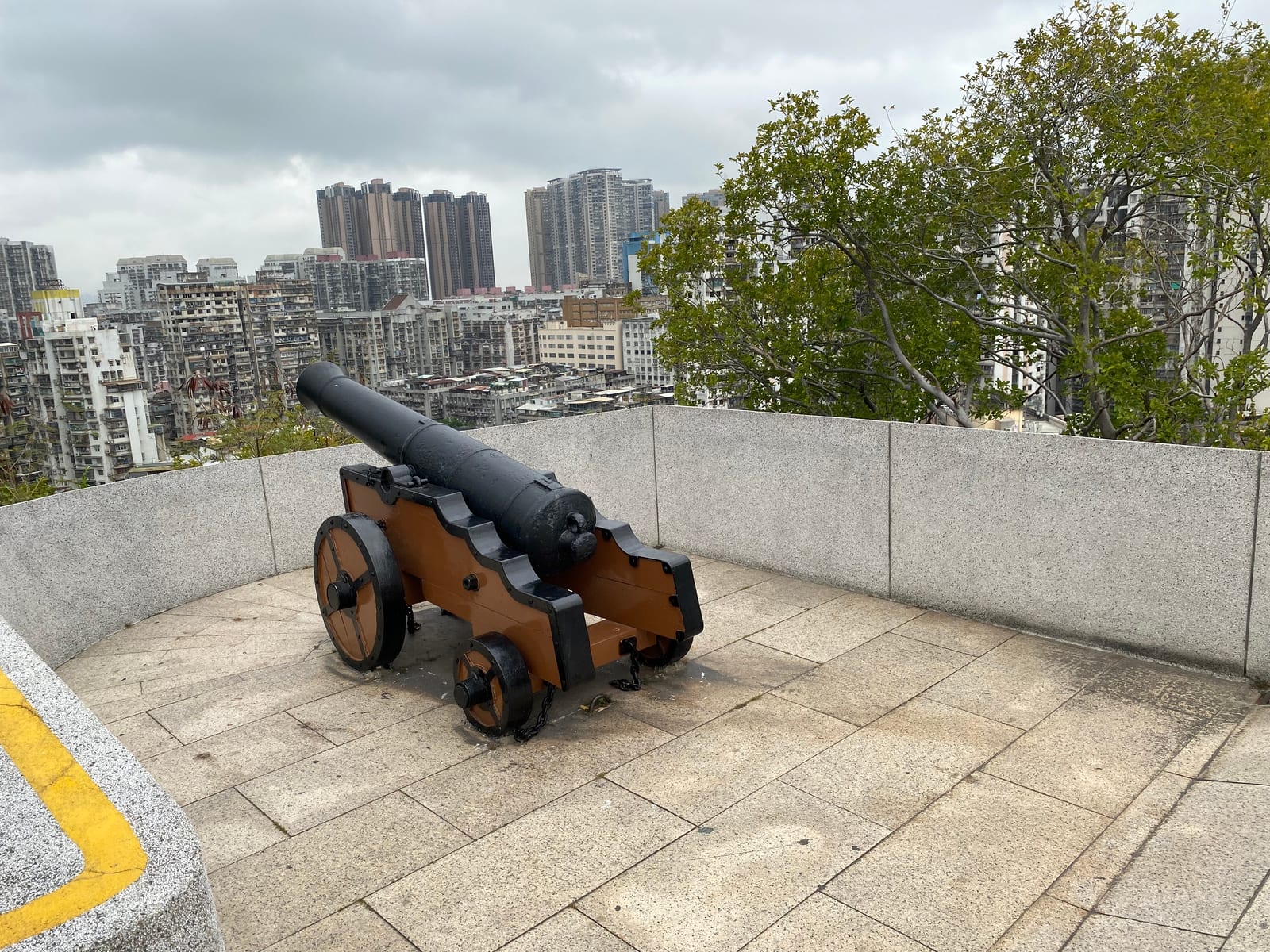
- Mong-Há Hill, the former fort and the municipal garden: this is the strongest outdoor section. The municipal garden provides a greener setting and views over northern Macao. The climb is unnecessary in heat or after heavy rain.
- Our Lady of Fátima Church: built in 1929 and rebuilt in 1967, the modern church serves the Toi San community. At Our Lady of Fátima Church, quiet observation matters more than photography, particularly when worship is taking place.
- Toi San, Areia Preta and Iao Hon: markets and neighborhood restaurants reveal daily life, but apartment entrances, schools and clinics are not visitor attractions.
Practical One-Day Itinerary
After arriving at the Border Gate, leave luggage at the hotel rather than pulling it through markets and steep streets. Spend the morning at Lin Fong Temple and the Lin Zexu Memorial Museum, entering only after confirming the current opening notice. Lunch in Toi San or Iao Hon gives a broad choice of plainly priced neighborhood food. Continue by bus or a short taxi ride to Mong-Há Hill for an easy garden walk, then visit Our Lady of Fátima Church if access does not conflict with a service. From Toi San, continue by bus toward the central peninsula, Qingmao Port or the hotel, according to the current route and the day's border plan. Keep only one uphill segment; in oppressive heat or heavy rain, remove Mong-Há Hill completely.
Two Days or Longer
Use the first day for northern Macao and stay near the border only when an early crossing genuinely matters. On day two, group Senado Square, the Ruins of St. Paul's and the Inner Harbour into one central-peninsula route. An alternative second day can focus on the waterfront near Areia Preta before continuing toward the Macao Science Center, although those areas are not adjacent. Cotai deserves a separate block of time because crossing from the northern peninsula to its large venues adds a substantial transfer. Religious festivals may also trigger road controls, so check the route itself rather than assuming that an annual procession follows the same access plan every year.
Getting There and Moving Around
The Border Gate handles heavy passenger volumes. Eligibility, operating arrangements and connections at Qingmao Port should be checked with the Public Security Police Force. Buses and taxis are more practical than walking between the northern parish, the Historic Centre and Cotai. Map distances across Macao understate traffic lights, footbridges, slopes and the effect of humid weather. Confirm the direction at the stop before boarding, and follow temporary signs when streets are closed. Families with a stroller, wheelchair users and travelers carrying large bags should identify accessible stops and preserve a generous buffer for immigration queues.
Where to Stay
Hotels near the Border Gate or Toi San suit early crossings and northern food streets, but room size, noise and peak foot traffic deserve close attention. A base near the central peninsula or NAPE offers a more balanced sightseeing location. Travelers whose priority is a Cotai show or resort should usually stay closer to Cotai rather than choosing the north solely for border convenience. Read the full tax, deposit, child, extra-bed, luggage-storage and late-arrival terms before paying. On a border-crossing day, avoid a nonrefundable event scheduled immediately after the expected arrival time.
Food Planning
Toi San, Iao Hon and Areia Preta have cha chaan tengs, congee and noodle shops, roast-meat counters, Southeast Asian restaurants and market food. Check the currency, service charge, tea charge and minimum spend on the menu. Seafood or dried goods sold by weight require confirmation of the unit, preparation method and final total. Anyone avoiding peanuts, shellfish, eggs, dairy or non-halal ingredients should ask before ordering; the English name of a dish is not enough evidence. Cooked food deteriorates quickly in summer, and meat, fresh fruit or other food carried across the border remains subject to customs and quarantine rules.
Booking and Final Checks
Most streets, parks and religious sites do not require a city pass, yet free access does not mean unrestricted access. Check the Lin Zexu Memorial Museum for its current closing day, the church for worship arrangements, and Mong-Há facilities for maintenance notices. School events or major festivals can alter local circulation. Ignore sellers claiming that they can bypass immigration queues or provide private access to residential buildings. Save the border, bus, weather and venue pages the day before departure, then read on-site notices again. If two planned indoor stops are unavailable, switch to a neighborhood meal and an indoor route in central Macao.
Safety and Local Etiquette
Crowds around ports, bus interchanges and markets make simple precautions important: separate passport, phone and payment cards, and keep luggage in sight. Ask before photographing residents, worshippers or stallholders. Do not block apartment doors, school gates or narrow pavements while reading a map. Mong-Há paths can be slick after rain, and the climb should be shortened in extreme heat. During typhoon, thunderstorm or rain warnings, stay away from scaffolding, trees and temporary barriers and follow official instructions. The best community walk is quiet, light on space and easy for local residents to pass.