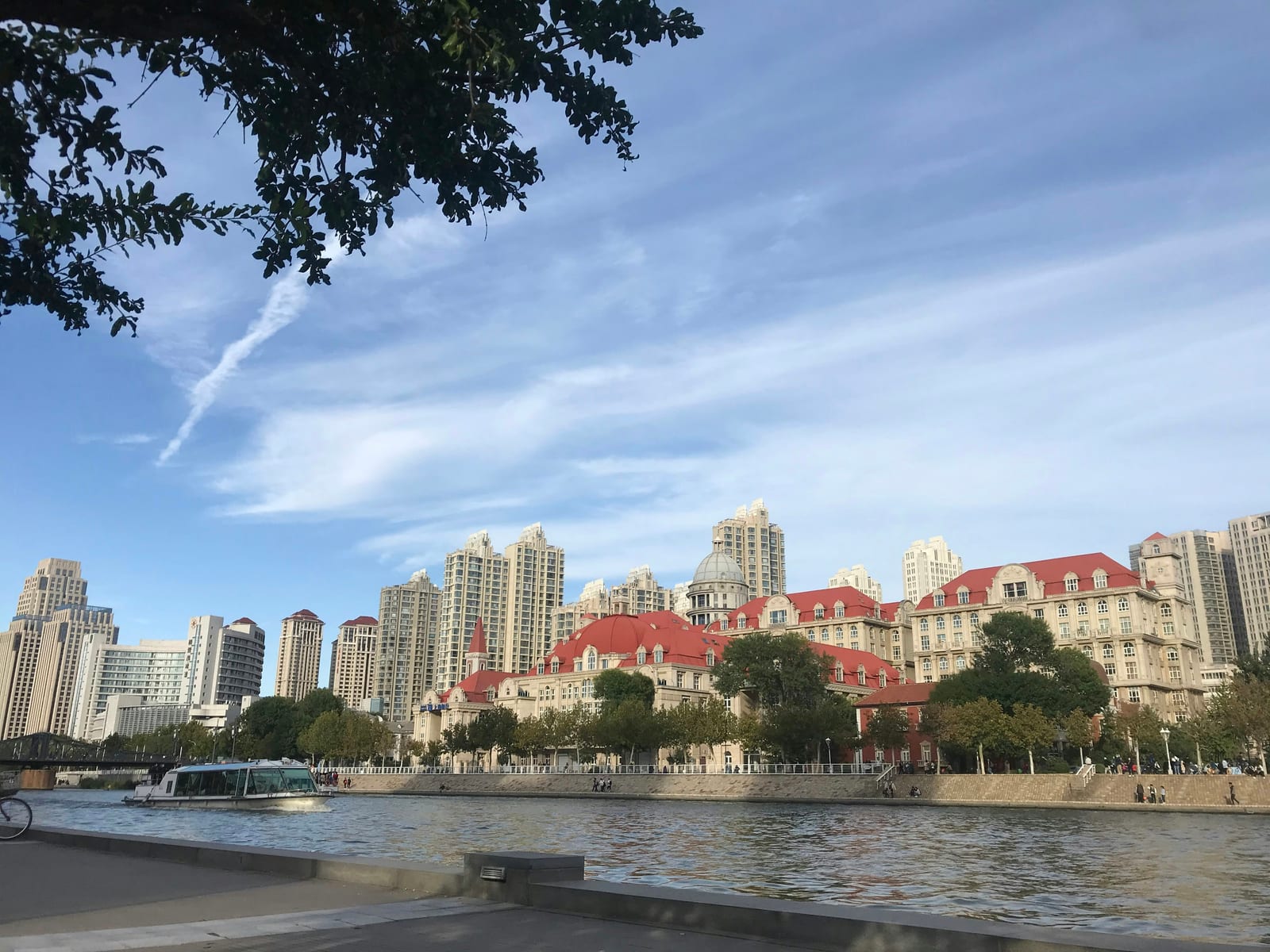
Tianjin works well as a two- or three-day city break built around the Haihe River, early twentieth-century streets, old-city crafts, museums, and a separate Binhai New Area day. The central districts may look compact on a map, but bridges, residential streets, evening activities, and museum reservations shape the pace. The National Maritime Museum of China and other Binhai stops belong to a different travel corridor and should not be forced into the same day as Five Great Avenues and the old city.
1. Decide the Scope of the Trip
Central Tianjin divides into three useful groups. Five Great Avenues and Minyuan suit a daytime architecture walk. Tianjin Railway Station, Jinwan Plaza, Italian Style Town, and the river bridges fit late afternoon and evening. Ancient Culture Street, Drum Tower, and nearby heritage venues focus more on crafts and old-city history. Tianjin Museum and the Cultural Centre provide a substantial indoor half-day.
Binhai New Area is a separate choice centred on the National Maritime Museum, Binhai Library, and maritime or industrial themes. On a two-day visit, keep Five Great Avenues, the river, and one old-city or museum group. Add Binhai only with a third day. Travellers interested in architecture can spend more time around Jiefang North Road, Tai'an Road, or Zhangyuan, while families may prefer a full museum block.
2. Seasons and Weather Decisions
Spring and autumn favour street walking, although spring can bring strong wind and dust and autumn has cooler mornings and evenings. Summer is humid, hot, and prone to thunderstorms; exposed riverfronts and squares offer uneven shade at midday. In winter, wind along the Haihe and in Binhai makes conditions feel colder, while snow or ice can alter walking, cruises, and evening plans. Major events may also change traffic arrangements.
On a poor-weather day, replace a long Five Great Avenues walk with Tianjin Museum or another confirmed indoor venue. Strong wind, intense rain, or poor visibility in Binhai calls for less time on exposed waterfronts. River lighting, cruises, and temporary performances are operational activities rather than permanent promises, so check the operator and municipal notices close to the visit.
3. Choose the Core Sights
The value of Five Great Avenues lies in the relationship between streets, gardens, and architecture. Select two or three roads, Minyuan, and one building with a formal exhibition instead of trying to identify every former residence. A private courtyard, school, or office does not become open to visitors because its exterior is attractive. Choose at most one additional paid or capacity-controlled interior such as Porcelain House or Zhangyuan.
Ancient Culture Street combines crafts, folk culture, and an old-city river setting. Before buying, distinguish handmade work, mass-produced souvenirs, and items presented as collectibles. Italian Style Town fits naturally with Tianjin Station, Jinwan Plaza, and an evening river walk. A Haihe cruise is optional; when the route, pier, weather, or return transport does not work, an open riverbank walk still provides a coherent city experience.
Do not travel to Binhai only for a library photograph. The National Maritime Museum covers maritime nature, human history, and ecology and needs time for exhibitions, security, rest, and the return journey. Binhai Library or another confirmed venue can be secondary. The museum district, railway or metro stop, and exposed waterfront are not one pedestrian zone.
4. A Workable Three-Day First Visit
Day one checks in near Tianjin Station and chooses a short route through Italian Style Town, Jiefang North Road, or Jinwan Plaza. Walk an open section of the Haihe around dusk, but do not add both a cruise and a performance after a long arrival. Day two starts with Five Great Avenues and Minyuan, then selects Tianjin Museum, Zhangyuan, or one other indoor venue. The evening can hold either a xiangsheng teahouse or another river walk.
Day three goes to Binhai. Make the National Maritime Museum the main commitment and treat Binhai Library or another open venue as a secondary stop. Leave enough time to return to the hotel, collect luggage, and clear station security. Travellers skipping Binhai can build an old-city day from Ancient Culture Street, Drum Tower, Guangdong Guild Hall, and a Tianjin meal. Families should avoid consecutive late nights, and travellers with mobility needs can shorten street sections around verified lifts and step-free entrances.
5. Arrival, Cross-City Travel, and the Last Ride
Tianjin, Tianjin West, Tianjin South, and Binhai-area railway stations serve different parts of the municipality. Check the exact station against the following day's plan before choosing a hotel. In the centre, metro, buses, and licensed taxis or ride-hailing services are usually more predictable than searching for parking at Five Great Avenues or Ancient Culture Street, especially during temporary controls.
For Binhai, compare railway, metro, and road connections against the exact museum or library address. Reaching a station with Binhai in its name does not mean the venue is within walking distance. After a cruise, teahouse, or performance, confirm the last public transport, the managed pickup point, and lighting on the walking route. Follow one-way crowd systems and road closures during major events.
6. Where to Stay
Tianjin Station, the Haihe, and Heping District are useful for a first central visit and an easy evening return. Five Great Avenues offers a slower neighbourhood base, but the real walk to a metro entrance matters. The Cultural Centre area suits museum-heavy plans. A Binhai hotel makes sense for consecutive New Area activities, an early museum entry, or a late arrival, not for a city-centre weekend sold as a sea-view escape.
Confirm the bed, window, heating or air-conditioning, soundproofing, parking, deposit, cancellation, children's breakfast, and luggage storage. A hotel in a historic building may also involve stairs, limited lifts, fire-safety restrictions, or a separate night entrance. When reading a map, check bridges, underpasses, and metro exits; a short straight-line distance can still be awkward with luggage.
7. Breakfast, Tianjin Dishes, and Consumer Checks
Jianbing guozi, guobacai, doufunao, buns, mahua, and miancha belong across several breakfasts and snacks rather than one morning. Traditional breakfast shops move quickly and may have tight seating, so read prices, portions, collection, and tray-return arrangements before joining the line. Travellers with allergies should ask about wheat, sesame, peanuts, soy, egg, dairy, seafood, sauces, and shared utensils.
For a full meal, choose dishes such as crispy sweet-and-sour carp (罾蹦鲤鱼), braised wheat gluten (独面筋), eight-treasure tofu (八珍豆腐), or corn cakes with small fish according to group size. Ask how fish is priced, portioned, and cooked and whether any added service applies. Packaged mahua and pastries need clear production, date, storage, and transport information. At a xiangsheng teahouse, confirm the seat, minimum spend, tea, additional orders, cancellation, and recording policy before paying.
8. Museums, Cruises, and Performance Bookings
Tianjin Museum, the National Maritime Museum, and other popular venues may use real-name, timed, security, or special-exhibition reservations. Closing days and temporary exhibitions differ. Use the venue, managing authority, or recognised channel rather than relying on a seller who promises internal access or no reservation. Families should also check luggage storage and step-free services.
For a Haihe cruise, verify the operating date, route, pier, boarding time, seating, weather cancellation, and refund terms. Different piers may not produce a return to the same point. Teahouse, theatre, and music tickets need an exact venue, collection or digital-entry rule, late-admission policy, and route home. Recheck the evening before departure and follow on-site announcements.
9. Family, Accessibility, and Bad-Weather Alternatives
With young children, combine a short Five Great Avenues walk, one museum, and a modest river section with a real rest period. Do not attach a late performance to a full Binhai return. Older travellers and wheelchair users should verify accessible metro exits, museum lifts, riverbank ramps, and steps in historic buildings. Shared bicycles are not a universal transport solution for a mixed group.
Rain can shift the day to Tianjin Museum, the National Maritime Museum, or another confirmed indoor venue. Strong wind is a reason to reduce exposed Binhai and cruise plans, while hot weather moves walks to morning and evening. These alternatives still require opening-day and reservation checks; a list of ten museums is not a workable single-day backup.
10. Riverfront, Street, and Coastal Safety
At night along the Haihe, watch for steps, cycle lanes, bridge traffic, and wet surfaces. Stay behind barriers, keep tripods out of through routes, and follow crew instructions when boarding a boat. Leave seawalls, exposed platforms, and construction shorelines when strong wind, thunderstorms, storm-surge risk, or an official closure affects Binhai.
In Five Great Avenues and other historic streets, respect homes, schools, and offices. Do not follow residents through gates or photograph private interiors through windows. Ask before filming craftspeople, shops, or teahouse patrons. When a road closes or a crowd-control route begins, protect the train, rest, and safe return rather than searching for an unofficial shortcut.