Before You Decide
Chizhou is best planned as a combination of Buddhist heritage at Mount Jiuhua, water conditions on the Qiupu River, birdwatching at Shengjin Lake, the mountain landscapes of Shitai and an easier city break around Pingtian Lake. Ticketing and cableway operations at Mount Jiuhua, rafting availability, mountain accommodation, restaurant hours and road conditions can all change. Check them for your actual travel dates rather than relying on an old price list, last-service time or business directory.
Before departure, pay particular attention to transfers at Mount Jiuhua, cableway maintenance, temple ceremonies, trail conditions in Shitai, water activities on the Qiupu River, birdwatching boundaries at Shengjin Lake, mountain weather and accommodation cancellation terms. Temple-fair periods, public holidays, rain and snow can significantly affect traffic, queues and room availability around Mount Jiuhua.
Destination Overview
Chizhou lies in south-western Anhui. The Yangtze River runs to its north, and the mountains of southern Anhui rise to its south. The city area provides an easier base for Pingtian Lake, Qishan, Xinghua Village and dining. Qingyang County and Mount Jiuhua focus on Buddhist culture and mountain scenery. Shitai County is the base for Guniujiang, Penglai Fairy Cave, Xianyu Mountain, the Qiupu River and selenium-rich tea, while Shengjin Lake, on the boundary between Dongzhi and Guichi, is known for wetland birdwatching.
This is not a destination to rush. Mount Jiuhua needs time for worship, transfers, walking and possible cableway queues. The natural attractions around Shitai are dispersed and may require a change of route during the rainy or flood season. Shengjin Lake is a protected wetland. A good birdwatching visit there depends on quiet observation and respect for access boundaries.
Seasons and Weather
Spring suits temple visits at Mount Jiuhua, Xinghua Village and unhurried time in the city. Summer is popular for Shitai's rivers, mountains and caves, but the plum-rain season, heavy rain and changing water levels require caution. Autumn works well for Mount Jiuhua, Shitai and Shengjin Lake. Winter can bring snow scenery, temple visits and birdwatching, but icy mountain roads, cableway maintenance and heating at accommodation all need checking.
Weather on Mount Jiuhua and in the Shitai mountains can change quickly; sunshine in central Chizhou does not guarantee stable conditions at elevation. Review attraction notices, hourly mountain forecasts, traffic controls and cableway status before setting out. In thunderstorms, strong wind, cold rain, snow or a trail closure, switch to the city, a shorter temple route or an officially open cave.
Main Experiences
Mount Jiuhua
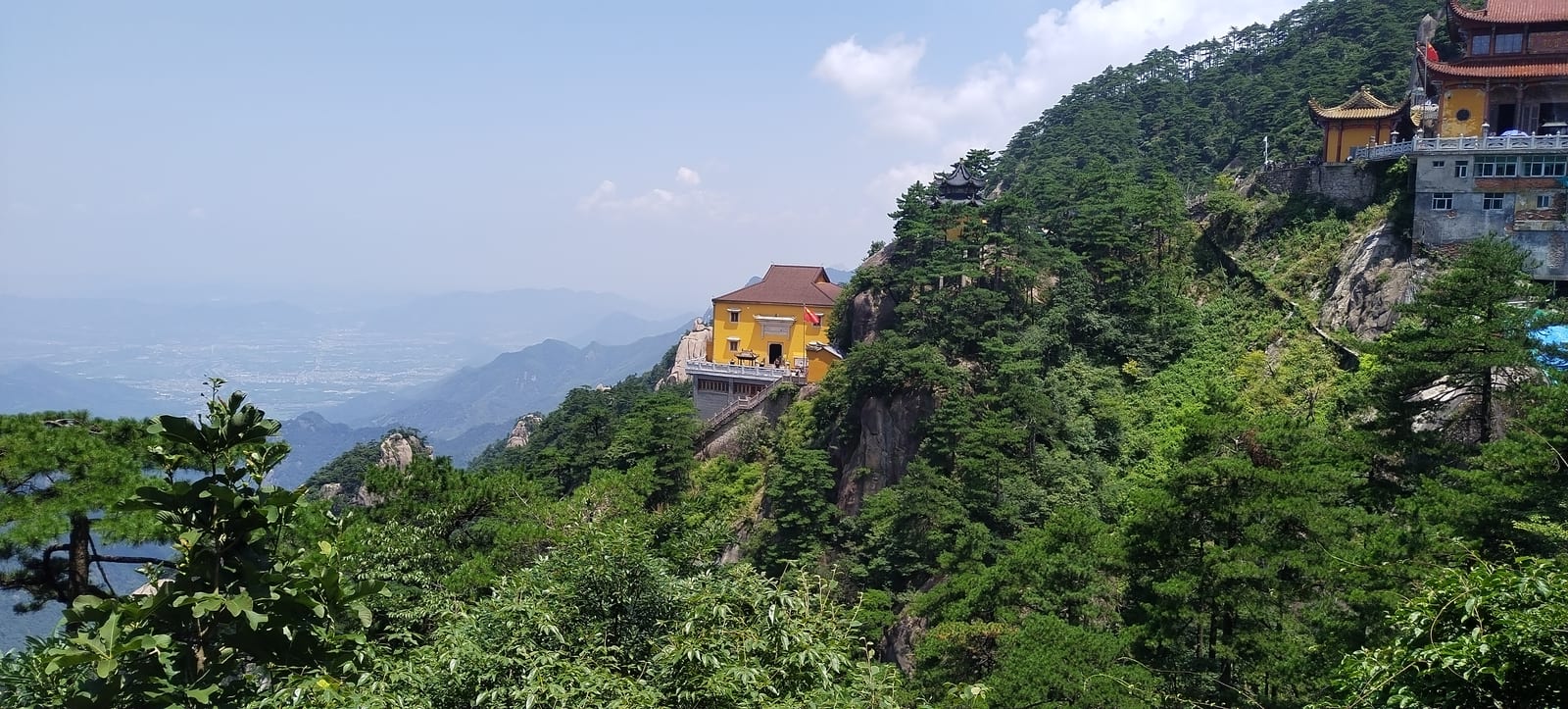
Mount Jiuhua is Chizhou's principal destination. Commonly visited areas include Jiuhua Street, the Flesh Body Treasure Hall (Roushen Baodian, 肉身宝殿), Huacheng Temple, Zhiyuan Temple, Baisui Palace, Tiantai, Huatai, Minyuan and the Great Vow Culture Park. Scenic-area buses, cableways, temple opening, religious ceremonies and visitor limits can change by season, so confirm current arrangements through official channels.
Keep quiet in places of worship and follow rules on incense, fire prevention, photography and dress. Do not try to combine Jiuhua Street, Tiantai, Huatai, Baisui Palace and the Great Vow Culture Park in a single day. With children or older travellers, favour Jiuhua Street and the easier nearby route; decide on Tiantai or Huatai only after considering the weather, everyone's stamina and cableway operation.
Guniujiang in Shitai
Guniujiang offers forest trails, streams, waterfalls and a cooler summer environment. Its ecosystem is sensitive, paths are slippery after rain and rising water makes stream edges hazardous. Observe wildlife and plants from a distance without feeding or chasing them for photographs. Before driving or hiring a car, check the road and parking situation between Shitai County town and the scenic area.
Qiupu River and Penglai Fairy Cave
Water activities on the Qiupu River are seasonal and depend on rainfall, river level, flood-control conditions, safety inspections and the operator's schedule. When an activity is officially open, wear a life jacket, follow safety staff and leave valuables ashore. Travellers who do not meet age, height or health requirements—or who are uncomfortable in water—can choose Penglai Fairy Cave, Guniujiang, Xianyu Mountain or a relaxed day in Shitai instead.
Penglai Fairy Cave and Dawang Cave can serve as wet-weather alternatives, but their interiors are damp, include steps and are noticeably cooler. Wear slip-resistant shoes and move slowly.
Pingtian Lake and Qishan
Pingtian Lake and Qishan make a manageable half-day near the city. Options include a lakeside walk, cycling, the Qishan cliff inscriptions and evening views over the water. Watch the wind and slippery surfaces near the lake. Do not touch, make rubbings from or climb on inscriptions and other protected remains.
Xinghua Village
Xinghua Village combines literary associations, wine culture and light sightseeing. Performances, displays, distillery experiences and blossom-season events vary over the year, making it a useful low-intensity stop between the city and Mount Jiuhua. For wine and other gifts, check the label, volume, production information and after-sales terms.
Shengjin Lake Wetland
Shengjin Lake is suited to birdwatching and wetland education. The best conditions depend on migration, weather, water levels and current conservation management. Do not approach flocks, use bright lights, fly a drone or enter areas of the reserve that are not open to visitors. Binoculars and a long lens are more useful than getting closer.
Xianyu Mountain and Jiuziyan
Xianyu Mountain, Jiuziyan and back-mountain routes offer quieter trails, old paths, bamboo groves, tea villages and temples. Surfaces can be slippery after rain or snow, and mobile reception is weak on some roads. A long hike requires a guide or reliable route track, food and water, and a clear exit plan. Most visitors will be better served by a short marked trail and time in a tea village.
Suggested Itineraries
One Day: A Compact Mount Jiuhua Route
Travel from Chizhou Railway Station or the city to the Mount Jiuhua Visitor Centre and transfer to the scenic-area transport system. Keep the day to Jiuhua Street, Huacheng Temple, the Flesh Body Treasure Hall, Zhiyuan Temple and Baisui Palace. Add the Great Vow Culture Park only when an early arrival, the group's energy and the return timetable leave enough room. Do not add Tiantai or Huatai to this one-day route; give either high-level route a separate day and confirm the weather, cableway and transport plan before going up.
Two Days: More Time at Mount Jiuhua
Day 1: Jiuhua Street, the Flesh Body Treasure Hall, Huacheng Temple, Zhiyuan Temple and Baisui Palace. Stay at Mount Jiuhua or in Qingyang.
Day 2: Choose Tiantai or Huatai. If time and energy permit before departure, add the Great Vow Culture Park, Qingyang town or central Chizhou.
Three Days: Mount Jiuhua and Shitai
Day 1: Follow the compact Mount Jiuhua route.
Day 2: Visit either Tiantai or Huatai, then travel to Shitai County.
Day 3: Choose one or two among Guniujiang, Penglai Fairy Cave, Xianyu Mountain and an officially operating Qiupu River activity. Return to Chizhou in the evening.
An Easier City-and-Wetland Break
For travellers who do not want a mountain climb, or groups with children or older people, combine Pingtian Lake, Qishan, Xinghua Village, city dining and a birdwatching visit to Shengjin Lake. Allow ample time for the round trip to the lake rather than waiting until evening to find transport back.
Transport and Connections
Chizhou Railway Station, Jiuhuashan Railway Station, Chizhou Jiuhuashan Airport and Chizhou Bus Station are the main arrival points. Jiuhuashan Railway Station is one of the high-speed rail gateways for Mount Jiuhua; confirm the direct coach, public bus or other connection to the visitor centre from official transport information for the actual travel date. Inside the scenic area, the visitor centre remains the key transfer point, and the coverage and operation of scenic buses, cableways and authorised vehicles depend on current rules. Public transport can be limited in Shitai, Dongzhi, around Shengjin Lake and in some mountain areas, so a self-drive trip, a properly arranged car or an overnight stay may be more practical.
Before hiring a car, agree on the route, waiting time, tolls, parking, any shopping stops, the return time and proof of payment. On public holidays, leave a generous margin before a departing train: traffic on the mountain and transfers on the way down can both take longer than expected.
Food and Souvenirs
Local options include Mount Jiuhua vegetarian meals and pastries, Chizhou xiaoba pastries, Qiupu River fish, Shitai selenium-rich tea, Ruanqiao pressed duck, kudzu starch, Nixi rice dumplings, tea-smoked pork and farmhouse dishes. Before ordering, confirm the priced menu, portion or weight, how fish is prepared, the serving rules for vegetarian meals and any additional charge.
Common gifts include Mount Jiuhua vegetarian pastries, Shitai tea, Xinghua Village wine, kudzu products, pressed duck, selenium-rich rice and local tea snacks. Be cautious with prayer beads, incense, medicinal products and expensive tea. Do not rely on claims of ritual blessing, special health effects or scarcity, and keep the receipt.
Where to Stay
Accommodation on Mount Jiuhua is convenient for early or evening worship and mountain views, but rates and availability can fluctuate during holidays, temple-fair periods and bad weather. Qingyang is useful for drivers and for an early start the next day. Central Chizhou suits railway or airport connections, Pingtian Lake and dining, while Shitai town is the practical base for Guniujiang, Penglai Fairy Cave, Xianyu Mountain and the Qiupu River.
Ask about parking, transfers, heating or dehumidification, hot water, breakfast, cancellation, noise near temples and any required scenic-area transfer. On the mountain, a short map distance matters less than convenient access to the correct transfer point.
Planning the Budget
The main variables are transfers and cableways at Mount Jiuhua, accommodation on the mountain, a hired car in Shitai and seasonal water activities. Calculate tickets, scenic transport, cableways, lodging, meals, guiding and car hire separately. Keep a contingency for weather-related changes. If the group has limited stamina, reducing the number of mountain activities is more important than squeezing the budget.
Safety Essentials
- Keep quiet in Mount Jiuhua's temples and ceremony areas, and follow rules on incense, fire, photography and visitor flow.
- Do not use a mountain cableway or trail during strong wind, thunderstorms, icing or maintenance closures.
- Join a Qiupu River activity only when it is officially operating, properly equipped and supported by suitable weather.
- Do not hike alone or enter unopened paths at Guniujiang, Xianyu Mountain, Jiuziyan or other mountain sites.
- At Shengjin Lake, do not disturb or feed birds, cross conservation boundaries, use strong lights or fly a drone.
- Do not touch, mark or climb on protected inscriptions, historic buildings or cave formations.
Final Checklist
- Mount Jiuhua: tickets, scenic transport, cableway maintenance, temple ceremonies, accommodation cancellation and parking.
- Shitai landscapes: trail status, rainfall, water levels, hired transport, slippery cave surfaces and an alternative plan.
- Qiupu River: current operation, insurance, life jackets, age, height and health limits, and weather-related suspension.
- Shengjin Lake: approved birdwatching points, conservation boundaries, roads, weather, binoculars and parking.
- Food and shopping: clearly priced menus, tea labels, receipts for alcohol, vegetarian-dining rules and after-sales terms for gifts.