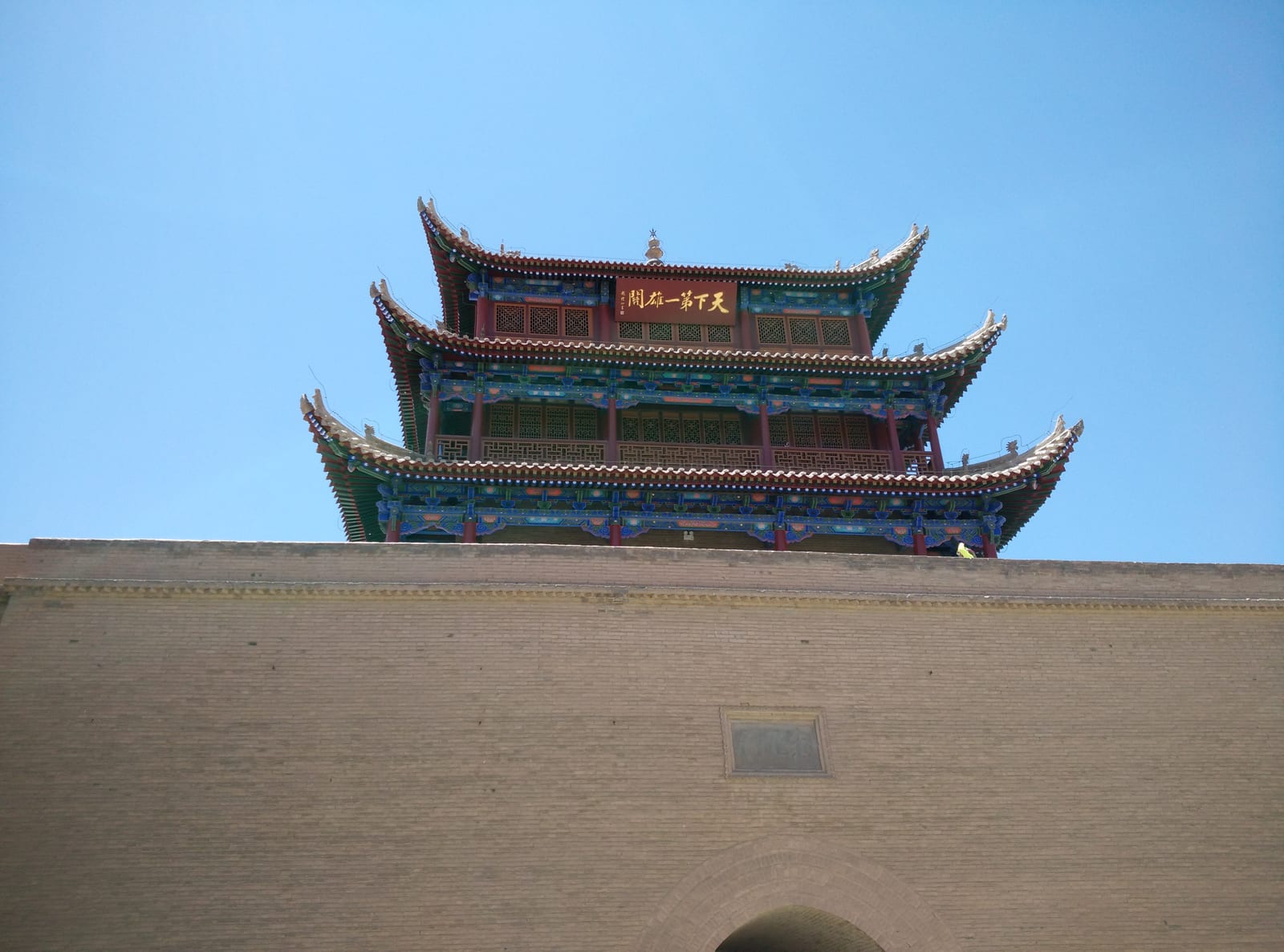
Jiayuguan, in northwestern Gansu on the western Hexi Corridor, is one of the route's most distinctive stops. Its defining sight is Jiayuguan Pass Fortress, supported by two outlying sections of the Great Wall landscape: the Overhanging Great Wall and the First Beacon Tower above the Taolai River Canyon. The city also works well for travellers interested in Silk Road archaeology, rock art, modern industrial history, family attractions or a quiet break between Zhangye, Jiuquan and Dunhuang.
With one full day, make Jiayuguan Pass Fortress the main visit and add either the Overhanging Great Wall or the First Beacon Tower, not both. Two days allow a more comfortable pace and room for the other outlying Great Wall site or one museum, archaeological site or leisure attraction. Do not try to fit every place named in this guide into a single visit: the outlying sites are spread across different directions, and wind, seasonal opening arrangements and return transport can all change the shape of the day.
Why Jiayuguan Works as a Hexi Corridor Stop
Jiayuguan Pass Fortress is the clearest introduction to the western end of the Ming Great Wall. The Overhanging Great Wall adds a steeper mountain-edge setting, while the First Beacon Tower explains how the defence line met the Taolai River gorge. Xincheng Wei-Jin Mural Tombs shift the story from military architecture to life along the earlier Hexi Corridor. Jiayuguan City Museum is a useful urban alternative when wind or road conditions weaken an outdoor plan.
Jiayuguan South Railway Station and Jiayuguan Railway Station connect the city with other Hexi Corridor stops, but they serve different trains and are not interchangeable. Jiayuguan-Jiuquan Airport also serves nearby Jiuquan, so the arrival label does not identify the final city transfer. These transport choices make central Jiayuguan a more practical base than isolated lodging near the mural tombs or rock-art sites.
When to Go
- Spring: Often windy and dusty. The fortress and museums remain worthwhile, but carry a well-fitting mask, sunglasses and a windproof layer.
- Summer: Expect strong sun and hot daytime conditions. Put exposed sites in the morning or late afternoon, take an indoor or lunch break around midday, and carry more water than you think you need.
- Autumn: Clearer skies often suit the fortress and Gobi landscapes, but mornings and evenings become noticeably cooler.
- Winter: Cold, dry and generally quieter. Outdoor visits can be rewarding, but ice, snow, wind and seasonal closures may affect steps, walls and scenic-area transport.
Whatever the season, check the same-day forecast for wind, dust, ultraviolet exposure and sudden temperature changes. Conditions at an exposed wall or canyon can feel harsher than they do in central Jiayuguan.
What to See
Jiayuguan Pass Fortress
The fortress is the essential Jiayuguan visit. Its gates, towers, inner and outer defensive spaces, walls and associated buildings make far more sense when seen as one defensive system rather than as isolated photo stops. The Youji General's Residence, Wenchang Pavilion and Guandi Temple add civil and religious context to the military architecture.
Allow unhurried time for the displays and views. An official guide or audio guide can help explain how the pass controlled movement along the corridor. On windy days, keep away from exposed edges and secure hats, scarves and loose belongings. Do not climb closed wall sections or touch historic masonry and exhibits.
Overhanging Great Wall
The Overhanging Great Wall climbs steeply into the dark Gobi hills and is best for travellers who want a more physical Great Wall experience. There are sustained steps and slopes, and the descent can be harder on the knees than the climb.
Wear shoes with good grip and turn back when needed. Families, older visitors and anyone with knee or balance problems should treat the highest point as optional. Wind, ice, rain, snow or maintenance may reduce the accessible section without notice.
First Beacon Tower and Taolai River Canyon
The First Beacon Tower combines a frontier signal-tower site with broad Gobi views and the Taolai River Canyon. Any glass platform, suspension bridge, zipline or other adventure feature is secondary to the heritage landscape and may not operate every day.
Check the day's wind limits, age or height rules, health restrictions and insurance terms before paying for an add-on. Stay behind barriers, avoid cliff edges in strong winds and never enter a closed gully.
Xincheng Wei-Jin Mural Tombs
The Xincheng Wei-Jin Mural Tombs reward travellers interested in funerary art and everyday life in the Hexi Corridor. Access to individual chambers, group size, guiding and photography can be restricted to protect the murals.
Confirm that the site is open before making the trip. Follow staff instructions, never use flash and do not touch walls or display fittings. This is a focused archaeological visit, not a convenient stop to squeeze between the three Great Wall sites.
Heishan Rock Art
Heishan Rock Art lies in a more remote Gobi and mountain setting with limited transport and visitor facilities. Go only in stable weather and full daylight, preferably with a reliable local driver or as a properly planned self-drive trip.
Confirm the road, legal access boundary, mobile coverage and return plan. Download an offline map, travel with another person, carry water and sun protection, and make sure the vehicle has enough fuel. Never leave marked access routes or touch, trace or mark the rock art.
City and Leisure Options
- Jiayuguan City Museum explains the city's development from frontier pass to modern industrial centre. It is a sensible indoor alternative when heat or dust disrupts outdoor plans.
- East Lake Ecotourism Scenic Area is suited to an easy evening walk, family time or a low-key recovery period when weather and waterside access are suitable. Stay on open paths and behind barriers, supervise children closely, do not enter the water or step onto ice, and obey temporary closures.
- Xiongguan Square and Jingtie Market offer an urban pause and convenient access to everyday food and services.
- Fantawild Silk Road Dreamland is a family-oriented theme park inspired by Silk Road and Great Wall culture. Give it most or all of a day rather than combining it with the complete Great Wall circuit.
- Zixuan Wine Estate suits visitors interested in local wine production and a light tasting. Confirm whether tours require a reservation and whether tastings or age restrictions apply. Do not drive after drinking.
Choosing Your Itinerary
One Day: The Great Wall Circuit
Arrange the day's transport before setting out, especially the final pickup.
- Morning: Visit Jiayuguan Pass Fortress while energy levels are high. Focus on the defensive layout, walls and interpretation rather than rushing through for photographs.
- Lunch: Return to the urban area for a proper meal and a short break.
- Afternoon: Choose either the First Beacon Tower or the Overhanging Great Wall according to current opening arrangements, wind, fitness and the confirmed return.
- Evening: If weather and waterside access are suitable, walk at East Lake while following barriers and child-supervision rules; otherwise use Xiongguan Square. Then have dinner in the city.
Keep the fortress as the main visit and add only one outlying Great Wall site. The First Beacon Tower and Overhanging Great Wall lie on separate transfers, so trying to collect both after the fortress leaves too little margin for wind, delays and the return.
Two Days: Heritage Plus One Interest
Day 1: Visit Jiayuguan Pass Fortress and choose either the First Beacon Tower or the Overhanging Great Wall.
Day 2: In the morning, choose the other outlying Great Wall site, the Xincheng Wei-Jin Mural Tombs or Jiayuguan City Museum. In the afternoon, choose one of Zixuan Wine Estate, Heishan Rock Art or a relaxed city visit. Each requires a different direction and style of travel, so combining them adds little and creates transport risk.
If Fantawild Silk Road Dreamland is the priority, devote most or all of Day 2 to it and skip the morning museum plan. Check the official park calendar, operating attractions, show schedule, child height rules and ticket-change policy before booking.
Continuing Along the Hexi Corridor
Jiayuguan is commonly combined with Jiuquan, Zhangye, Dunhuang or the poplar forests around Jinta. Distances along the corridor are substantial. Confirm train stations, luggage capacity, licensed-driver details, accommodation cancellation terms and the weather window before linking several cities. Avoid building an itinerary that depends on a late arrival and an unverified onward transfer.
Getting There and Around
Air and Rail
The airport serving the area is Jiayuguan-Jiuquan Airport (JGN). It serves travel to both Jiayuguan and nearby Jiuquan, so check the destination of any airport transfer before boarding and confirm pickup arrangements against the actual flight, not an old timetable.
Jiayuguan has two useful rail arrival points: Jiayuguan South Railway Station and Jiayuguan Railway Station. They are not interchangeable. Check the station printed on the ticket before reserving a hotel or transfer, especially for an early departure or late arrival.
Flight routes, train services and airport or station transfers are dynamic. Use the airline, China Railway or another authorised booking channel for the exact travel date rather than relying on a copied schedule.
Local Transport
Public buses, taxis, ride-hailing, self-drive vehicles and seasonal scenic-area links can all be useful. The fortress, Overhanging Great Wall and First Beacon Tower are separate sites, so a pre-arranged car or a currently operating scenic connection can simplify the transfer to the single outlying site chosen for a one-day plan.
For the mural tombs, rock art and wine estate, self-driving or hiring a car is usually more practical. Agree on the route, waiting time, total charge and return point in writing before departure. For remote sites, do not assume a ride-hailing car will be available for the return; confirm a pickup in advance. Keep an offline map, a charged phone and the address of your accommodation in Chinese.
Where to Stay
- Central Jiayuguan, Xiongguan Square or Xinhua Road: The best all-round base for most travellers, with easier access to restaurants, shops and transport.
- Near Jiayuguan Railway Station or Jiayuguan South Railway Station: Practical for a very early or late train or a short overnight stop. Match the hotel to the correct station.
- Near Fantawild or Jiayuguan Pass Fortress: Consider this only when the theme park or an early fortress visit is the clear priority. Check nearby dining, parking and cancellation terms before booking.
Do not choose accommodation simply because it appears close to the Xincheng Wei-Jin Mural Tombs, Heishan Rock Art or another remote heritage point. These are visit destinations, not useful bases for meals, evening transport or a wider Jiayuguan itinerary.
When booking, confirm the property's exact location, late-arrival procedure, heating or air-conditioning, parking, deposit, invoice and cancellation policy. If arriving by air or rail, ask the hotel to identify the correct airport or station in writing.
Food and Souvenirs
Jiayuguan's everyday food centres on wheat noodles, beef and mutton, Hexi Corridor snacks and evening barbecue. Useful dishes to look for include:
- kao rou: grilled meat, often ordered by skewer;
- cuoyu mian: small hand-shaped wheat noodles;
- paozhang mian: short, tube-like noodles;
- yangrou fentang: mutton and vermicelli soup;
- huguo: a local savoury soup;
- niangpizi: cool, chewy starch noodles;
- shao kezi: baked local flatbread;
- sha cong: desert chives;
- shouzhua yangrou: plain-cooked mutton served in large pieces;
- yangrou dian juanzi: mutton served with rolled dough.
At barbecue stalls and markets, check displayed prices, whether meat is priced by weight or by piece, and any separate charge for drinks. Ask for food to be cooked through, pace rich meat and fried dishes if your stomach is sensitive, and keep a payment record for larger purchases.
Local gift options include wine, luminous cups, camel-wool products, dried fruit, packaged snacks and Great Wall-themed cultural products. For herbal products, jade or Gobi stones, buy only from a reputable seller, ask for a receipt and written description, and be wary of unverifiable claims. Check airline or railway rules before carrying wine or other liquids.
Booking and Budget
The main variable costs are arrival and departure transfers, tickets for the three Great Wall sites, local transport, a hired car, accommodation, theme-park admission and any wine-estate or adventure add-ons. Build a reserve for a weather-related route change or a cancellable extra night if Jiayuguan is part of a longer corridor trip.
Do not rely on old prices, opening hours or ticket bundles. Shortly before travel:
- check the official Jiayuguan cultural-heritage scenic-area notice for the fortress, First Beacon Tower and Overhanging Great Wall;
- check museum and archaeological-site closure or maintenance notices;
- use Fantawild's official channel for the park calendar, attraction restrictions and refund terms;
- confirm whether the wine estate requires an appointment.
Safety and Responsible Travel
- Carry sun protection, water, sunglasses, lip balm and a windproof layer. A secure hat is more useful than a loose one in strong wind.
- Rework the route when a wind, dust, heat, cold, rain, snow or ice warning affects exposed sites. On-site closures take priority over the original plan.
- Wear grippy footwear on walls, stairs and mountain paths. Do not push through knee pain or fatigue at the Overhanging Great Wall.
- Stay inside barriers at walls and canyon viewpoints. At tombs and rock art, do not touch, trace, climb, carve or use flash where prohibited.
- Visit remote Gobi sites with a companion, share the route and expected return time, and carry enough water, fuel and offline navigation for the agreed route.
- Do not drive after a tasting or meal with alcohol.
- Treat high-altitude or glacier excursions as separate expeditions, not casual extensions of a Jiayuguan city break.