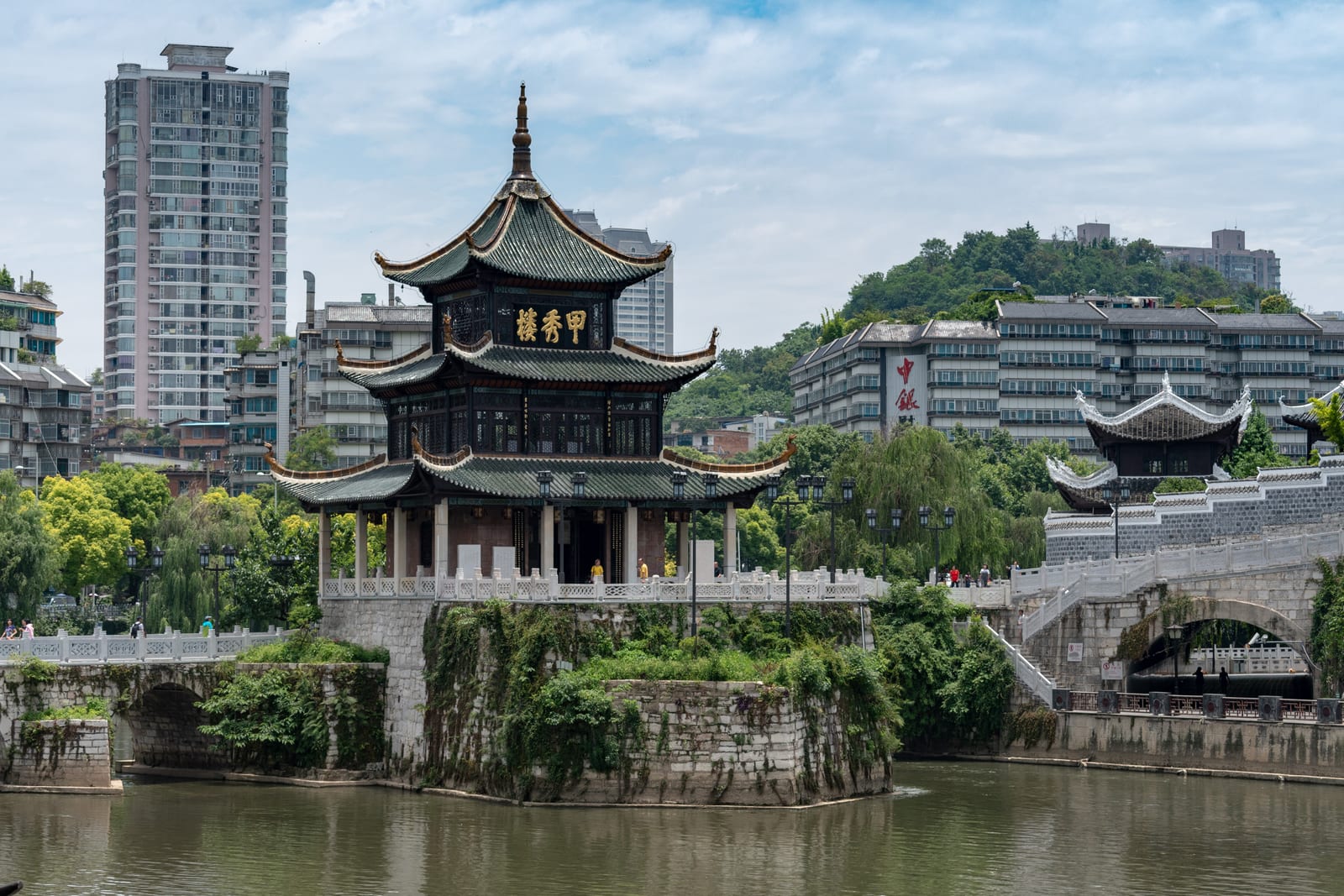
Guiyang works both as the transport hub for a wider Guizhou trip and as a two- or three-day city break. Its appeal comes from wooded city hills, the Nanming River, historic streets, karst scenery and an unusually strong food scene. The main planning challenge is distance: the old centre, Huaxi and Guanshanhu are separate zones, not one continuous walking route.
Destination Fit
For a first visit, divide the city into three practical areas. Qianling Mountain, Jiaxiu Tower and old-centre dining form the urban core. Qingyan Ancient Town, Huaxi Park and the Shili Hetan greenway form the southern route. Guizhou Provincial Museum, Guanshanhu Park and rail connections form the newer northern area. Tianhetan needs a separate half-day or full day. If Guiyang is only an overnight stop before Huangguoshu, Libo or southeast Guizhou, one complete afternoon and evening is enough for a light old-city route.
When to Go
Spring and autumn suit city walks, heritage streets and riverfront time, though rain and cool evenings still call for a light layer. Summer is a popular season for escaping hotter lowland cities, but showers, thunderstorms and short bursts of heavy rain can disrupt roads and water-based attractions. Winter is quieter and can feel damp and cold; museums, neighbourhood food and shorter walks become more useful. During public holidays, Qingyan, Qianling Mountain and major museums can all be busy, so check weather, reservations and traffic notices together.
Choosing the Right Stops
Qianling Mountain Park combines woodland, Hongfu Temple and lakeside paths. In macaque areas, secure food, glasses and loose belongings; do not feed or provoke the animals. Jiaxiu Tower and the Nanming River work well in late afternoon and evening, paired with old streets, Wenchang Pavilion or one nearby food district. Qingyan Ancient Town is for gates, stone lanes, courtyards and snacks rather than rushing through every paid interior. Huaxi Park and Shili Hetan offer gentler outdoor time. Tianhetan focuses on karst water and cave experiences. Open areas and internal transport depend on current operating conditions. Guizhou Provincial Museum is a strong rainy-day choice and gives useful context on the province's peoples, history and natural geography.
Practical Two-Day Itinerary
On day one, begin at Qianling Mountain Park and choose the hill route or lakeside paths according to the group's stamina. Return to the old centre for lunch and a slower afternoon. Toward evening, walk around Jiaxiu Tower and the Nanming River, then eat in one nearby district instead of crossing the city for several trending restaurants. On day two, make Qingyan or Tianhetan the main decision. Choose Qingyan with a short Huaxi stop for heritage and food; choose Tianhetan when natural scenery matters more. Start the return journey early if you still need to reach the city centre, airport or a railway station that evening.
Three Days or Longer
A third day can focus on Guanshanhu, Guizhou Provincial Museum and an easy park or shopping stop before an evening departure from Guiyang North Railway Station. Families and slower travellers can instead separate Qingyan and Huaxi into different days.
For four days, complete the old centre, southern route and Guanshanhu on separate days, then choose either Tianhetan or a slower Huaxi day for day four. Do not cross back to Qianling Mountain or several night markets merely to increase the count. On a five-day stay, keep day four flexible for bad weather and use the final half-day for an indoor stop already aligned with the airport, Guiyang North or Guiyang East. When continuing to Huangguoshu, Libo, Kaili or Zunyi, protect the last Guiyang night for laundry, supplies and delay recovery. Those are regional journeys, not city sights, and need their own transport, lodging, effort and return plan.
Getting There and Moving Around
Guiyang Longdongbao International Airport, Guiyang North Railway Station and Guiyang East Railway Station are in different parts of the city. Choose accommodation according to the actual arrival and departure point. Metro, buses and licensed ride-hailing can be combined in the urban area, but hills and indirect roads mean a short map distance may still take time. For Qingyan, Huaxi and Tianhetan, check the day's public transport, last service, scenic shuttle, parking and temporary traffic controls. Rainy rush hours and large events can lengthen taxi queues, so agree on a meeting point before the evening begins.
Where to Stay
Penshuichi, Dashizi and the Jiaxiu Tower area are convenient for old-city walking and evening food. They suit first visits and short stays, but room soundproofing, slopes and vehicle access deserve attention. Guanshanhu and the Guiyang North station area are useful for rail connections, business trips and newer hotels. The journey to the old centre is longer. Huaxi makes sense when Qingyan, Huaxi Park or the university area is the priority; it is less practical for repeated late-night trips downtown. For an early flight, an airport-oriented final night may be safer than leaving directly from an outer attraction.
Food and Local Specialties
Changwang noodles, siwawa wraps, Huaxi beef rice noodles, tofu balls, lian'ai doufuguo (恋爱豆腐果), sour-soup fish, Guiyang-style griddled dishes known as luoguo (烙锅), and zhe'ergen are characteristic local choices. Sourness, chilli, oil and fish mint can be adjusted, so state the preferred heat level and whether zhe'ergen should be included. A night market is useful for small portions and variety, but there is little value in racing across several districts in one evening. Families can balance strongly seasoned dishes with broth noodles and rice. For packaged chilli, tea or cured food, check ingredients, expiry dates and transport rules rather than relying on health claims.
Tickets, Reservations and Final Checks
Guizhou Provincial Museum, popular attractions and holiday events may use reservations, timed entry or security checks. Consult official accounts and authorised booking channels. At Qingyan, distinguish public streets from combined tickets and separately charged interiors. At Tianhetan, confirm the open areas, internal transport and any water activity for that day. Qianling Mountain may issue temporary closures or wildlife-management notices. Keep orders, cancellation terms and payment records for tickets, guides, vehicles and performances. Treat published hours and schedules as planning clues until rechecked for the travel date.
Budget and Booking Order
Secure the return transport and first night before estimating airport or station transfers, cross-city travel among the old centre, Huaxi and Guanshanhu, lodging, entry and internal transport, meals, luggage storage and a rain fallback. Check Tianhetan activities, Qingyan paid interiors and museum reservations as separate rights rather than assuming that one combined product includes everything. A hotel change to Huaxi or the airport side also consumes checkout time, luggage handling, a cross-city ride, another check-in and possible cancellation value; make that move only when it materially protects the next morning or the departure.
Safety and Respectful Travel
Macaques at Qianling Mountain are wild animals, not photo props. Keep children close and food out of sight. Guiyang's slopes, stone steps and wet pavements reward shoes with good grip and a flexible pace. Cancel or reroute riverfront, cave and water activities during severe rain. At night, choose clearly priced food and licensed transport, and avoid climbing or taking waterside photos after drinking. Follow photography and quiet-space rules in temples, residential parts of old towns and exhibitions about local cultures.