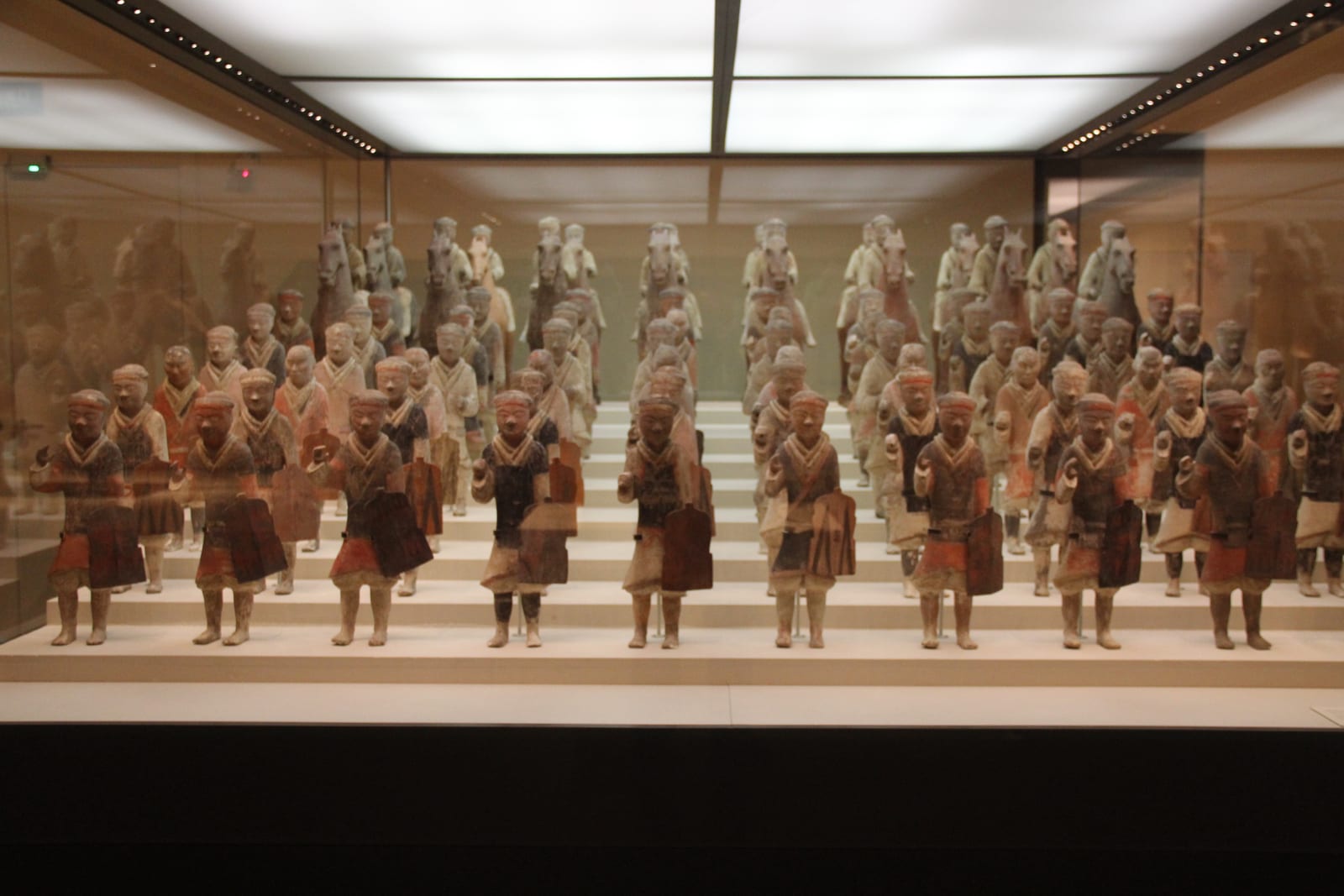
Shaanxi stretches far from north to south, and its three broad regions do not make one convenient sightseeing loop. Xi'an and Lintong are the natural starting point for history, Mount Hua needs a separate day suited to its physical demands, Yan'an and Yulin form a long northern journey, and Hanzhong, Ankang and Shangluo lie south of the Qinling Mountains. Before leaving, check current notices from the provincial tourism and weather authorities, transport operators and each attraction. Museum reservations, mountain access and Yellow River conditions all change.
Choose a Region Before Choosing Your Stops
Three or four days are enough for Xi'an, Lintong and one Guanzhong extension. With five or six days, add Mount Hua, Xianyang or Baoji. Northern or southern Shaanxi deserves another three to five days of its own. A first trip should not force Xi'an, Mount Hua, Hukou Waterfall, Yan'an, Yulin and Hanzhong into one week; the province's long rail and road transfers would divide every day.
- Guanzhong covers Xi'an, Lintong, Xianyang, Baoji, Weinan and Tongchuan. This region has the greatest concentration of museums and historic sites.
- Northern Shaanxi centres on Yan'an, Yulin and routes along the Yellow River. It works best by car, licensed driver or carefully connected public transport.
- Southern Shaanxi covers Hanzhong, Ankang and Shangluo, with more mountains, river valleys and weather-sensitive nature trips.
Seasons, Temperature Swings and Weather
Spring and autumn generally suit city walking and archaeological sites. During the Qingming, Labour Day and National Day peaks, reduce the number of intercity transfers. Summer is hot around Guanzhong, while the Qinling range and southern valleys can receive sudden heavy rain. Autumn brings cooler nights. In winter, northern Shaanxi can be bitterly cold and higher parts of Mount Hua may have snow, ice or service changes.
Do not rely on a Xi'an forecast for the whole province. Before Mount Hua, Taibai Mountain, Jinsi Gorge, a Yellow River route or any southern valley, check warnings for the destination county as well. Heavy rain can trigger flash floods, landslides and rockfall. Even after the sky clears, stay out of closed gullies, riverbeds, cliff bases and unofficial paths.
Core Sights: Xi'an and Lintong
Divide central Xi'an over two days. The Shaanxi History Museum, Big Wild Goose Pagoda area, City Wall, Bell and Drum Towers, Forest of Steles and Muslim Quarter do not fit comfortably into one rushed circuit. Popular museums use real-name reservations and may alter their release process. Use the museum's own channel rather than paying a stranger for an “inside allocation” or a compulsory tour bundle.
The Emperor Qinshihuang's Mausoleum Site Museum and Huaqing Palace in Lintong make a separate day. The galleries at the mausoleum site are dense, so settle transport and a realistic return time before adding an evening performance. Admission, a guide, shuttle transport and a show may all be separate products. Never hand a street solicitor a document image, verification code or payment password.
Mount Hua and Weinan: Keep a Full Mountain Day
Do not place Mount Hua on an arrival or departure day. Choose a cable-car combination or a shorter walking range according to your fitness and the routes actually open. Different cable cars, peaks and transfer buses are not automatically included in one purchase. High wind, thunderstorms, fog, ice, maintenance and crowd controls can alter the plan. If a sector closes, remove it rather than following a private guide around a barrier.
Elsewhere in Weinan, Hancheng Old Town, the Sima Qian Temple and Qiachuan can be worthwhile, but none is a quick add-on to Mount Hua. Hukou Waterfall sits in the Jin-Shaan Canyon and is managed as a cross-provincial destination from both Shaanxi and Shanxi. Confirm which bank, entrance and return journey your ticket covers; visitors cannot simply switch sides at the waterfall.
Xianyang, Baoji and Tongchuan
Xianyang suits a Qin and Han history extension, including imperial mausoleum landscapes and the Qin-Han branch of the Shaanxi History Museum. The sites are dispersed and final transport takes time, so half a day normally allows only one major stop. Baoji can hold one or two days for Famen Temple, Zhou and Qin history and city museums. Taibai Mountain or Guanshan Grassland needs extra mountain time and a weather alternative.
In Tongchuan, consider Yaozhou ceramics, Yaowang Mountain or the Zhaojin area according to current access. Treat accounts of historical figures, religion and traditional medicine as cultural interpretation, not medical advice. During holidays, confirm parking, attraction shuttles and the return road instead of relying on roadside salespeople.
Yan'an: Revolutionary History and the Loess Plateau
Allow one or two days in Yan'an for Baota Mountain, the Yan'an Revolutionary Memorial Hall, Yangjialing and Zaoyuan. Opening arrangements and guided interpretation change, and moving between the sites takes time. Use formal exhibitions to understand the history; theatrical stories or unsupported claims from an informal guide are not evidence.
Hukou, the Mausoleum of the Yellow Emperor and Qiankun Bay lie in different directions and require substantial road time. From Xi'an, an overnight stop in Yan'an or along the route is more sensible than a multi-stop day return. At the Yellow River, remain behind barriers and within open viewing areas. High water, ice runs, strong wind or road controls can close sections without notice.
Yulin: Old Town, Great Wall Remains and Desert Edges
Yulin Old Town, Zhenbeitai and Hongshi Gorge fit into one or two days. Jingbian's Wave Valley, Tongwancheng and routes toward Fugu or Shenmu each need additional road time. Desert and canyon scenery changes with wind, rain and light, so no itinerary can promise a drone flight or a particular sunset.
Fuel and charging points are farther apart in northern Shaanxi. Check range, tyres, insurance and roadside assistance before a long drive. Great Wall remains, archaeological areas, cliffs and grazing land are not off-road playgrounds. Keep out of closed tracks, farmland and protected areas, and ask before photographing residents at work.
Hanzhong, Ankang and Shangluo
Hanzhong combines the Ancient Hantai, the Altar of Han Xin, the Shimen plank-road area and Three Kingdoms sites around Mian County. Spring flowers are a bonus, not a fixed-date promise. Foping, Liuba and Ningqiang need mountain-road and overnight time. In nature reserves, remain within public visitor areas and never enter a core conservation zone.
Ankang is better at a slower pace around the Han River, Ying Lake and selected counties. In Shangluo, choose one direction such as Jinsi Gorge, Dihua Old Town or Niubeiliang. During the southern rainy season, a warning, landslide risk or closure means switching to a city or indoor plan. Do not camp on a river terrace or enter a canyon without communications.
Four to Ten Day Itineraries
Four Days in Guanzhong
- Day 1: arrive in Xi'an and choose one cluster around the Bell and Drum Towers, City Wall or Forest of Steles.
- Day 2: visit the Shaanxi History Museum and Big Wild Goose Pagoda area, adjusting the order to the reservation obtained.
- Day 3: spend the day at the imperial mausoleum museum in Lintong; add Huaqing Palace or a performance only if the return remains comfortable.
- Day 4: visit another central Xi'an site or choose just one Xianyang or Qin-Han Museum direction.
Six Days with Mount Hua or Baoji
Use the four-day plan, then choose Mount Hua or Baoji for Days 5 and 6. For Mount Hua, stay in Huayin or a practical Weinan location. For Baoji, pair Famen Temple with one city museum. Do not force both branches into the same two days.
Nine or Ten Days with One Wider Region
After four or five Guanzhong days, take Yan'an and Yulin for a northern extension, or Hanzhong with Ankang or Shangluo for a southern one. Each remote county should replace another intercity sight and add a buffer night. Return to a city with dependable rail or air connections on the final evening.
Intercity Transport, Drivers and Self-Drive
Xi'an is the main hub. High-speed rail serves some journeys toward Mount Hua, Baoji, Hanzhong and Yan'an, but county attractions still need buses, attraction shuttles, a licensed ride-hailing car or a legitimate driver. Confirm the exact station and final road distance; “rail to the city” does not mean the attraction is beside the platform.
A hired car or small tour should state the vehicle and driver credentials, daily distance, tolls and parking, attraction transfers, lodging, meals, optional purchases and cancellation. Before driving across the Qinling range, the Loess Plateau or Yellow River country, check roads, weather and charging. Stop when fatigue, night fog, heavy rain or ice makes progress unsafe.
Lodging, Food and Reservations
In Xi'an, choose a metro area around the reservations that matter most. For Mount Hua, stay where the official visitor transport is straightforward. In Yan'an, Yulin and Hanzhong, prioritise the station and next morning's route. Verify claims such as “walk to the entrance” or “panoramic view” against the map, gradient, obstruction, construction and recent room photographs.
Shaanxi specialities include roujiamo, liangpi, lamb paomo, gourd chicken, saozi noodles, Qishan noodles, fried rice cakes, northern grains and Hanzhong hot rice noodles. Start with modest portions if the oil, salt or spice is unfamiliar. Be cautious with raw or undercooked food, unlabelled infused drinks and foraged plants. Diners with allergies should ask about ingredients and shared preparation surfaces.
Heritage, Mountain and Consumer Safety
- Follow photography, touching, dress and security rules in museums, tomb sites, historic buildings and religious places. Never climb or mark a monument.
- Stay within open mountain, canyon and river areas. A closure or transport suspension cannot be bypassed safely by a private offer.
- Do not buy unverified antiquities, fossils or wildlife products, and do not treat souvenir marketing as professional authentication.
- For a cheap day tour, check the travel company's licence, contract, shopping schedule and total price. Keep orders, messages, payments and receipts.
- When weather, a reservation or physical condition changes, remove a stop. A missed sight is preferable to a late and exhausted transfer.