
A rewarding museum trip in China is not about fitting in as many venues as possible. Start with a theme and choose one main museum. Let its booking requirements, security checks, the group's stamina, transport and the journey back determine the shape of the day. A large general museum, an archaeological site, a historic palace, a science museum and a memorial may all have different visitor rules. Opening days, areas open to visitors and admission procedures can also change during public holidays, summer programmes, exhibition installation or maintenance.
This guide focuses on choosing museums and planning a workable visit. It does not assume that any particular object will be on display. The dated booking examples below apply only to the named venues, not to every museum's ticket releases, prices, closures or tours. Before setting out, check each venue's official website, WeChat account or mini programme, then follow the current booking page, same-day notices and signs at the museum.
Decide What Kind of Museum Day You Want
- First visit to a city: choose a general museum that explains the area's history. Add a smaller specialist museum only if time and energy allow. Establishing the broad story is usually more rewarding than rushing through several similar galleries.
- A deeper cultural trip: connect museums through a theme such as early civilisations, the Silk Roads, bronze casting, cave temples, maritime trade or regional crafts. Keep one principal museum at the heart of each day.
- A family visit: favour natural history, science, hands-on archaeology and venues with a clear route. Do not fill the day with galleries that require children to listen quietly for long periods.
- Travelling with an older or disabled visitor: confirm the accessible entrance, lifts, seating, wheelchair loans, toilets and return pickup point before deciding how many galleries to cover.
- An arrival-day or wet-weather option: choose somewhere with straightforward transport, clear luggage arrangements and an easy journey back. Allow about two hours and do not try to squeeze an out-of-town site museum into an uncertain gap.
Core Sights and Trade-offs
General and City Museums
The National Museum of China, provincial museums and city museums often use a chronological route to explain a place through its history, geography, communities, crafts and urban development. On a first visit, begin with the orientation area and general history galleries, then choose one local theme to explore in more depth. Even when a temporary exhibition is popular, leave time for the permanent displays: they often provide the clearest account of the region.
Palaces, Historic Buildings and Memorial Sites
The Palace Museum, Shenyang Imperial Palace and museums housed in Confucian temples, former government compounds, guild halls or historic residences are as much about their buildings and courtyards as their displays. One-way routes, temporary closures, conservation work, steps and exposed sections can all affect the pace of a visit. Memorial museums and revolutionary sites call for quiet, respectful conduct; ceremonial spaces should not be treated as backdrops for casual photo shoots.
Archaeological Site Museums
At sites such as the Emperor Qinshihuang's Mausoleum Site Museum, Sanxingdui Museum, Jinsha Site Museum, Liangzhu Museum and Yinxu Museum, the relationship between the site, the excavation and the objects matters as much as any famous find. Begin with the site's extent and period, then move on to representative objects. This gives the displays more meaning than simply seeking out a single celebrated piece. Site museums may involve long outdoor walks or transfers between areas, so allow for the weather and the group's stamina.
Natural History, Science and Art Museums
Natural history, science, astronomy, maritime and children's museums may offer films, workshops or interactive sessions with separate bookings and age restrictions. Admission to the main building does not necessarily include these activities. Art museums and venues devoted to crafts or rare books reward a slower pace, but their exhibitions and objects may rotate more frequently. In either case, check admission to the museum and any additional activity or exhibition separately.
Season, Admission Time and Pace
Indoor museums can be visited year-round, but historic complexes, archaeological sites and out-of-town venues are more exposed to heat, heavy rain, snow, ice and transport disruption. In midsummer, choose an early slot for outdoor areas and save indoor galleries for later. In winter, consider time spent in courtyards, slippery steps and how early the return journey will fall after dark. A reservation during a busy holiday does not remove the need to queue for security.
Do not assume that every museum in China closes on Monday. Public holidays, summer schedules and special events may bring an extra opening day or move a closure elsewhere in the week. Admission windows, last-entry times and areas open to visitors can change independently, so verify all three for the exact date of your visit.
Check Before Leaving
- Official booking channel: make sure the website, WeChat account, mini programme or tourism-department link belongs to the museum. Check whether individual, group and guided-visit bookings use different routes.
- Identity documents: confirm which documents are accepted from mainland residents, visitors from Hong Kong, Macao and Taiwan, and overseas travellers. Check whether children, older visitors and carers also need a reservation or must show an original document.
- Booking changes: read the current rules for ticket release, timed entry, late arrival, amendments, cancellation, no-shows and rebooking.
- What is open: check permanent galleries, temporary exhibitions, specialist buildings, archaeological areas and courtyards for the day of the visit. Important objects may be rotated, lent elsewhere or removed for conservation.
- Security and luggage: find out whether large bags, liquids, food, lighters, selfie sticks, tripods, folding stools, pushchairs and professional equipment are allowed or can be stored.
- Tours and photography: check the times and booking arrangements for official tours, audio guides and volunteer talks. Follow current rules on photography, flash, commercial shoots, livestreaming and recording.
- Visitor facilities: locate the accessible entrance, lifts, wheelchair or pushchair loans, baby-care room, seating, drinking water and toilets.
Do not buy an unofficial booking service, “guaranteed admission”, an “internal ticket” or a vaguely described queue-jumping service. If you use an independent guide, confirm the operator, meeting point, duration, group size, language, charges and cancellation terms, and keep the booking record after payment.
Borrowing an audio guide: track pickup, return and deposit separately
- Confirm the service before borrowing. Use the museum's official page or service desk to check availability for that date, languages and exhibitions covered, the actual pickup point, permitted return points, the return deadline, the device and accessory list, and how the rental charge, any deposit and proof of return are recorded. A request, payment or availability message does not mean that the device has been handed over. If none is available, use gallery labels or an official phone guide only if that museum actually offers one; do not assume that a personal headset or a particular app will work.
- Check every item at pickup. In the permitted area, count the player, headset, lanyard and any other components actually supplied, and note visible issues with staff. Only where staff permit and instruct you to do so, try playback for the intended language or exhibition and check that the player and headset work. If testing is not allowed, write that the function still needs checking. Do not open or repair the equipment. Record an item as received only after it is physically handed over. Keep the record private rather than posting identity numbers, payment codes, return codes or full receipt numbers in a group chat.
- Complete the return before leaving, then track the money separately. Return every component at a point and by a method confirmed for that museum, and obtain confirmation from staff or the return system. If no confirmation appears, ask the official service desk from a safe public place without blocking a route. Record separately whether the equipment return is confirmed or still awaiting confirmation. For the deposit, write either “no deposit was collected”, “still processing” or “settled”. If a deposit was collected, check the actual charges and receipt of any amount due back before calling it settled. Placing an item in a return unit, completing a scan, requesting a refund or starting deposit processing does not by itself confirm both the equipment return and deposit settlement. Do not assume a universal settlement time.
Invented example: a museum supplies one player, one headset and one lanyard. The visitor returns all three at the confirmed point, and the receipt confirms the complete equipment return. The deposit still shows as processing, so record it as processing rather than complete. If a separate borrowing transaction required no deposit, write “no deposit collected” instead of zero or settled. This example names no real museum, price, device number or refund period, and does not promise availability.
Private copyable line: Museum/date ___; device and accessories ___ items; pickup point and what was received ___; return point/deadline ___; rental charge and deposit terms ___; where the return record is stored privately ___; return confirmed or still awaiting confirmation ___; no deposit, processing or settled ___; alternative if the device is unavailable ___
The National Museum of China's self-guided visit article published on 10 August 2026 distinguishes combined rental-and-return points from return-only points and treats complete equipment return separately from the subsequent deposit settlement. The page was checked on 26 September 2026. It is an example from one museum, not a rule for another museum's equipment, locations, charges, deposit, return deadline or settlement time.
Palace Museum and National Museum: Different Booking Clocks
These official booking instructions were checked on 9 September 2026. They are not special Golden Week opening notices or live ticket availability. Times are Beijing time; recheck if the museums update their rules.
- Palace Museum (故宫博物院): the individual booking instructions say there are no same-day tickets and reservations open at 20:00 seven days before a visit. Visitors from outside mainland China may use a passport or another listed document. Check the exhibitions included; general admission does not establish a reservation for every exhibition.
- National Museum of China (中国国家博物馆): the booking instructions allow reservations within a seven-day advance window, with releases at 17:00 daily. Complete account identity verification, then bring the original booked document and confirmation for the reserved entry slot at the north entrance. Free admission does not remove the booking requirement.
For each traveller, record the museum, date, slot, document and confirmed status, not just a payment or group-chat screenshot. Follow each museum's rules for children, carers and concessions. If document verification fails, contact the museum's official service rather than booking under another person's identity.
If no reservation is available, remove that museum as a fixed appointment and check the alternative's entry, opening and booking arrangements before travelling. Do not arrive with bags hoping for an unconfirmed walk-in place. Use the rail connection guidance for an arrival-day visit and the Golden Week deadline plan for a longer holiday.
Group booking check: confirm each person, date and item
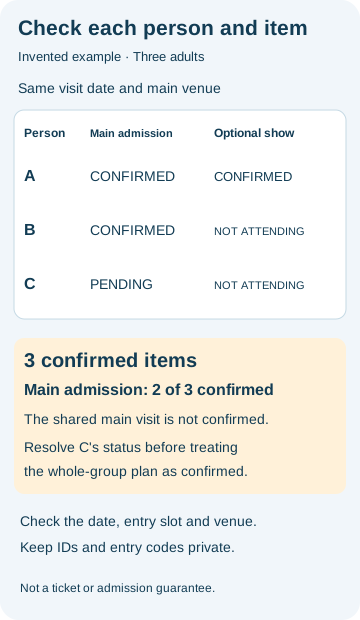
One successful screenshot proves only what that screen explicitly confirms. It does not automatically cover every traveller, museum area or additional exhibition. Build a private check card with traveller codes such as A, B and C. Record the full visit date, museum area and actual entrance, then give each person a separate cell for main admission and each additional exhibition or activity. Use only three states: CONFIRMED, PENDING, NOT ATTENDING. Do not place identity numbers, booking QR codes, order codes or full names on the shared card; supply required details privately through a verified official venue channel.
Invented example for three adults on the same date:
- A: main admission CONFIRMED; optional exhibition CONFIRMED.
- B: main admission CONFIRMED; optional exhibition NOT ATTENDING.
- C: main admission PENDING; optional exhibition NOT ATTENDING.
There are three confirmed item cells, but that does not mean all three people have confirmed main admission. While C remains pending, the shared plan for everyone to have main admission is still unconfirmed. If a field is missing, a page shows only one traveller, or an exhibition status is unclear, ask the venue rather than infer from one screenshot.
This adult-only example is not a suggestion to separate children or visitors who need assistance from their required companions. NOT ATTENDING is a planning choice, not proof that an existing booking has been cancelled. Track cancellation, refund and any new booking separately.
Copyable card:
- Venue, area, actual entrance, full date and slot: ___
- A — main: ___; additional item: ___
- B — main: ___; additional item: ___
- C — main: ___; additional item: ___
- Evidence for each cell and time checked: ___
- Is the shared plan confirmed? Remaining pending cells: ___ / ___
- Alternative venue/item, entrance, opening and booking status: ___
A cancellation, change or refund remains pending until the official page or venue response shows completion. Verify an alternative too: do not assume admission without a booking, that a general or combined ticket includes every item, or that submitting a cancellation completes a refund. Carry the result into the day-by-day itinerary and keep a private copy in an offline travel kit; an offline card is not a current booking page or valid admission credential.
The Palace Museum personal booking instructions state that its visitors, including accompanying visitors, use real-name booking, and that some exhibitions require reservations according to the booking page. The page was checked on 26 September 2026 Beijing time (25 September UTC); its old pandemic pop-up is not used here. This supports checking people, main admission and exhibitions separately. It is not a universal museum rule and does not guarantee entry.
Re-entry checks and the final collection route
Before going outside for lunch, luggage or another traveller and planning to return, ask the museum's official service desk whether your booking allows re-entry, which entrance to use, what verification is needed and whether the remaining admission window permits it. If re-entry is still unconfirmed, do not make an afternoon exhibition depend on it. A ticket valid for the date, free admission, an earlier scan or a separate exhibition reservation does not by itself establish re-entry rights. Nor does this mean that every museum bans re-entry. Without a clear answer, consider a permitted café or rest area inside, or eat outside after finishing the visit. Do not delay a necessary meal, rest or urgent departure merely to see more galleries.
Before leaving, check three separate tasks rather than recording only the exit gate:
| Task still to complete | Location or condition to confirm | Effect on the route |
|---|---|---|
| Belongings in an indoor locker | Inside or outside the admission boundary, permitted access and collection deadline | Collect them before crossing that boundary; keep locker codes private |
| A bag stored outside or transferred elsewhere | Collection point on the receipt, whether the bag has arrived and the service deadline | Do not assume pickup is at the drop-off point or available at every exit |
| Borrowed equipment and onward transport | Confirmed return desk, then the actual exit and permitted pickup point | Complete the handover and collect belongings before recalculating the journey outside |
The Palace Museum's official youth-site visitor guidance names the Meridian Gate as the entrance and Shenwumen or Donghuamen as exits. The National Museum of China service page separately lists storage outside its north gate and smart lockers inside. Both pages were read on 4 October 2026. These examples support checking exits and collection points separately, not today's temporary routes, storage capacity, charges, collection deadlines or re-entry permission. Check each museum and storage arrangement individually; do not apply the Palace Museum's route to the National Museum or elsewhere.
Invented calculation, not a museum schedule or queue estimate: a visitor chooses 16:20 as their planning time to reach a confirmed pickup point. They budget 25 minutes from bag collection to that point and 15 minutes for collection and margin, so collection should start at 15:40: 16:20 − 25 − 15. If still in a gallery, they must also allow time to reach collection, return equipment and leave the museum. 15:40 is not the time to leave the gallery. If collection and margin rise to 30 minutes with everything else unchanged, start collection at 15:25 instead. Work backwards from an earlier service deadline if one applies. Recalculate after a route, queue or stamina change and drop the final exhibition; the example cannot guarantee a connection.
Private copyable line: Museum/date ___; re-entry permission and evidence (CONFIRMED/PENDING) ___; last gallery → equipment return → belongings → actual exit → pickup point ___; time and margin for each leg ___; actual service deadlines ___; personal planning times to leave the gallery/start collection ___; unresolved items and what to drop ___. If collection does not match the exit, a transferred bag has not arrived or a task cannot be completed before its deadline, contact the service desk first. Do not walk against a one-way route or cross a closed admission boundary. For storage handover and receipt checks, continue with the luggage storage tutorial.
Three Workable Itineraries
A Two-Hour Arrival-Day Visit
This light visit works for an unexpected gap or a day with children. Save the reservation and return route before setting out. Once through security, choose one main gallery and one nearby special exhibition rather than crossing the complex in search of more. Leave enough time for the toilet, bag collection and the walk to the metro or pickup point.
A Standard Half-Day
A half-day suits a provincial museum, one major section of a palace complex, or a large natural history or science museum. Read the map on arrival, then divide the visit into three parts: main display, seated break, specialist exhibition. Take a rest after two or three hours on your feet, and do not let a queue for a temporary show consume the time needed for the journey back. With children or older travellers, one main museum is usually enough.
A Full Day at a Site Museum
See the site or main display in the morning, then eat and rest in an area where this is permitted. Add a specialist exhibition, related historic area or museum shop in the afternoon. For an out-of-town museum, secure the return journey before adding a side trip. If heavy rain, traffic controls, a temporary closure or fatigue disrupts the plan, drop the final section instead of taking risks to “finish” the visit.
City Combinations That Make Sense
- Beijing: make either the Palace Museum or the National Museum of China the day's main visit. Save the Capital Museum, the National Museum of Classic Books or a natural history or science museum for another day, and allow ample time for transport and security checks around Tiananmen.
- Xi'an: separate the Shaanxi History Museum from Beilin Museum and the city wall if the day is already full. The Emperor Qinshihuang's Mausoleum Site Museum is outside the city centre and needs dedicated time for both the site and the return journey.
- Chengdu and Guanghan: The Jinsha Site Museum closure notice announced that all areas are closed from 5 December 2025 through 30 April 2027, so do not schedule museum or park entry during that period. Treat Sanxingdui Museum as a separate half-day or full-day outing and confirm its reservation, opening and intercity transport. Any Chengdu replacement also needs its own same-day opening check.
- Changsha: use Hunan Museum as the main half-day visit, then decide according to energy levels whether to continue to Yuelu Mountain or the old city.
- Wuhan: Hubei Provincial Museum and East Lake are close, but a large exhibition, a performance and a long lakeside route should not all be compressed into one afternoon.
- Nanjing: divide Nanjing Museum, the Six Dynasties Museum, the Imperial Examination Museum and city-wall sites by historical theme rather than trying to collect them all in one day.
Transport, Lodging and Luggage
Choose accommodation with the earliest timed booking and the final return point in mind. For a morning reservation, a hotel on a reliable metro line or within walking distance is often more useful than one described simply as “central”. For an archaeological site or other out-of-town museum, confirm the departure point, where to get off, return services and ride-hailing arrangements. Do not rely on the last departure as your only way back.
Check whether the museum accepts large items before arriving with luggage. If it does not, use storage at a station or hotel, or another legitimate luggage facility. Do not wait until you reach the entrance to look for an alternative, and never leave identity documents, medication or valuables in an unattended bag.
Food, Rest and Museum Shops
Rules on food and drink, and the availability of cafés and water points, vary by museum. Restaurants near popular venues may have long queues, so identify an alternative outside before a half-day visit. Anyone managing blood sugar, allergies or a child's mealtime should not depend on being able to buy the only suitable meal inside.
Before buying a catalogue, replica, stamp or other souvenir, check its authorisation, materials, returns policy and any transport restrictions. Photography and stamp collecting must not block corridors, display cases or accessible facilities. For edible gifts, check the producer information, shelf life and storage requirements.
Families, Older Visitors and Accessibility
With children, turn the visit into a search for patterns, colours, materials or animal forms rather than expecting them to remember a complete chronology. Agree on a meeting point and what to do if anyone becomes separated. Avoid chasing or running near escalators, stairs and crowded galleries.
When travelling with an older visitor, confirm lifts, seating, indoor temperature, toilets and the distance to the return vehicle. Wheelchair and pushchair loans, accessible entrances and arrangements for companions differ between museums, so ask the venue directly. Anyone sensitive to sound, lighting, enclosed spaces or long periods of standing should also have a clear route for leaving early.
Safety, Conservation and Etiquette
- Do not touch display cases, objects, historic building fabric or gallery walls. Do not lean on railings or cross barriers.
- Follow the day's signs on photography. Do not use flash, additional lighting, a tripod or a selfie stick unless the museum explicitly permits it.
- Keep voices low, avoid lingering in front of a busy case and leave fire exits and accessible routes clear.
- Do not allow children to climb on displays. Slow down on the steps of archaeological sites and historic buildings in rain, snow or ice.
- Object rotations, conservation work and temporary closures are normal. Follow staff instructions and keep a nearby alternative in reserve rather than trying to enter a closed area.
A good museum trip is not measured by the number of galleries completed. It gives the day a clear thread, protects time to rest and return, and can be shortened calmly when conditions or rules change.