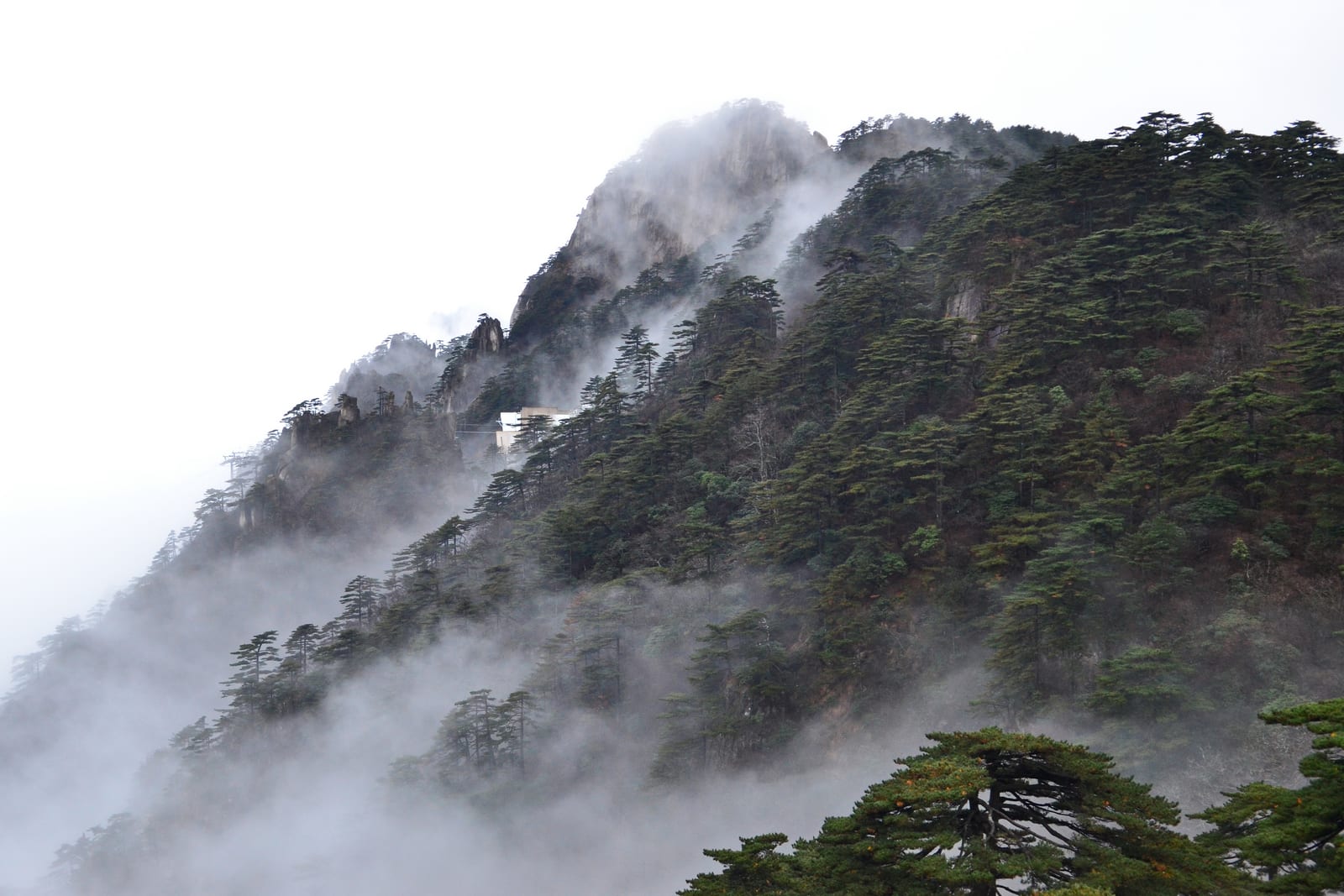
Huangshan City is more than a mountain trip. A balanced visit combines one or two days in Huangshan Scenic Area with a separate block for Huizhou villages, Tunxi, Shexian or the Xin'an River. Mountain weather, cableway maintenance, timed reservations and limited summit lodging can all change the route, so keep at least one part of the itinerary flexible.
Decide the Shape of the Trip
Tangkou and the South Gate are the usual bases for Huangshan Scenic Area. Tunxi is better for city services, the old street and onward transport. Hongcun, Xidi, Tachuan and Chengkan are living Huizhou communities rather than extensions of the mountain, while Huizhou Ancient City and Yuliang Dam lie in Shexian. Qiyun Mountain, the Xin'an River Landscape Gallery and Huashan Mystery Caves each require their own transport and current operating check.
First-time visitors should avoid treating Tiandu Peak, Xihai Grand Canyon, sunrise, sunset and a full mountain crossing as one compulsory day. Stairs, queues, fog and changing trail controls can add hours. Families, older travellers and anyone with limited knee or stair tolerance will usually have a better trip by using a cableway and one shorter walking circuit.
Check Before Leaving
- Use the scenic area's official platform and management notices for admission, real-name reservations, Tiandu Peak access, cableway operation, trail closures and weather controls. Recheck the evening before the mountain day and again before entering.
- Yungu, Yuping and Taiping cableways, as well as the Xihai sightseeing funicular, can close for maintenance, wind, thunderstorms, ice or crowd management. A ticket or hotel booking does not override a safety closure.
- Summit rooms are limited and cancellation terms can be strict. Confirm the exact location, room type, heating, meals, luggage arrangements, entry requirements and refund rules before paying.
- Hongcun, Xidi, Chengkan, Huizhou Ancient City and other heritage areas use separate rules for admission, re-entry, evening access, guiding and parking. Check each place rather than assuming one policy applies across Huangshan City.
Huangshan Scenic Area
Tangkou, the South Gate and the Rear-Mountain Route
Most visitors transfer at Tangkou or the South Gate before continuing toward Yungu or Yuping. Private cars normally do not drive directly to the main climbing approaches, so include the current scenic shuttle in the day's timing.
The Yungu side provides a practical first ascent toward Shixin Peak, Beihai and nearby viewpoints. It suits a slower introduction to Huangshan's granite peaks and pines. If staying around Beihai or Xihai, wait for the current forecast before committing to a sunset viewpoint. Fog may reduce the view, while rain makes stone steps slippery and the air noticeably colder.
Yuping, Guest-Greeting Pine and Tiandu Peak
The Yuping side serves Guest-Greeting Pine and the steeper front-mountain routes. Tiandu Peak requires stronger fitness and may use a separate reservation and access-control process. Treat the official status at the entrance, the weather and your remaining energy as three independent reasons to turn back.
Crowds gather around Guest-Greeting Pine, so keep photography within marked areas and moving lanes. A front-mountain descent places sustained load on the knees. Trekking poles or knee supports can help some walkers, but they do not replace sufficient drinking water, rest or a realistic route. Carry enough water without creating unnecessary weight.
Xihai Grand Canyon
Xihai Grand Canyon involves repeated ascent and descent and can take much longer than a map suggests. The sightseeing funicular may reduce some walking, but its direction, queue, ticket and operating status must be checked for the day. Skip the canyon during thunderstorms, snow, dense fog or a closure, and leave it out whenever fitness is declining. A shorter Beihai, Bright Summit, Flying-over Rock and Yuping route is a complete alternative.
Huizhou Villages, Tunxi and Shexian
Hongcun is known for its water system and village layout, while Xidi emphasizes ancestral halls, gateways and historic houses. Both remain residential communities. Early morning and evening can feel quieter, but guests must respect private courtyards, residents and local photography rules. Tachuan's autumn colour depends on the year's weather and leaf change, so do not plan around an old photograph.
For a village stay, ask about admission or re-entry help, nighttime access, parking or shuttle arrangements, luggage handling, dampness, soundproofing and cancellation. Roads and parking tighten during busy holidays.
Tunxi Old Street works well on an arrival or departure day. Huizhou Ancient City can be combined with Xuguo Stone Archway, Yuliang Dam and other open sites in Shexian. Boat services on the Xin'an River Landscape Gallery depend on current piers, water level, weather and operator notices. Around riverbanks, old bridges and Yuliang Dam, stay behind barriers and use extra care on wet stone.
Chengkan suits travellers interested in ancestral halls, historic houses and village planning. Qiyun Mountain combines Danxia landforms and Taoist heritage. Weather can affect its mountain paths and cableway operation. Huashan Mystery Caves can be a lighter half-day choice. These places are dispersed and should not be forced into the same day as a full Huangshan ascent.
Workable Itineraries
Two Days in the Scenic Area
On day one, transfer through Tangkou, ascend from the Yungu side and choose Shixin Peak, Beihai, Xihai or Bright Summit according to conditions, then stay on the mountain if the booking is confirmed. On day two, let the forecast decide whether to attempt sunrise, then continue toward Bright Summit, Guest-Greeting Pine or an open Tiandu Peak route before descending on the Yuping side.
Three Days: Mountain and Huizhou
Use day one for Tunxi, Huizhou Ancient City or Chengkan. Give day two to Huangshan Scenic Area and stay either on the mountain or in Tangkou. On day three, choose one coherent branch: Hongcun and Xidi, a slower village stay, or the confirmed Xin'an River route.
Four Days at a Slower Pace
Spend the first day around Tunxi and the Xin'an River, the second around Beihai and Xihai, and the third on an open Yuping or Tiandu route followed by recovery. Use the fourth day for no more than two compatible Huizhou villages or heritage areas.
Transport and Where to Stay
Huangshan North Railway Station is the main high-speed rail gateway and connects onward to Tunxi, Tangkou, the heritage villages and Shexian through services that should be checked for the travel date. Huangshan Tunxi International Airport serves selected flights. Because the city is spread out, match the hotel to the next morning: Tangkou before or after climbing, Tunxi for transport and city services, and a village base for a slower Hongcun or Xidi visit.
Summit lodging can support sunrise, sunset and a two-day crossing, but it brings higher weather exposure, limited rooms and stricter changes. A mountain-base hotel offers more choice and suits travellers who do not need sunrise. Confirm heating or air-conditioning, slippery-weather access, luggage storage and the actual walking distance from the transfer point.
Food and Shopping
Huizhou dishes can be rich and strongly seasoned. Stinky mandarin fish, hairy tofu, yipin pot, cured pork, bamboo shoots, Huangshan flatbread and sweet fermented rice are common choices, but no visitor needs to try everything. Start with a small portion of unfamiliar fermented food. Before ordering fish or weight-priced dishes, confirm the species, unit price, weight, preparation, service charge and estimated total.
Tea, flatbread, Huizhou ink, She inkstones, woodcarving and cultural products vary widely in quality and price. Check origin, grade, production information, packaging, after-sales terms and shipping before purchase. Keep receipts and do not treat an unverified certificate or sales story as proof of value.
Mountain and Heritage Safety
Wear shoes with grip, slow down on wet or icy steps and never cross barriers for a photograph. If thunder, lightning or a thunderstorm warning appears, stop ascending and move away from summits, ridges, isolated trees and metal railings. Follow staff instructions to descend or reach a designated safe area; rainwear protects against rain but not lightning.
Tiandu Peak and Xihai Grand Canyon require three separate checks: official access, current weather and personal fitness. Carry sufficient water, a warm or rain layer and essential medication without overloading the pack. In villages and heritage sites, ask before photographing residents or private courtyards, do not touch protected surfaces and place rubbish only at designated collection points.