Plan by Riverbank and Railway Station
Nanchang is easier when the older east bank of the Gan River and the Honggutan west bank receive separate days. Cross the river once as part of the route instead of shuttling back and forth. Nanchang Railway Station fits Bayi Square, the August 1st Nanchang Uprising Memorial Hall, Wanshou Palace and Tengwang Pavilion, while Nanchang West Railway Station fits Honggutan and high-speed rail. Book the train before the hotel, then place the final evening near the departure station instead of crossing the Gan River again for one photograph.
How Much Time to Allow
A first Nanchang day can cover the Uprising Memorial Hall, Bayi Square and Tengwang Pavilion without adding the entire Honggutan museum district. A second day gives Jiangxi Provincial Museum and the Honggutan riverfront enough time, while a third day should choose either Meiling or Anyi Ancient Villages. Poyang Lake birding is a separate excursion dependent on reserve rules, water level, roads and open observation points, not an extra stop after a city museum.
Heat, Rain and Night Events
Nanchang summers are hot and humid, and afternoon thunderstorms can interrupt the Gan River promenade, Qiushui Square and roads toward Meiling. Winter is damp and cold; wind on the Gan River can make an evening walk uncomfortable, so carry a wind-resistant layer and shorten the waterfront section. Qiushui Square fountains, lighting, cruises and performances depend on weather, water level, maintenance and crowd controls. If the official notice does not confirm that an event is running, finish dinner near Honggutan Metro and return to the hotel.
Core Attractions and Trade-offs: Tengwang Pavilion and the East Bank
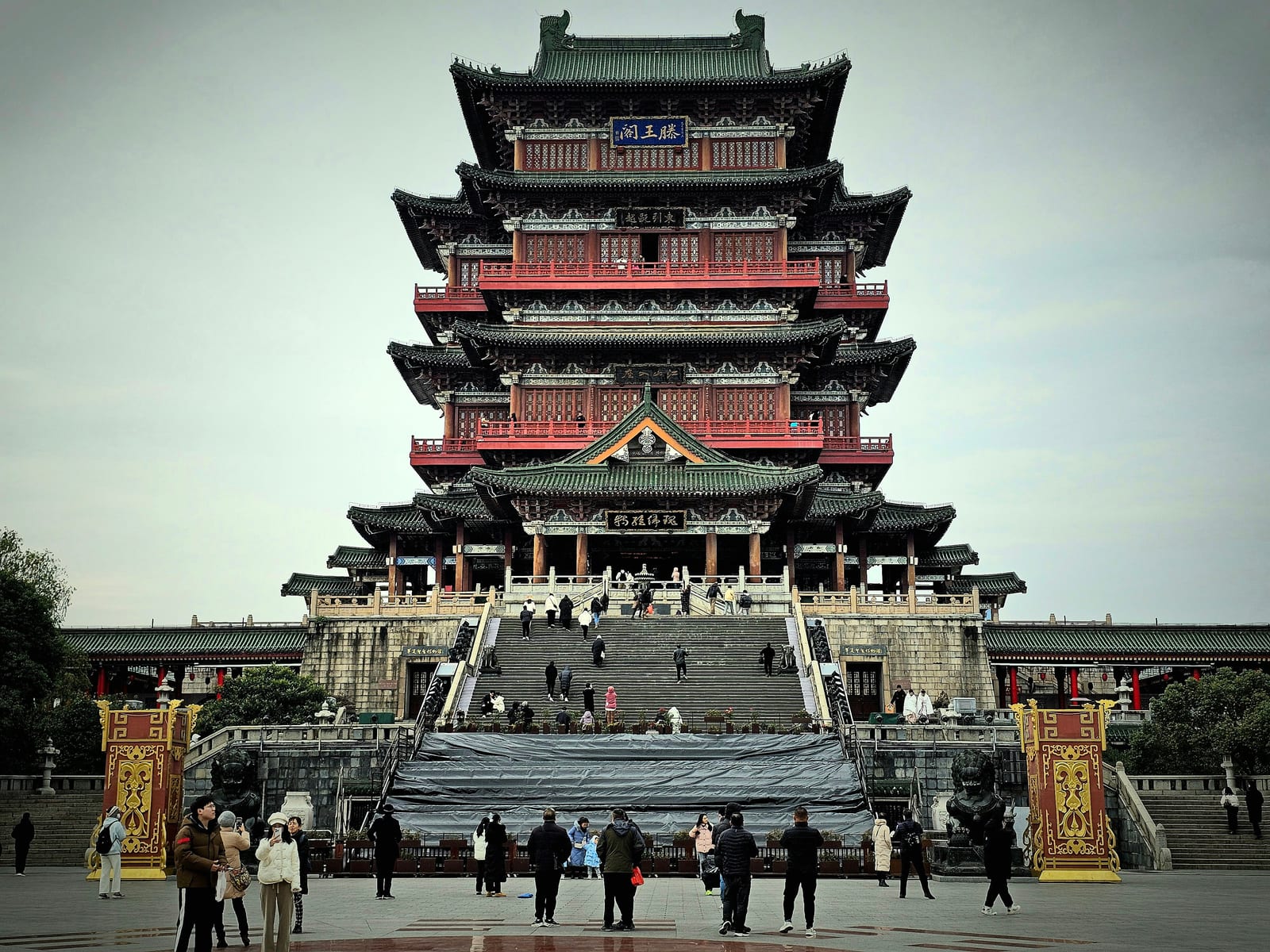
Tengwang Pavilion is the strongest choice for travellers interested in classical poetry, reconstructed pavilion architecture and a broad Gan River view, but it competes for time with the old-city memorial route. Place Tengwang Pavilion after lunch when the morning belongs to the Uprising Memorial Hall, or give the pavilion a quieter morning and move Bayi Square to late afternoon; current entry, performances and night access remain attraction decisions. If the Tengwang Pavilion river edge closes for wind, rain or crowd control, retain the open pavilion route and continue to Wanshou Palace rather than searching for a way around the barrier.
Uprising Memorial Hall and Bayi Square
The August 1st Nanchang Uprising Memorial Hall needs a real-name reservation and enough time for security, the historic site and the exhibition sequence. Bayi Square adds the civic memorial setting and can follow the hall on foot or by a short local transfer, but ceremonies may redirect pedestrians and vehicles. When a Nanchang Railway Station departure is close, keep the Memorial Hall as the core booking and treat Bayi Square photographs or a second old-city stop as removable.
Jiangxi Provincial Museum and Honggutan
Jiangxi Provincial Museum deserves at least half a day for its Jiangxi archaeology, regional history and intangible-heritage displays. Check the current reservation page to see which temporary galleries are open. From the museum district, continue to a public Honggutan riverside section only if wind, temperature and the evening return remain comfortable; metro is the simple fallback to a Honggutan hotel. Travellers arriving at Nanchang West Railway Station can sleep in Honggutan, visit Jiangxi Provincial Museum the next morning and cross east only after completing the west-bank programme.
Wanshou Palace, Shengjin Pagoda and Food Streets
Wanshou Palace Historic and Cultural Block combines old-city architecture, commercial streets and Nanchang snacks, making it a useful evening after Tengwang Pavilion. Shengjin Pagoda can form a separate same-bank extension, but the distance, heat and meal queues make it a poor compulsory addition before a train. If Wanshou Palace is crowded, eat near a confirmed metro station or the old-city hotel; blocking residential lanes for photographs is not an acceptable shortcut to a quieter scene.
Choose Meiling or Anyi, Not Both
Meiling suits a day of light mountain walking, while Anyi Ancient Villages suits travellers focused on Jiangxi houses, ancestral halls and settlement form. Both sit beyond the compact Nanchang museum routes, so each needs confirmed transport, road conditions and a full return window rather than an afternoon left over after Tengwang Pavilion. Rain, fog, lightning or a failed connection should send the group back to Nanchang for Jiangxi Provincial Museum, a city exhibition or rest, not onto an unopened mountain road or into a private village house.
Arrival and Local Transport
Nanchang Railway Station is the practical rail anchor for the old city, whereas Nanchang West Railway Station is the practical anchor for Honggutan and many high-speed services. The Nanchang Metro connects major urban areas, but a transfer still needs walking, security and waiting time, especially when luggage separates the station from the hotel entrance. For Meiling, Anyi or the Poyang Lake direction, record the legal operator, pickup point, final return and fallback before departure; decline drivers soliciting passengers without a clear licensed arrangement.
Hotels and Breakfast
An old-city hotel works for Tengwang Pavilion, Bayi Square, Wanshou Palace and an early bowl of Nanchang mixed rice noodles, while a Honggutan hotel works for Jiangxi Provincial Museum and Nanchang West Railway Station. Check the actual metro walk, lift, air conditioning, soundproofing, luggage storage and cancellation before paying; a “Gan River view” does not establish safe or convenient river access. At breakfast, ask whether mixed rice noodles, clay-pot soup or side dishes contain peanuts, sesame, wheat, meat stock or heavy chilli, and request separate chilli for children or sensitive diners.
Food, Gifts and Hygiene
Nanchang mixed rice noodles, clay-pot soup, white sugar cake and artemisia with cured meat offer different breakfast and dinner choices rather than one mandatory tasting list. At Wanshou Palace or Shengjin Pagoda food streets, use posted prices, fully cooked food and a queue that still leaves time for the reserved venue or Nanchang Metro return. Packaged Jiangxi tea snacks, noodle products or seasonings should carry ingredients, production details, shelf life and transport instructions; avoid products made from unidentified wildlife or plants.
A Workable Two-Day Route
On day one, start at the August 1st Nanchang Uprising Memorial Hall, continue through Bayi Square, take lunch in the old city and reserve the afternoon for Tengwang Pavilion. Finish at Wanshou Palace if the group still has time, but remove the Gan River night walk when storms, crowds or the Nanchang Railway Station schedule reduce the margin. On day two, use the Jiangxi Provincial Museum reservation as the fixed point, spend the remaining afternoon in Honggutan and add Qiushui Square only when the event notice and return to the hotel are both clear.
Safety and Real-Time Checks
Tengwang Pavilion, the Uprising Memorial Hall and Jiangxi Provincial Museum publish their own entry and closure arrangements, while Qiushui Square activities respond to municipal operations and weather. Gan River barriers, fountain controls and Meiling trail closures define the usable route; crossing one to preserve an itinerary creates risk without improving the visit. When illness, lost property or a transport failure occurs, contact Nanchang venue staff or local emergency services and drop Meiling, Anyi or the night programme before it threatens the station transfer.
Same-Day Departure Checklist
Before leaving a Nanchang hotel, put the correct railway station, museum entry time, metro transfer, luggage plan and final evening return into one shared sequence. A day beginning near Nanchang Railway Station should not accidentally end with luggage at Nanchang West Railway Station, and a Honggutan museum day should retain enough time for the Gan River crossing if the hotel is east. Carry water and sun protection in summer, a wind layer in winter, and remove Qiushui Square or Meiling first under a thunderstorm warning; keep the reserved Jiangxi Provincial Museum or Memorial Hall visit as the stable centre of the day.