Understand Zigong's three travel themes
Zigong is best understood through three connected stories: dinosaur fossils, the technology and society of well-salt production, and the craft of lantern making. Zigong Dinosaur Museum stands on the Dashanpu fossil site. Shenhai Well and the Salt Industry History Museum explain deep-well drilling and the rise of a salt city. The China Lantern Museum and the seasonal lantern festival cover a very different form of local heritage.
For Zigong, allow at least one full day. Two days are more realistic if you also want Rongxian Giant Buddha, Fushun Confucian Temple, or Xianshi Ancient Town. Across Zigong, the dinosaur museum, salt-history sites, and a night lantern event are not one walkable cluster. Families need time for museum breaks and a controlled evening return; travellers focused on history can give more time to Shenhai Well, the salt museum, and the old city.
Seasons and the day-to-night rhythm
Spring and autumn are comfortable for museums, old-city streets, and a county-level heritage add-on. In the humid summer, use museums for the main daytime hours and reduce exposed afternoon walking. Winter and the period around Lunar New Year often bring greater attention to Zigong's lantern traditions, but every festival edition has its own dates, ticketing, entrances, and transport controls.
For the Zigong Lantern Festival, do not reuse a previous edition's timetable. On a lantern-event day, avoid filling the morning and afternoon with distant county stops. A practical family plan is the dinosaur museum in the morning, a hotel break in the afternoon, and the evening event only after checking that edition's official information. At the China Lantern Museum or a night event, older travellers may need a shorter route, easy toilet access, and a clear dispersal plan.
Choose the right core sights
- Zigong Dinosaur Museum: built around the Dashanpu site and Jurassic fossils. At Zigong Dinosaur Museum, families can prioritise the Dashanpu fossils rather than asking children to read every panel.
- Shenhai Well: important for the history of deep drilling, brine, and natural-gas extraction. Stay within the visitor route and do not touch the derrick or industrial equipment.
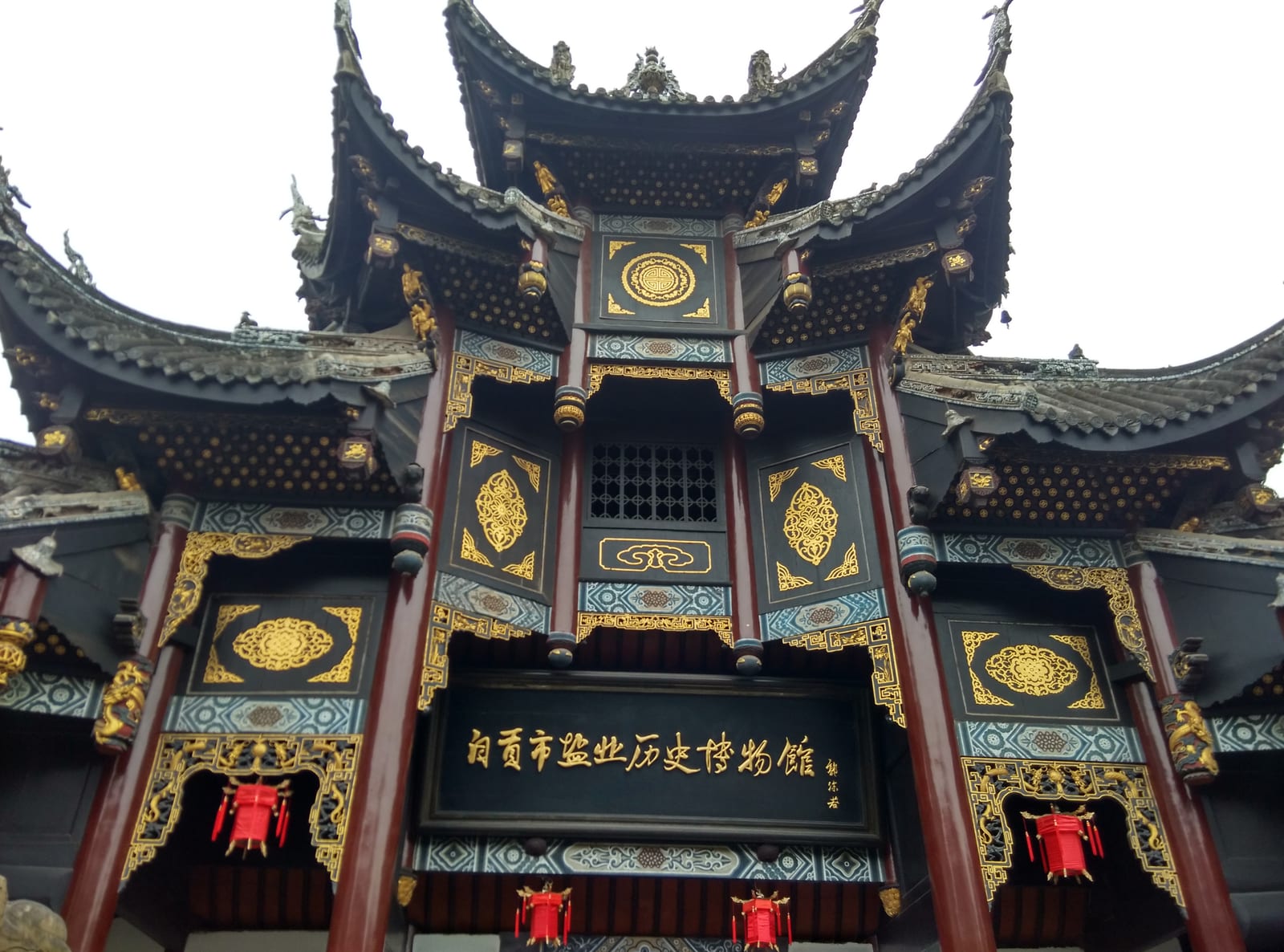
- Zigong Salt Industry History Museum: the former salt-merchants' guild-hall architecture is part of the visit. Pair it with the old city to understand how salt shaped Zigong.
- China Lantern Museum and the lantern festival: the museum explains craft and history; the festival is a large seasonal night event. They complement each other, but the festival is not a year-round certainty.
- Rongxian Giant Buddha, Fushun Confucian Temple, or Xianshi Ancient Town: choose one for a second day. The first two emphasise protected heritage, while Xianshi adds old-town and salt-transport context.
One-day and two-day plans
Classic one day: visit Zigong Dinosaur Museum in the morning. Rest or have lunch in Da'an or the city centre, then choose either Shenhai Well or the Salt Industry History Museum. Add a lantern night only when a formal event is running and the return plan is clear. If Shenhai Well and Zigong Salt Industry History Museum both deserve a close look, drop the extra stop.
Family two days: use day one for the dinosaur museum, an afternoon break, and either the China Lantern Museum or the current lantern event. On day two, combine Shenhai Well, the Salt Industry History Museum, and an old-city meal. This is easier on children than stacking a museum, theme attraction, and night event into one day.
Heritage two days: spend day one on the salt museum, the old city, and Shenhai Well. On day two, select one line to Rongxian, Fushun, or Xianshi. Confirm road access, parking, and the final return before leaving the city.
Arrival and local transport
Travellers arriving at Zigong Railway Station can continue by bus, taxi, or app-booked car according to the lodging area. The dinosaur museum, the lantern-event area, Shenhai Well, the Salt Industry History Museum, and the old city do not form one pedestrian zone. Plan them as the Da'an dinosaur cluster, the Ziliujing old-city and salt cluster, and a separate county route.
Festival editions may use special buses, temporary car parks, and designated pick-up points. For the Zigong Lantern Festival, rely only on current organiser and transport-department notices. After a Zigong Lantern Festival session, ride demand rises sharply, so save the official boarding point and a backup route. Drivers heading to Rongxian, Fushun, or Xianshi should not leave county-road and parking time until the final hour.
Where to stay
- Ziliujing, Huidong, and central commercial areas: the most balanced choice for the salt museum, old-city dining, and transfers in several directions.
- Near Zigong Railway Station: practical for a late arrival or early departure. Compare the real road journey to the museums before booking.
- Da'an, the dinosaur museum, or family-attraction area: useful when dinosaurs and an evening event dominate the trip, though the old city still requires a transfer.
- Rongxian or Fushun: worth considering only when that county has at least half a day of planned activity and a late return would be inconvenient.
On Zigong Lantern Festival dates, confirm cancellation terms, parking, family-room needs, noise, and late check-in. A hotel close to the correct boarding point can be more useful than one that appears close to the event on a map.
How to approach Yanbang cuisine
Zigong's Yanbang cooking is known for strong aroma, freshness, chilli, and Sichuan pepper. Common choices include cold-eaten rabbit, fresh-pot rabbit, Niufu braised pork, fire-edge beef, Fushun tofu pudding, and local snacks. Ask directly about chilli, peppercorn, oil, portion size, and whether seasoning can be separated. At a Zigong Yanbang restaurant, a group does not need several large rabbit dishes simply to sample every famous name.
For Zigong packaged rabbit, beef, seasoning, or lantern souvenirs, check production dates, storage instructions, delivery, and after-sales terms. Do not keep loose cooked food in a hot vehicle. At a Zigong restaurant, anyone with allergies should ask about peanuts, sesame, rabbit, and compound sauces rather than only asking whether a dish is spicy.
Tickets, reservations, and event checks
The dinosaur museum, Shenhai Well, the salt museum, and county heritage sites can each use different combinations of reservation, real-name entry, on-site ticketing, and timed admission. Lantern festivals are even more seasonal: dates, ticket categories, entrances, parking, and shuttles can change with every edition.
Before paying, confirm the date of use, visitor identification, child and senior conditions, refund rules, and any extra paid activity inside. Use the venue's official channel or an authorised platform. For a Zigong study, photography, charter, or meal package, require a stated service duration, meeting point, cancellation responsibility, traceable order, and receipt.
Family, night-event, and heritage safety
Both Zigong Dinosaur Museum and Zigong lantern events can be crowded. At Zigong Dinosaur Museum or a lantern venue, agree on a meeting point before entry and place a contact card with a child. Do not assume every museum zone or night-event path works smoothly with a stroller. At a lantern event, stay behind barriers around electrical cables, moving installations, and water, then follow crowd-control routes to the designated transport area.
Shenhai Well, the salt museum, Rongxian Giant Buddha, and historic buildings are industrial or protected heritage spaces. Do not climb, touch, or cross barriers. Across Zigong heritage sites, prepare for summer heat and thunderstorms, winter-evening cold, and wet paving. Do not turn a meal into a chilli challenge on an empty stomach; families and sensitive diners should identify a mild backup in advance.
Final departure checklist
Decide whether dinosaurs, salt history, or lantern craft is the main theme. Recheck reservations, the current lantern announcement, and event transport. Keep Da'an, the old city, and county stops in separate clusters. Protect a child-rest window and the night return. Confirm lodging cancellation, parking, and late arrival. Carry water, rain protection, and the right layer for the season. Explain spice and allergy needs before ordering. If no lantern festival is currently open, use the China Lantern Museum, salt-history sites, or an old-city dinner rather than rearranging the day around an unavailable event.