School-holiday dates, venue operations, snow activities, age or height limits, weather warnings, transport, hotel benefits and cancellation terms all change. This guide neither diagnoses children nor recommends medication: before booking any cold-weather, high-altitude or strenuous activity for a child with a health concern, seek appropriate professional advice and rely on current notices from the venue, carrier and weather authority.
A family winter holiday is rarely made of full sightseeing days: cold or wet weather, early starts, queues, hotel changes, schoolwork and missed sleep accumulate. The practical starting point is one dominant rhythm—managed snow, a warm-weather base, city museums, winter landscapes or a resort—with an indoor alternative for bad weather.
Match the route to the children
A pre-school child usually needs naps, familiar meal times and a short retreat to the room. A primary-school child may manage half a day in a museum or an introductory snow lesson, while a teenager may want a fuller city or sport day. At any venue, age, height, skill and adult-supervision rules still outrank enthusiasm, and a large age gap between siblings may call for the adults to split up temporarily.
Talk through motion sickness, allergies, old injuries, cold tolerance, sleep and the child's ability to report discomfort before choosing an ice-and-snow, city or warm-coast route. “Other children did it” is not a risk assessment. During any long-distance journey or resort transfer, give one adult the documents, another the luggage, and every younger child a clearly named guardian; the family should also agree on a specific meeting point.
When to travel and how many days to allow
China's school break can overlap with Spring Festival transport, ski-season demand, weekends and the winter migration to Hainan. In the north, wind, snow, ice and limited daylight shape the day; around Sanya or Lingshui, cool rain, strong wind and sea conditions can still cancel an outdoor plan. Compare Hainan transport and lodging cancellation terms before buying individual activities.
Three days fit one city or one resort, and five allow one nearby outing plus a low-key period. Even a seven-day city-and-resort trip should not become a chain of nightly hotel moves. Treat both arrival and departure as half-days, place a lighter period at least every third day, and allow time for clothing and luggage when moving between very different climates.
Trip styles and destination trade-offs
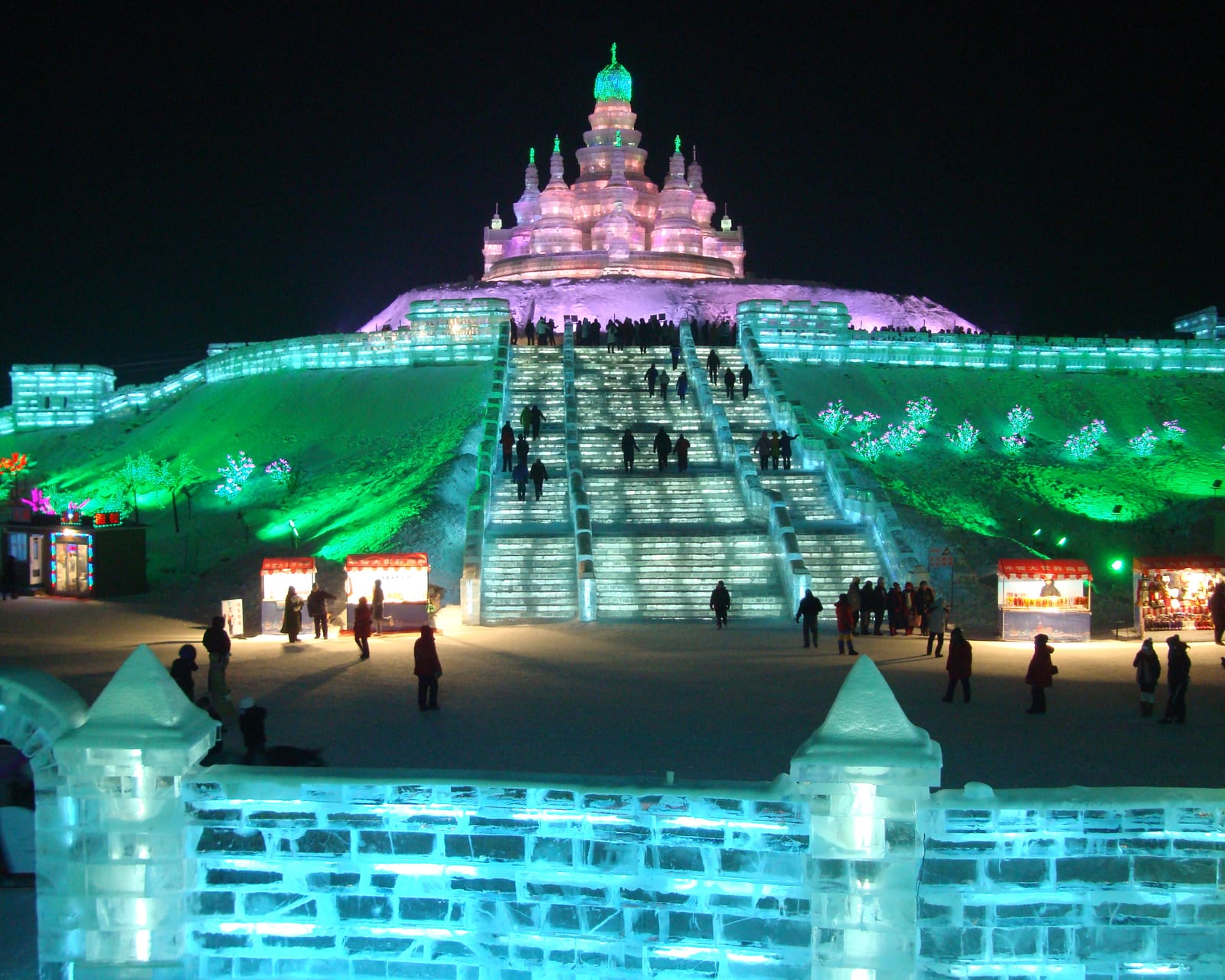
- Managed ice and snow: Harbin's urban winter venues, Chongli's ski areas, the Changbai Mountain region and Altay have very different transfers and cold exposure. At any of them, first-timers need a managed site, beginner terrain and a verifiable instructor, never unofficial natural ice or an unmanaged snow slope.
- Warm coast and southern cities: Sanya, Lingshui, Guangzhou, Zhuhai and Beihai combine parks, waterfronts and family venues. Around Sanya or Beihai, sea state, sun, mosquitoes, food storage and the operator's credentials still determine whether a water activity belongs in the plan.
- Museums and science centres: Beijing, Xi'an, Nanjing, Chengdu and Guangzhou can support compact indoor days. Check the exact open galleries and booking method for the China Science and Technology Museum, Nanjing Museum, Shaanxi History Museum or Guangdong Science Center rather than assuming last winter's process still applies.
- Winter landscapes: Huangshan, Zhangjiajie, Sanqing Mountain and Wuyi Mountain can be affected by rain, snow, ice, cableway suspensions and managed trail closures. At Huangshan or Zhangjiajie with a younger child, one open and maintained section is enough.
- Resorts and theme parks: A hot-spring hotel, theme park or family resort reduces transfers only when the room benefits, pools, maintenance periods, meals, night transport and refunds are clear.
Four workable itineraries
Three-day museum city
After check-in, stay close to the hotel for a park or short street. Reserve the second morning for one main museum or science venue. Return for an afternoon rest before deciding whether an evening performance still suits the family. Day three needs a low-queue indoor option before departure. Check the venue's closing day and real-name booking process before the room becomes non-refundable.
Four-day warm-weather stay
Use arrival day to learn the hotel area. Give day two to a managed beach or park, day three to an indoor family venue or compact cultural district, and day four to an unhurried return. If wind or waves close a water activity, a different high-risk sport is not compensation.
Five-day first snow trip
Arrive in the resort town and inspect clothing and equipment on day one. Day two holds one beginner lesson and plenty of rest; day three repeats suitable terrain or changes to sightseeing according to the child. Put an urban winter venue or indoor activity on day four and travel home on day five, never combining a full ski day, a long transfer and a late-night ice attraction.
Seven days with two rhythms
Combine one well-connected city with one nearby resort, stay three nights before the single hotel change, and insert a complete rest day. If a weather warning appears or a child becomes ill, remain in the city with stronger transport and medical services rather than improvising a more remote substitute.
Safety boundaries for ice and snow
A legitimate rink or ski area should have visible operating rules, patrol or rescue arrangements and access to first aid. At any ski area, a child belongs with a guardian or qualified instructor, on suitable terrain, wearing a compliant helmet, goggles, gloves and whatever protection the operator requires. The price of a lift pass never determines the next level of difficulty.
Natural ice without official opening and inspection, unofficial snow slopes and unmanaged ice-fishing sites do not offer dependable testing or rescue; images from Xiaohongshu or another social platform are not evidence of safety. Read the local forecast and the venue notice before leaving, and change plans for high wind, heavy snow, ice, low visibility or closure. Persistent shivering, unusual pallor or drowsiness, pain, or loss of movement control means moving the child to a warm staffed place and seeking professional help.
Transport, luggage and long transfers
The booking needs the exact station or airport, arrival hour, child travel document, baggage terms and final pickup. Consult the relevant rail, airline or coach operator directly about skis, pushchairs, child seats and oversized cases. A late arrival should not be followed by an unfamiliar mountain road; winter self-drivers also need current road controls, vehicle condition, suitable tyres or traction equipment, and a realistic parking plan.
During a station change, one adult can confirm the platform or pickup while another stays physically with the children. No child should wait alone at a station security point, baggage carousel, motorway service area or car park. A transfer contract should record the vehicle, driver, child-seating requirement, total charge, cancellation and insurance, and an unlicensed last-minute substitute should be refused.
Accommodation and real rest
For a northern or mountain stay, ask about heating, window sealing, hot water, drying wet clothing and the actual resort shuttle. At a warm-coast stay, the equivalent checks are cooling or dehumidification, mosquitoes, pool maintenance and the walking route to the beach. A family-room photograph does not settle the bed size, guard rail, extra bed, breakfast count, laundry, noise or charges for children's items.
Pools, hot springs and children's clubs each need their own operating hours, maintenance schedule, age or height limit, guardian rule and lifesaving provision. A hot spring is not treatment, and a child remains in view around pools, baths and changing areas. Naps and early nights are structural parts of the route, even when a prepaid theme-park ticket includes evening entry.
Food, equipment and health information
Regular, warm meals and water matter more on a snow day than an endless supply of sweets. On the Hainan coast, cold-chain handling, separation of raw and cooked ingredients and fully cooked seafood deserve the same attention as in winter elsewhere. A child with allergies needs direct questions about milk, egg, nuts, seafood, broth and shared utensils.
Pack layers, spare socks, waterproof gloves, non-slip footwear, sun protection and the child's usual essentials for the actual destination. Regular medicine should remain in its original packaging and be used only as directed by the clinician or pharmacist; no travel article should prompt a new drug or dose. Store allergy details, emergency contacts and insurance information offline without exposing a child's identity document or room number.
Booking camps, lessons and paid activities
For a winter camp, ski lesson, surf or dive experience, theme-park fast pass or hotel club, establish the operating entity, instructor identity, staff-to-child ratio, insurance, transport, handover, cancellation and accident process. A WeChat group payment code, verbal promise or “internal place” does not establish any of them.
If the child leaves a parent's sight, put the meeting point, authorised pickup check, communications and early-exit procedure in writing. A cheap package linked to shopping, compulsory photographs or extra lessons should be costed as a whole. Preserve the contract, order, messages and payment record, and never give an organiser an account password, one-time code or unrestricted identity image.
Separation, weather changes and the exit plan
On entering a museum, theme park or ski base, choose one precise reunion point and make sure the child knows a guardian's name and phone number. A younger child can carry a discreet contact card without a home address; a private photo of that day's clothing can help staff describe a missing child. Public posts or announcements should disclose no more identity information than the response requires.
Each main activity has three legitimate outcomes: finish, shorten and return to the room, or cancel. Motion sickness, exhaustion, distress, injury or illness takes priority over a night scene or a lesson already paid for. A sound winter holiday leaves enough slack for weather and energy to change while the family still has a safe route home.