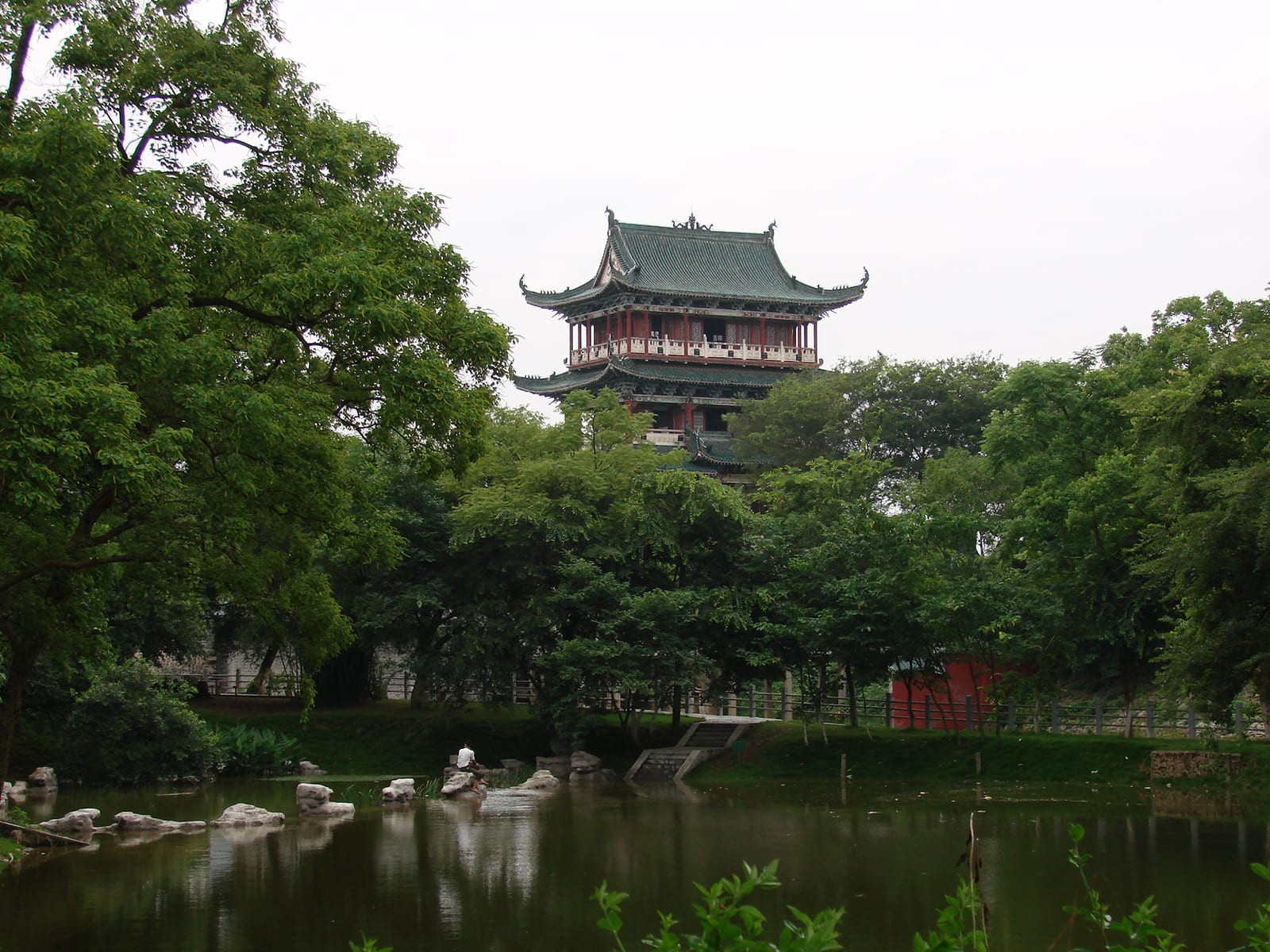
Ganzhou's main travel themes are separated by a very large municipal area. Jiangnan Songcheng is walkable in Zhanggong District; Ruijin and Yudu form a twentieth-century history branch; Longnan is the principal Hakka-enclosure base; and Sanbaishan in Anyuan is a mountain day. Choose the urban core or one county theme before reserving transport. Three days cannot usefully cover all four directions.
Choose the Urban Core or One County Route
With two days, concentrate on Zhanggong's old city. A three- or four-day trip can add one branch: Ruijin and Yudu for revolutionary history, Longnan for enclosure architecture and villages, or Anyuan for Sanbaishan. A serious Yudu–Ruijin route benefits from an overnight stop, and Longnan also works better as its own base.
"Ganzhou" on a booking page does not mean that the station, county town and scenic gate are close together. Plot all three before buying a ticket or hiring a car. Ruijin and Yudu share a more coherent historical direction, whereas Longnan and Anyuan require different road or rail decisions. Do not end a cross-county day with a tightly timed performance in central Ganzhou.
Seasons and Weather Alternatives
Spring and autumn generally suit Zhanggong walking and county roads. Spring rain makes old paving, enclosure courtyards and mountain paths slippery. Summer heat and downpours favour outdoor mornings followed by indoor exhibitions; winter mornings and evenings can be cold around Sanbaishan. Flowering, harvest and commemorative events can increase weekend demand, but an unverified "best date" should not control a durable itinerary.
The night before a county departure, check Ganzhou weather, railway or road status and the specific venue notice. Heavy rain, lightning or a geological-hazard warning cancels Sanbaishan and remote-village travel. When a mountain day is lost, a confirmed Zhanggong museum or an additional Jiangnan Songcheng walk is a complete alternative rather than a failed trip.
Walking Jiangnan Songcheng
Ganzhou City Wall, Bajingtai and Yugutai
The old-city area is presented to visitors as the Jiangnan Songcheng Historical and Cultural Tourism Area. Begin near Bajingtai, follow whichever sections of Ganzhou City Wall are open, then continue through public lanes toward Yugutai and Zao'er Lane. The route is valuable because it links walls, terraces, streets and the confluence landscape rather than presenting isolated monuments.
Restoration can change access to the wall or towers. At Bajingtai and Yugutai, follow barriers and interpretive material rather than substituting an unverified legend for the physical site. Zao'er Lane and the surrounding old city still contain homes and shops, so keep doorways and narrow passages clear.
Jianchunmen Floating Bridge and Fushougou
The floating bridge outside Jianchunmen responds to river level, weather and maintenance. When management closes it, view the structure from the bank; the bridge is not a guaranteed cross-river shortcut or a platform for a large posed group. High water also makes the adjacent low bank inappropriate for lingering.
Fushougou is Ganzhou's historic urban drainage system. Learn about it through open interpretation or a formal exhibition space, not by entering an unstaffed underground opening. During rain, Fushougou must remain functioning infrastructure under its managers' control, not an improvised tunnel tour.
Choosing a County Direction
Ruijin: Visit a Group of Historic Sites
The Ruijin Republic Cradle Tourism Area includes Yeping, Red Well, Ersuda and the Chinese Soviet Memorial Park. These components are not one courtyard. Use the current official opening list to group nearby places and leave time for exhibition text. At Red Well and other protected sites, keep landmarks in their specific historical context, avoid comic poses and do not touch or climb structures.
Travellers with a general interest can choose one Ruijin site group and its exhibitions. Those studying the period in depth should sleep in Ruijin rather than compressing the visit between long returns to Zhanggong.
Yudu: Understand Assembly and Departure
Yudu's Central Red Army Long March Assembly and Departure Memorial Park supports a focused visit tied to the history of assembly and departure. Distinguish original locations, memorial architecture and later displays instead of describing every structure as unchanged from the period. Study groups should arrange interpretation and manage flags, amplification, attendance and group photographs without displacing other visitors.
Longnan: Distances Between Enclosures Matter
Guanxi Wei Scenic Area is in Guanxi Town outside central Longnan. Its core is Guanxi Xinwei, while the scenic area also includes other enclosures and village spaces; it is not a single building. Longnan's protected architecture can stand beside ordinary homes, so observe the open boundary, ask before photographing residents and never enter a private room.
A useful Longnan day selects two or three named enclosures on the same side of the city. Adding distant examples can turn architectural comparison into repeated transfers. A hired-car order must name each enclosure, collection point, waiting time and final return. The phrase "Hakka enclosure day tour" is too vague and leaves room for unagreed substitutions or shopping stops.
Sanbaishan in Anyuan
Sanbaishan is associated with the Dongjiang headwaters and a sensitive mountain ecology. Use only the trails, shuttles and facilities that the Anyuan scenic area has opened for the day. Ropeways, glass facilities or individual sections can close for wind, rain or maintenance, so no one installation should be the sole reason for the county transfer.
Wear shoes with grip and carry water and a light rain layer at Sanbaishan. Turn back for thunder, strong wind or a geological warning. Do not leave the marked route in search of an unofficial "source," and do not collect plants or wildlife.
Three- to Five-Day Plans
Three Days: Old City Plus One Theme
Spend day one in Jiangnan Songcheng. Use days two and three for Ruijin, Longnan or Anyuan, staying locally when that removes a long return. Choose Ruijin for exhibitions and historic-site groups, Longnan for enclosure architecture, or Anyuan for a full mountain day with weather margin.
Four or Five Days: Change Base Once
Begin in Zhanggong, then move to Yudu and Ruijin for the historical route or south to Longnan for the Hakka route. Add Anyuan only after calculating the actual transfer and the Sanbaishan weather window. Ruijin, Longnan and Anyuan are not three easy day trips from one old-city hotel; one deliberate change of base preserves more visiting time.
Rail, Air and Cross-County Transport
Ganzhou West Railway Station, Ganzhou Railway Station and Ganzhou Huangjin Airport serve different arrivals. Confirm the exact station or terminal and the complete transfer to the first hotel before booking. Yudu, Ruijin and Longnan have their own rail or road nodes, but the ticket issuer and official transport notice should control the service used on the travel date.
Walk within Jiangnan Songcheng. For county branches, use rail, regular coaches or a licensed vehicle. A private-car order should state the business registration, driver, vehicle, insurance, exact route, total charge, tolls, parking and waiting time. Reject a low quote that later adds compulsory shopping. For Longnan, put the enclosure names in writing; for Sanbaishan, never make the descent and road return depend on the final possible connection.
Where to Sleep
Zhanggong District is the sensible first base for Jiangnan Songcheng and the main Ganzhou transport nodes. A hotel near, but not directly inside, the busiest pedestrian lanes can balance access and sleep. Move to Ruijin, Longnan or Anyuan when that county is the trip's main subject instead of repeating the highway from Zhanggong.
Before payment, verify the actual address, lifts, parking, breakfast time, luggage storage, cancellation and late reception. International visitors should select registered accommodation that can process passport guest registration. In an enclosure village or mountain area, a platform listing does not replace confirmation of legal operation, fire arrangements and the night contact.
Food and Agricultural Purchases
Gannan stir-fried fish, Hakka stuffed tofu, rice noodles and county cooking offer a good introduction to the region. Ask about chilli and fish bones; soy, peanuts, rice wine and mixed sauces may matter for allergies. In Ganzhou or Longnan, establish portion size before ordering several shared dishes.
Gannan navel oranges and other farm products are seasonal. Check the stated origin, producer, net weight, storage period and delivery terms rather than accepting a roadside claim as proof of grade or geographic indication. For cooked foods or fruit sent onward from Ganzhou, confirm shelf life, packing, leakage protection and after-sales terms.
Booking, Interpretation and Respectful Conduct
Museums, Ruijin and Yudu memorials, Longnan enclosures and Sanbaishan use separate closure days, identity documents and group rules. Free admission can still require a reservation. A school group should identify its safeguarding lead, attendance method, emergency contacts and consent arrangements for identifiable images of minors.
- Do not step onto a closed Jianchunmen floating bridge or a low riverbank when water rises.
- Cancel Sanbaishan and remote-village travel under severe-weather or geological-hazard warnings.
- Keep Longnan's protected interiors distinct from residents' private space; do not touch, climb or enter closed rooms.
- Leave realistic transfer time between Zhanggong, Ruijin, Yudu, Longnan and Anyuan, and do not use an unlicensed roadside vehicle.
- Use venue interpretation and public records for revolutionary history rather than theatrical retellings.
- Recheck the station, opening status, weather, hotel address and cancellation conditions before every county move.